The shape of demand
If you plot a city's electricity use over 24 hours, you get a curve called a load curve. It usually dips in the early morning, rises as people wake and businesses open, and peaks in the afternoon or evening. In hot countries such as the UAE, summer peaks are driven by air conditioning, while winter demand is much lower. But the curve never falls to zero. Fridges, street lights, hospitals, data centres and factories keep drawing power all night.
Baseload, intermediate and peak
Engineers divide demand into three layers. Baseload is the steady minimum that is always there. Intermediate load sits on top and rises and falls during the day. Peak load is the highest part of demand, which may only occur for a few hours on the hottest or coldest days. Traditionally, each layer was supplied by a different type of power plant, chosen for its costs and how quickly it could change its output.
Traditional baseload plants
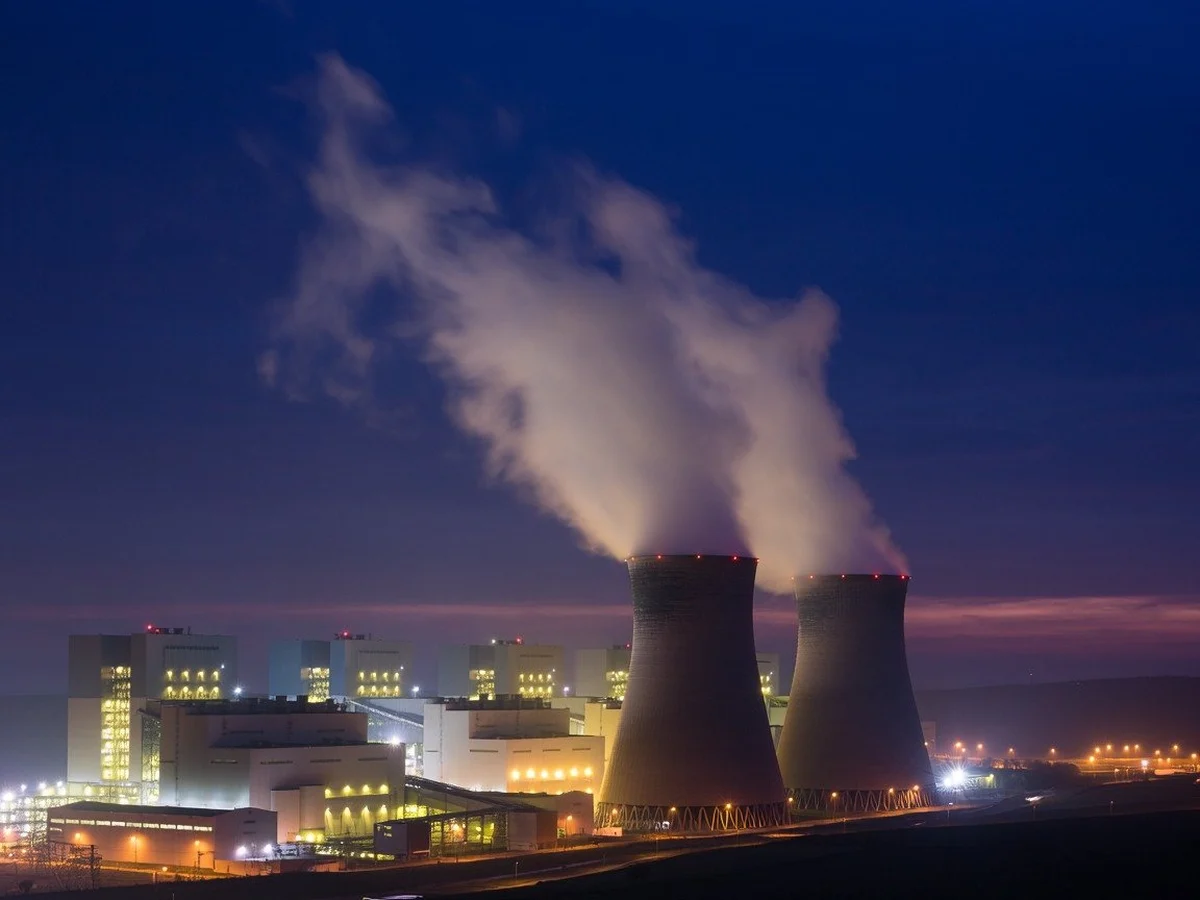
Plants with high building costs but low fuel costs are cheapest when they run almost all the time. Nuclear power is the classic example: in the United States, nuclear plants ran at more than 90% of their maximum output on average in 2023. Large coal plants and some efficient gas plants have also been used for baseload. These plants are not designed to switch on and off quickly; they work best running steadily for weeks or months at a time.
Peaking plants
To cover peaks, grids have relied on plants that can start quickly but cost more to run, such as simple gas turbines and, in some places, oil-fired units. They might sit idle much of the year and run only when demand spikes. Hydroelectric dams can also respond quickly, releasing more water when power is needed. Pumped-storage hydro, which pumps water uphill when power is cheap and releases it later, has long been used to shift energy from night to day.
Capacity factor
A useful measure is the capacity factor, the actual electricity a plant produces over a year divided by what it could produce if it ran at full power all the time. Nuclear plants often exceed 90%. Gas combined-cycle plants averaged around 60% in the United States in 2023, coal about 43%, wind about 34% and solar panels about 23%. A low capacity factor does not mean a technology is bad; solar simply cannot produce at night.
Renewables change the picture
Solar and wind have very low running costs, so when they are available, they are usually used first. That pushes other plants down the merit order. On sunny days, solar can supply much of a grid's demand at midday, reducing the need for steady baseload in those hours. But their output varies with the weather and time of day, so grids need other resources to fill gaps, especially in the evening when the sun sets but demand stays high.
From baseload to flexibility
Many grid experts now argue that the key question is not how much baseload capacity a system has, but how flexible it is. Flexible resources include batteries that charge at midday and discharge in the evening, fast-ramping gas plants, interconnections with neighbouring grids, and demand response, where large users shift their consumption to times when power is plentiful. Nuclear and other steady sources still provide valuable firm power, but within a more dynamic system.
The UAE's mix
The UAE's electricity system has changed rapidly. Gas-fired plants, many of them combined with water desalination, have long supplied most power. The Barakah nuclear plant now provides a large share of steady, low-carbon electricity, while huge solar parks such as Mohammed bin Rashid Al Maktoum Solar Park in Dubai and Noor Abu Dhabi and Al Dhafra in Abu Dhabi deliver cheap daytime power. Large batteries are being added to help match solar output with evening demand.
Why it matters to you
The way a grid balances baseload and flexibility affects reliability, prices and emissions. A well-balanced system keeps the lights on during heatwaves and cold snaps, makes good use of cheap renewable power and avoids wasting energy. For households, time-of-use tariffs, smart appliances and home batteries may increasingly reward using electricity when it is most plentiful. Understanding baseload helps explain why the energy transition is about more than just building solar panels.
Sources & further reading
Capacity factors are US averages for 2023 and vary between countries and individual plants. Photograph: original AI-generated illustration (Adobe Firefly). Reference organisations do not endorse this website.