A waiter between kitchens
API stands for application programming interface. The easiest way to picture one is a restaurant. You do not walk into the kitchen and cook; you choose from a menu, a waiter takes your order, and a dish comes back. The menu limits what you can ask for, and the kitchen's methods stay hidden. An API works the same way between programs. A service publishes a list of things it is willing to do, such as 'give me tomorrow's forecast' or 'charge this card', together with the exact form each request must take. Any program that follows those rules can use the service without seeing or copying its code.
Request and response
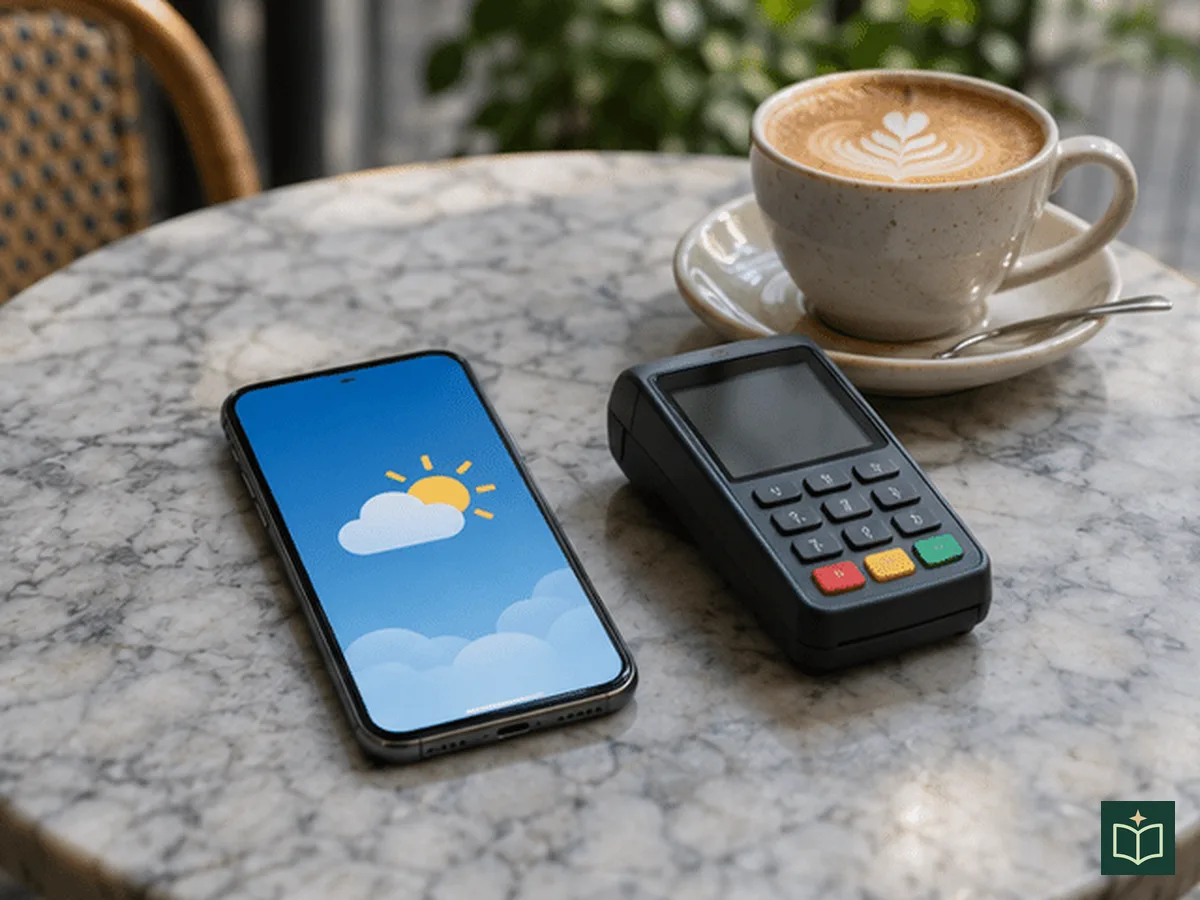
Most modern APIs work over the web. A program sends a request to an endpoint, a web address such as one ending in /forecast. The request includes a method, usually GET to read data or POST to create something, plus details like a city name. The server checks the request, does the work and replies with a status code and data. The reply is commonly written in JSON, a lightweight text format of labelled values, for example a temperature of 41 and a humidity of 55. Because the format is predictable, the calling program can read it automatically. Your phone's weather app is mostly a polished screen wrapped around requests like these.
Payments, maps and logins
Much of what feels like a single app is really several services stitched together through APIs. When an online shop in Dubai takes your card, its website usually hands the card details to a payment provider's API, which talks to the card network and the bank and returns 'approved' or 'declined'. The shop may never store your full card number. A delivery app shows a map from a mapping provider, checks addresses with another service and sends text messages through a third. 'Sign in with' buttons use APIs to confirm your identity with an account you already have. Each company concentrates on its own speciality and rents the rest.
Keys, limits and a quick sum
Services need to know who is calling, so most APIs require a key, a long secret code identifying the app. Keys let providers bill customers, block abuse and cap usage with rate limits. Those limits shape how apps are designed. Imagine a small weather app with 5,000 users, each opening it four times a day. If every opening called the forecast API directly, that would be 20,000 requests a day, which might exceed a free tier. Because a city's forecast barely changes within an hour, the app can instead fetch each city once and reuse the answer for everyone, a technique called caching. Good API use is often about asking less.
Older than the web
The idea long predates smartphones. Operating systems have offered APIs for decades, so that a program can open a file or draw a window without controlling the hardware directly. Code libraries publish APIs that other programmers call. What changed around 2000 was the spread of web APIs, which let companies offer services over the internet to anyone with a key. In the same year Roy Fielding described REST, a simple style built on ordinary web addresses and methods, which became the dominant approach. Online marketplaces, retailers and social networks opened APIs in the following years, and an industry of developers began building on other companies' platforms.
A contract, not a database
An API is often confused with the data or the app behind it. It is better seen as a contract: a promise that a certain request will produce a certain kind of answer. That promise matters. If a provider changes a field name or retires an endpoint, every app relying on it can break overnight, which is why careful providers publish versions and give notice. APIs also concentrate risk, since a leaked key or a poorly protected endpoint can expose large amounts of data. Their importance keeps growing. Open-banking rules in several countries require banks to offer secure APIs, and AI models are now commonly reached through APIs too.
Sources & further reading
Figures are rounded and widely published; check the linked organisations for the latest editions. These organisations do not endorse this website.