A computer, shrunk
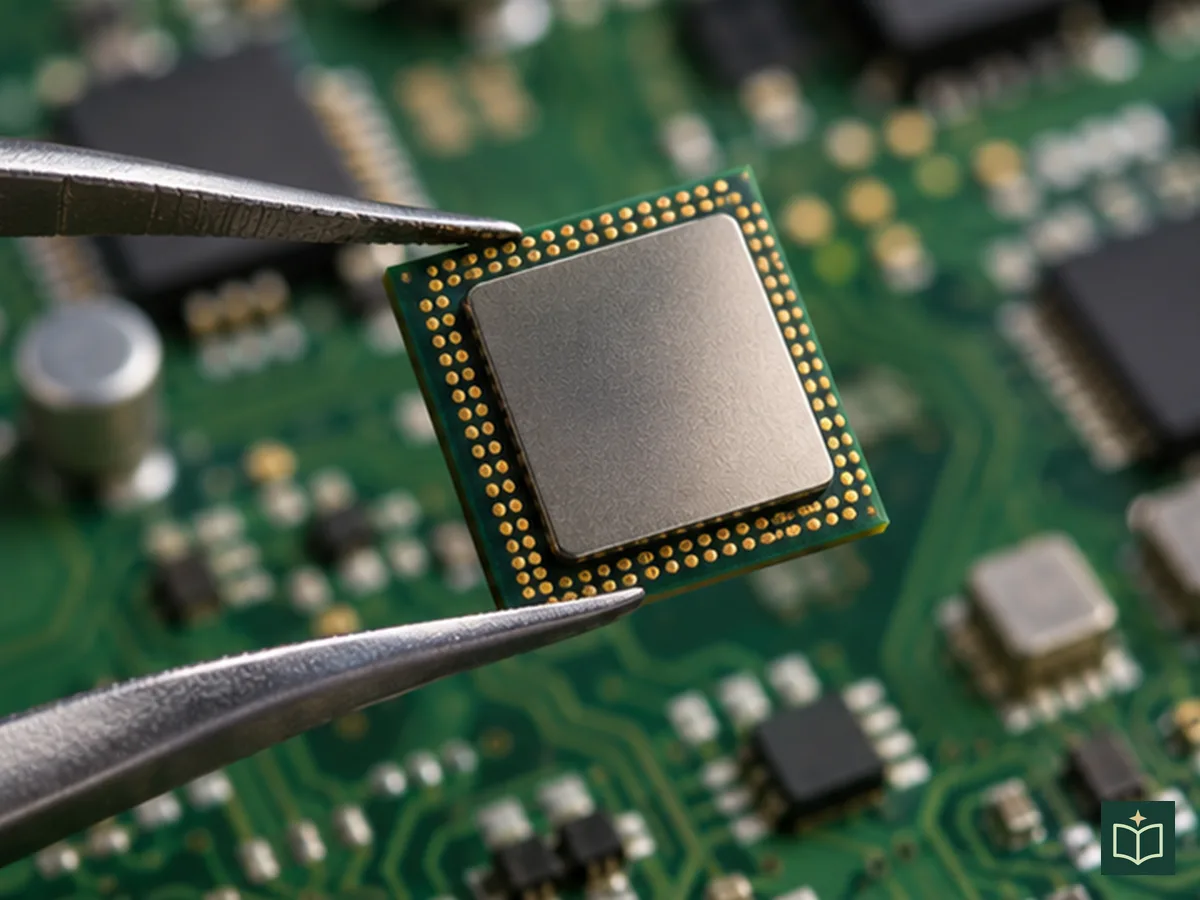
A traditional desktop computer is built from separate parts on a large circuit board: a central processor, a graphics card, memory sticks, network and sound chips, all linked by copper traces. A system-on-a-chip, or SoC, puts nearly all of those functions onto one piece of silicon a little larger than a fingernail. Every modern smartphone, tablet, smartwatch and smart speaker is built around one, as are many laptops, cars and televisions. The chip is designed as a set of blocks, sometimes licensed from different companies, then manufactured together on a single die. The result is a complete computer, minus the battery, screen, storage and some memory, in a package small enough for a pocket.
What is inside
A typical phone SoC contains several groups of CPU cores: a few large, fast cores for demanding tasks and more small, efficient ones for background work. Beside them sits a graphics processor for games and the interface, and a neural processing unit tuned for the arithmetic of AI tasks such as recognising faces in photos. An image signal processor turns raw sensor data from the cameras into pictures. A video engine encodes and decodes films far more efficiently than the CPU could. There is also a secure area for passwords and biometric data, controllers for memory and storage, audio and display blocks and, in many phones, the cellular modem.
Why integration saves power
The biggest energy cost in modern computing is often not calculation but moving data. Driving a signal across a circuit board to a separate chip takes much more energy than sending it a few millimetres across the same die. An SoC keeps its blocks close together, often sharing one pool of memory, so the graphics processor and neural engine can work on the same image without copying it back and forth. Specialised blocks also do their jobs with a fraction of the energy a general-purpose core would need. That is how a phone with a battery of around 15 watt-hours can last a whole day: if it averages about one watt, the battery lasts roughly 15 hours.
Constant power management
Inside the SoC, a power controller switches blocks on and off thousands of times a second. When you read a page, most of the chip may be idle while a small core updates the screen. When you open the camera, the image processor and neural engine wake up, then sleep again. Clock speeds and voltages are raised and lowered continually to match demand, because power use rises steeply with voltage. Heat is a hard limit. A phone has no fan, so if the chip runs at full speed for too long it must slow down to stay at a safe temperature, which is why a long video call on a hot day can make a phone feel sluggish.
From watches to laptops
The idea is older than smartphones. Digital watches and calculators of the 1970s already put most of their logic onto one chip, and embedded SoCs ran printers, routers and games consoles for decades. Phones made the approach mainstream, because they demanded high performance on a tiny power budget. In 2020 Apple moved its Mac laptops to its own M1 SoC, with 16 billion transistors, showing that the design could rival traditional desktop chips while using much less power. Other companies now build SoCs for Windows laptops, cars and data-centre servers, and as manufacturing costs rise, some designs split the system across several smaller dies inside one package.
Trade-offs and what to watch
Integration has drawbacks. Because the processor, graphics and memory controller are fused, you cannot upgrade one part; improving the computer means replacing the whole chip, and often the device. A flaw in one block can affect the rest. Designing an advanced SoC also costs hundreds of millions of dollars, so only large companies make leading-edge ones. When comparing phones, the name of the SoC usually says more about speed, camera processing, battery life and how long software support will last than the headline clock speed does. Increasingly, the most noticeable improvements from one generation to the next come from the specialised blocks, especially those for AI and photography.
Sources & further reading
Figures are rounded and widely published; check the linked organisations for the latest editions. These organisations do not endorse this website.