Why the body needs a suit
Outside a spacecraft there is no air pressure at all. Without it, the water in body tissues would begin to turn to vapour, swelling the skin, and the lungs could not take in oxygen; consciousness would be lost within about 15 seconds. Space also brings extremes of temperature, from well above 100°C in direct sunlight to far below freezing in shadow, plus unfiltered solar radiation and tiny meteoroids travelling faster than bullets. A suit for working outside, known as an extravehicular suit, must deal with all of this at once, for up to eight hours or so. In effect it is a small, flexible spacecraft built around one person.
Pressure, but not too much
The most important job is pressure. An inner airtight bladder is inflated with oxygen, and an outer restraint layer stops it ballooning. NASA’s suit used at the International Space Station runs at about 29.6 kilopascals of pure oxygen, roughly 30% of sea-level air pressure. Because the gas is pure oxygen, the lungs still receive enough. A lower pressure keeps the suit more flexible, but it creates a problem: the station’s cabin uses ordinary air at sea-level pressure, and moving suddenly to a low pressure could let dissolved nitrogen form bubbles in the blood, the diving illness known as the bends. Astronauts therefore breathe pure oxygen for some time beforehand to flush nitrogen out.
The backpack that keeps you alive
Most of the life support is in a backpack called the primary life support system. It stores oxygen in high-pressure tanks, circulates it through the helmet, and removes carbon dioxide using chemical canisters, along with moisture and odours. It also contains a radio, a battery, warning systems and a reserve oxygen supply for emergencies. Cooling is surprisingly important, because a working astronaut produces a lot of heat that a sealed suit traps. Under the suit they wear a garment threaded with thin tubes through which cool water flows. The warmed water passes through a device that lets a little water escape to vacuum, where it freezes and evaporates, carrying the heat away.
Layers against heat and debris
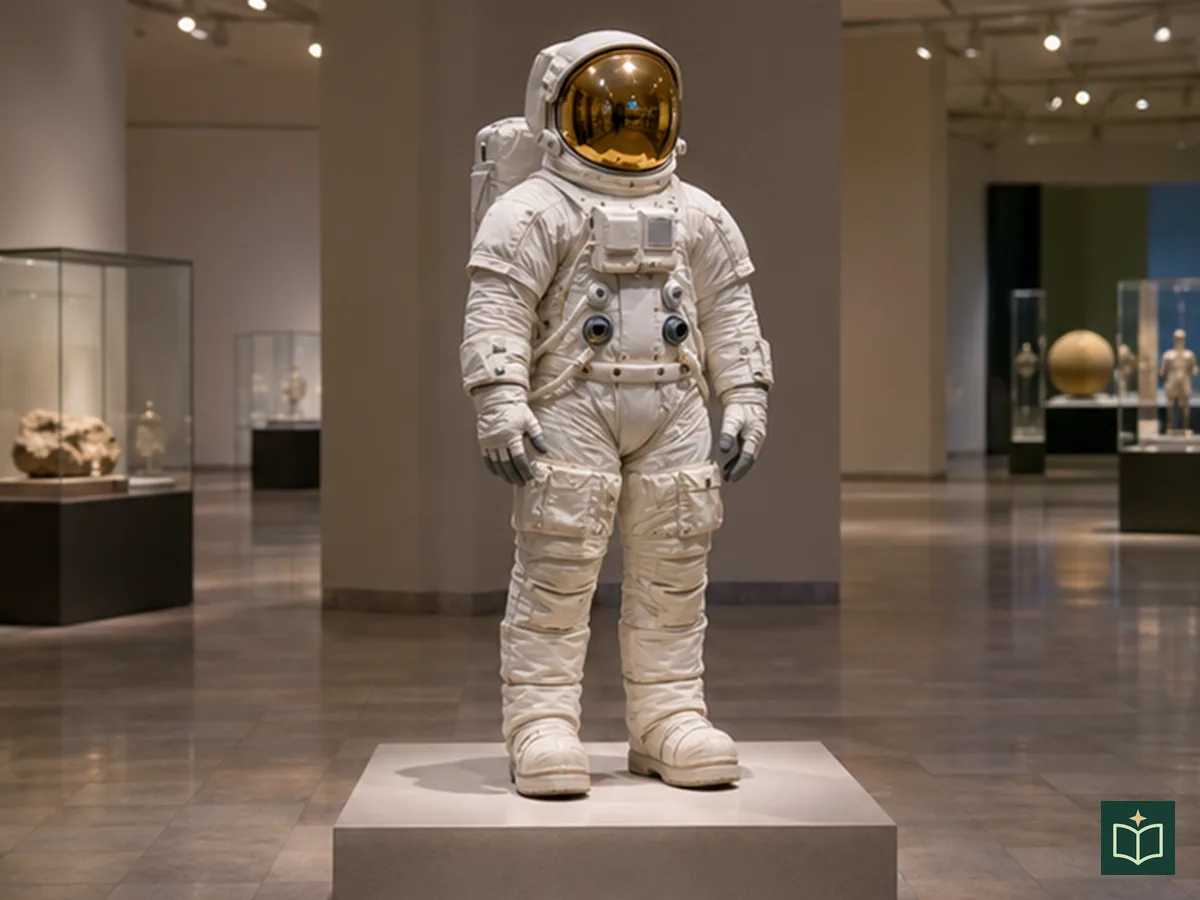
Over the pressure layers sit a dozen or so thin insulating layers, often of aluminised plastic films, that reflect sunlight and stop the suit losing too much heat in shadow. The outer covering is a tough fabric blend designed to resist tears and small particle strikes. The helmet has a gold-coated visor, because a very thin layer of gold reflects much infrared and ultraviolet light while still letting the astronaut see. Helmet lights and cameras help during night passes, which come every 90 minutes or so in low orbit. In April 2023 the Emirati astronaut Sultan Al Neyadi became the first Arab to perform a spacewalk, spending about seven hours outside the station.
Why the gloves are so hard
Anything inflated resists bending. Squeeze a balloon and it pushes back, because bending reduces its volume and the gas inside must be compressed. A pressurised glove behaves the same way, so every grip is a small fight against the suit itself. Over a long spacewalk this causes fatigue in the hands and forearms, and some astronauts have suffered bruised fingertips and damaged fingernails. Engineers reduce the effort with carefully shaped joints, bearings at the wrist and pleated sections that keep volume nearly constant as they flex. Gloves are tailored to each astronaut’s hand, and tools on the station are designed with large handles that can be gripped without fine finger movements.
Suits for the Moon and beyond
Suits for walking on the Moon or Mars face different problems. Lunar dust is fine and sharp and clings to everything, wearing joints and seals; Apollo astronauts found it in their suits, tools and cabins. Walking requires hip and knee joints that the station suit lacks, and future missions want suits that can be used for many excursions with little maintenance. Designers are also working on suits that operate at higher pressure to shorten the oxygen pre-breathe, and better ways to remove heat without losing water. However advanced they become, the principle stays the same: carry a small, reliable piece of Earth’s environment around a human being.
Sources & further reading
- NASA · International Space Station ↗
- Mohammed Bin Rashid Space Centre ↗
- Smithsonian National Air and Space Museum ↗
Figures are rounded and widely published; check the linked organisations for the latest editions. These organisations do not endorse this website.