A discovery from the air
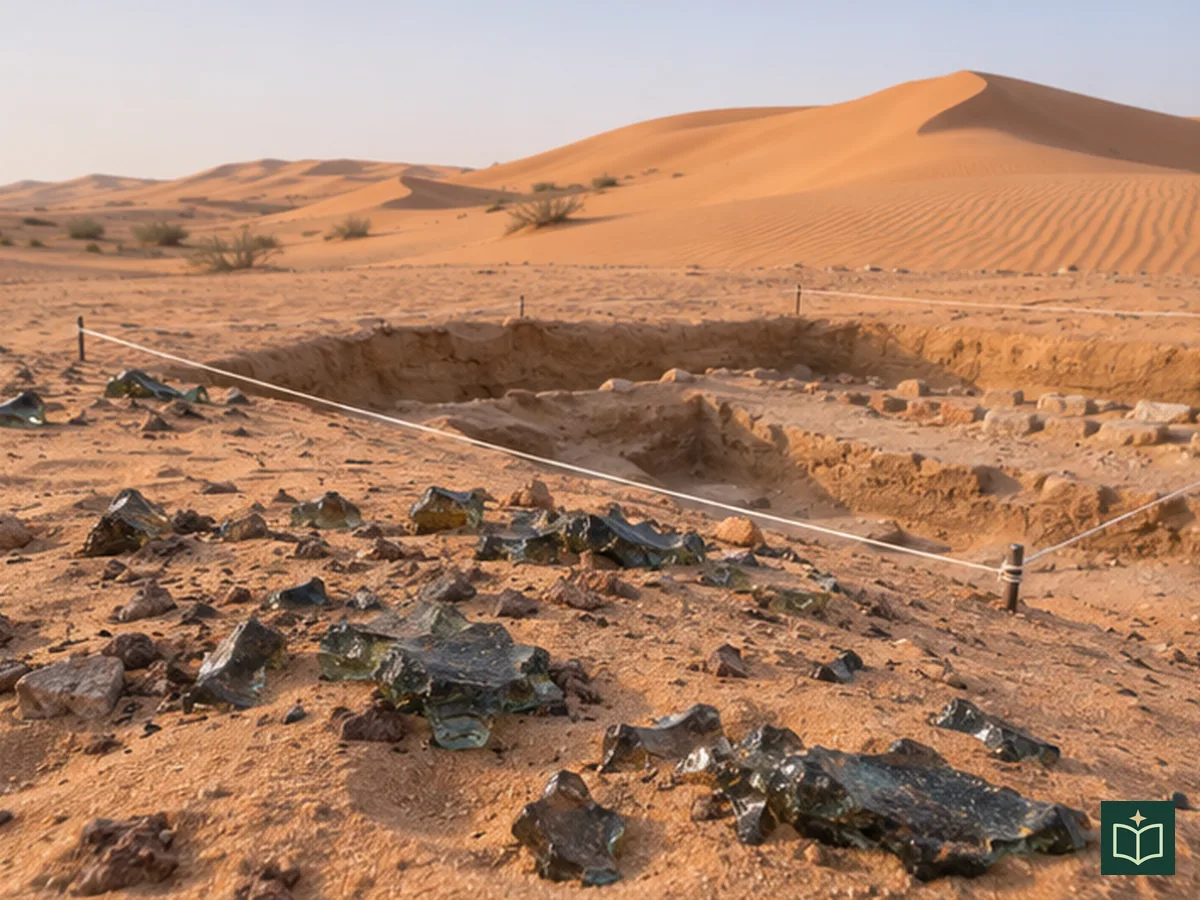
Saruq Al Hadid lies in the sand sea of southern Dubai, far from the coast. Its existence became known in 2002, when large spreads of dark slag, the glassy waste left by smelting metal, were noticed on the dunes from the air. The name itself, often translated as the ‘path of iron’, reflects this scatter. Excavations by Dubai Municipality and later by international teams revealed that the slag was only the surface sign of a much larger site. Over the following years archaeologists recovered tens of thousands of objects from sand layers up to several metres deep, making Saruq Al Hadid one of the richest sites in south-east Arabia.
What the site was
People used the area over a long span, from the Bronze Age onward, but its busiest phase came in the Iron Age, roughly three thousand years ago. The evidence points to a centre where metal was processed and worked on a large scale, with furnaces, slag heaps and crucible fragments. Despite the name, most metal found is copper alloy, such as bronze; iron objects are fewer. The copper itself almost certainly came from the Hajar mountains to the east. Why a workshop sat so far into the desert is still being studied, but water was probably more accessible then, and the site may have lain on routes connecting inland and coastal communities.
Weapons and tools
Among the most striking finds are copper-alloy weapons in large numbers: arrowheads, axe-heads, daggers and swords. Many seem to have been made on site. Some arrowheads are so numerous and so finely made that archaeologists wonder whether they were offerings rather than items meant for use. Tools such as chisels and fishhooks also appear, along with pottery, stone vessels, shell and beads of semi-precious stones. Analysis of the metal and slag helps researchers work out the techniques used, such as how hot the furnaces ran and which alloys the smiths preferred. Together these finds show skilled specialists working within a wider regional economy.
Gold and snakes
Saruq Al Hadid also yielded fine gold work, including rings, beads, small decorative sheets and pieces shaped with animal designs, showing that goldsmithing reached a high standard here. A recurring motif across the site is the snake. Snakes appear modelled on pottery vessels, cast in bronze and decorated on other objects. Similar snake imagery is known from other Iron Age sites in the UAE and Oman, including near Masafi and Al Qusais. Many researchers think it reflects a regional cult in which snakes were linked to water, fertility or protection. The volume of finished objects suggests that ritual activity and metalworking were closely connected at the site.
Iron Age south-east Arabia
Saruq Al Hadid belongs to a period of rapid change in the region. During the Iron Age, communities expanded settlement inland, helped by the falaj system of underground channels that tapped groundwater for farming. Villages, fortified hilltops and cemeteries multiplied. Domesticated camels were increasingly used for transport, opening new desert routes. Metal products, incense and other goods moved between Arabia, Iran and Mesopotamia. In that setting, a large production centre in the desert makes sense as part of a network linking mountains, oases and the coast. Seals and imported items found at the site hint at contacts with these wider trading systems.
Seeing it today
Many of the finds are displayed at the Saruq Al Hadid Archaeology Museum in the historic Al Shindagha district beside Dubai Creek, which opened in 2016. The desert site itself remains a research area, and work continues to date its layers more precisely and to understand how it was organised. Its significance goes beyond Dubai: it is one of the largest Iron Age metalworking sites known in the Arabian Peninsula, and it challenges the old assumption that the inland desert was empty in antiquity. It shows that south-east Arabia had craft industries, long-distance contacts and shared beliefs long before the rise of the modern emirates.
Sources & further reading
Figures are rounded and widely published; check the linked organisations for the latest editions. These organisations do not endorse this website.