A great atmospheric loop
The Sun heats the equator most strongly. Warm, moist air rises there, spreads towards the poles at high altitude, cools and sinks around 30 degrees north and south. The air then flows back along the surface towards the equator. Meteorologists call each of these loops a Hadley cell.
Bent by the spinning Earth
Because Earth rotates, air moving towards the equator is deflected—to the right in the Northern Hemisphere and to the left in the Southern. The result is the north-east trade winds north of the equator and the south-east trade winds to the south. They are among the most consistent winds on the planet.
The doldrums
Where the two trade-wind belts meet near the equator, air rises rather than blowing sideways. The surface winds can almost disappear for days, broken by sudden squalls and thunderstorms. Scientists call this the Intertropical Convergence Zone; sailors called it the doldrums, a word that now also means a state of listlessness.
Highways for sail
Navigators from the Atlantic to the Indian Ocean learned to use these winds. European ships swung south-west on the trades to reach the Americas and returned on the westerlies further north. Today the same winds shape rainfall, desert locations and hurricane tracks across the tropics.
Sources & further reading
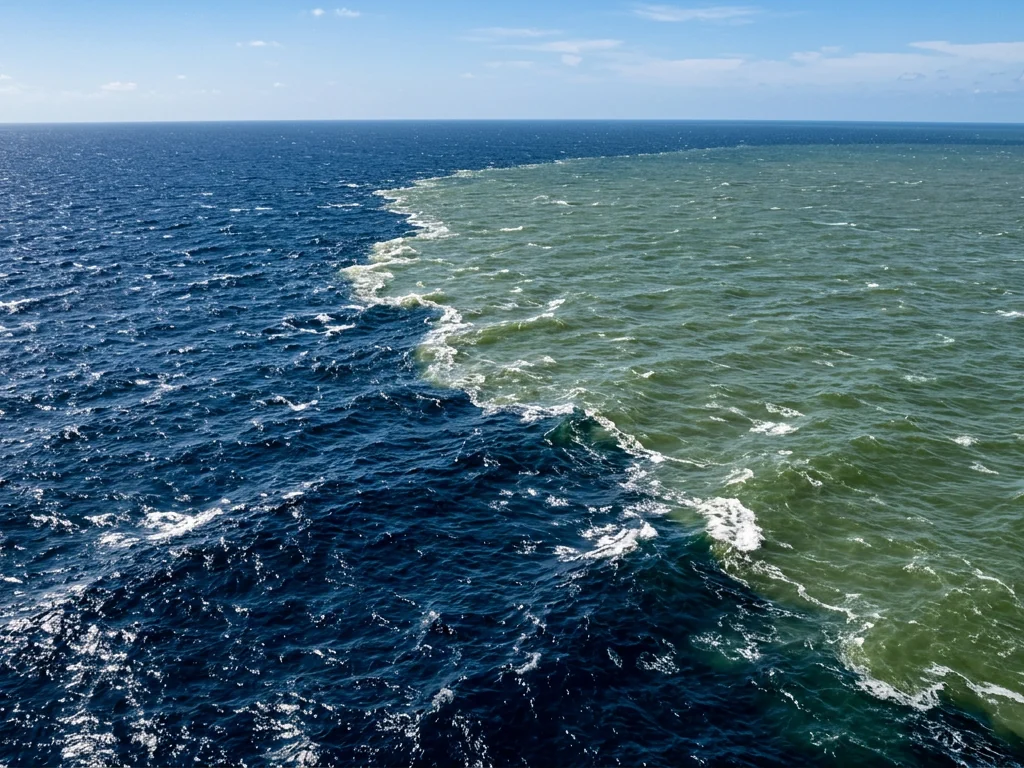
Wind belts shift north and south with the seasons; latitudes are approximate. Photograph: original AI-generated illustration (Adobe Firefly). Reference organisations do not endorse this website.