A current with an edge
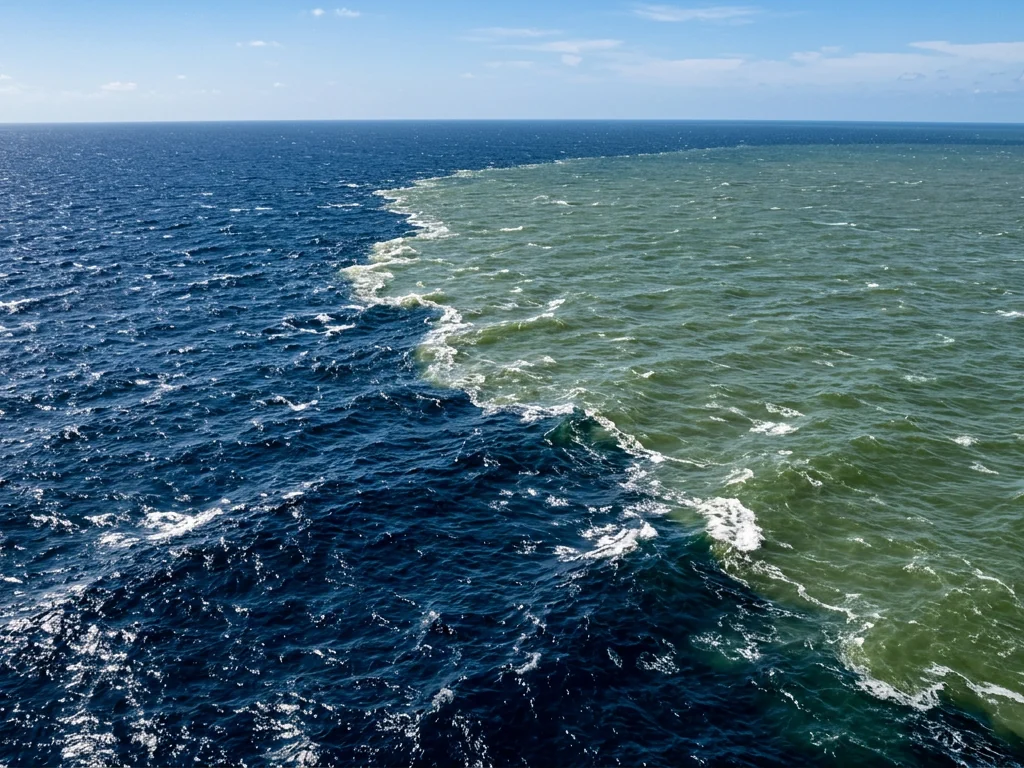
The Gulf Stream is one of the strongest currents in the world’s oceans. It is narrow—often less than 100 kilometres wide—and fast, with surface speeds that can exceed two metres per second. Its warm, salty water is a deeper blue than the surrounding sea, so the boundary can sometimes be seen from ships and aircraft.
Why it flows
Prevailing winds pile water into the western side of the North Atlantic, and Earth’s rotation squeezes the return flow into a jet along the coast of North America. Ocean scientists call this western intensification. The Gulf Stream is part of a wider loop of currents, the North Atlantic subtropical gyre.
Carrying warmth
After leaving the American coast near Cape Hatteras, the current meanders across the Atlantic. Its extension, the North Atlantic Drift, carries heat north-east. Together with prevailing westerly winds, this helps give north-western Europe milder winters than places at similar latitudes in Canada.
A current under watch
The Gulf Stream connects to the deeper Atlantic overturning circulation, which some climate studies suggest may be slowing. Scientists monitor it with moored instruments, floats and satellites. It also matters every day: ships ride it to save fuel, and its warm water can strengthen hurricanes that pass over it.
Sources & further reading
Speeds and widths vary with season and location; figures are typical, rounded values. Photograph: original AI-generated illustration (Adobe Firefly). Reference organisations do not endorse this website.