Where tides come from
Tides are caused mainly by the gravitational pull of the Moon, with a smaller contribution from the Sun. As the Earth rotates, most coasts experience two high and two low tides roughly every 24 hours and 50 minutes. When the Sun and Moon align, during new and full moons, the tidal range is largest; these are spring tides. In most of the open ocean, the range is under a metre, but coastline shape can amplify it dramatically. Canada’s Bay of Fundy has the world’s highest tides, with ranges that can exceed 15 metres. Channels and straits between islands can also create fast tidal currents.
Barrages and lagoons
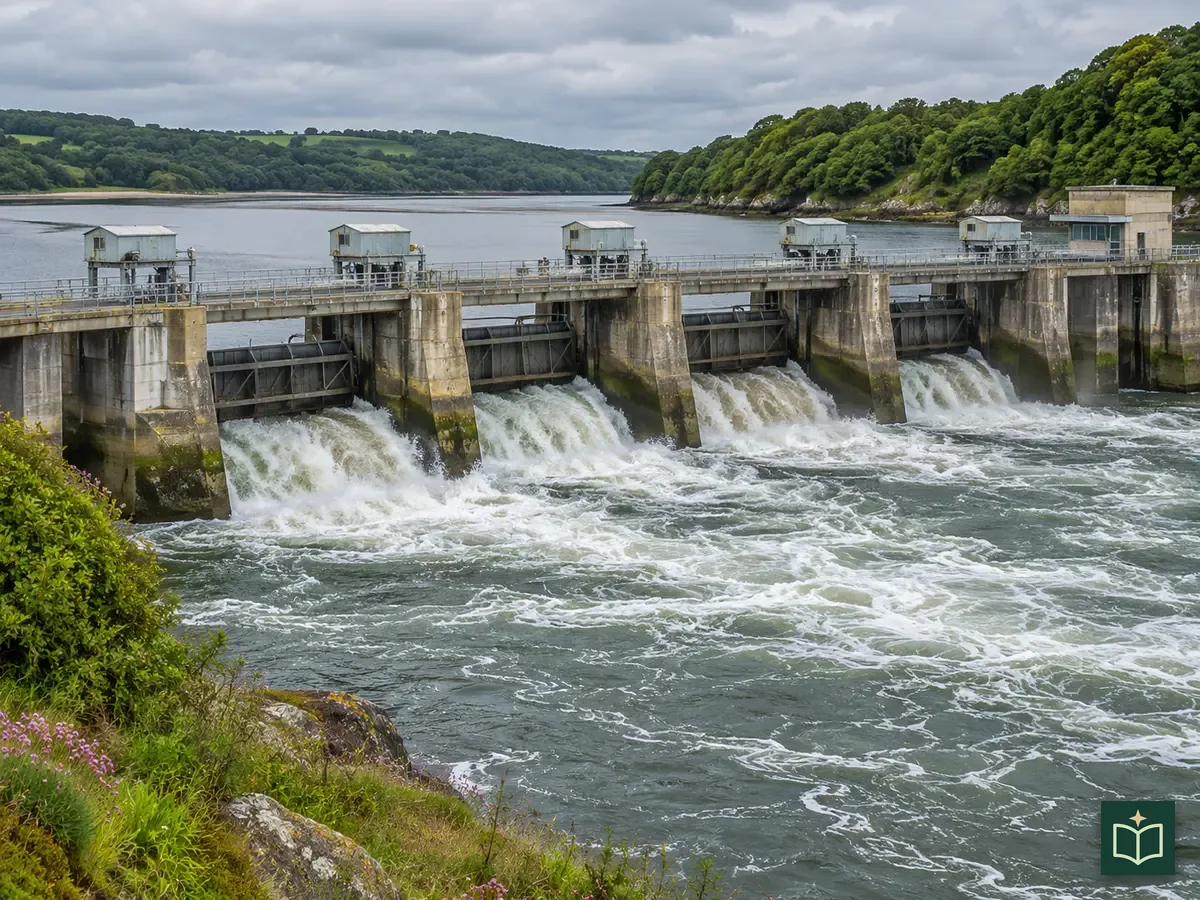
The oldest approach is the tidal barrage, a dam built across an estuary. Sluice gates let the rising tide fill the basin; at high tide they close, and when the sea outside has fallen, water is released through turbines. Some barrages generate on both incoming and outgoing tides. France’s La Rance plant, opened in 1966, has a capacity of 240 megawatts and generates electricity reliably to this day. South Korea’s Sihwa Lake station, opened in 2011 using an existing seawall, has a capacity of about 254 megawatts, making it the largest. Tidal lagoons, enclosed by walls built offshore, are a proposed variation.
Underwater turbines
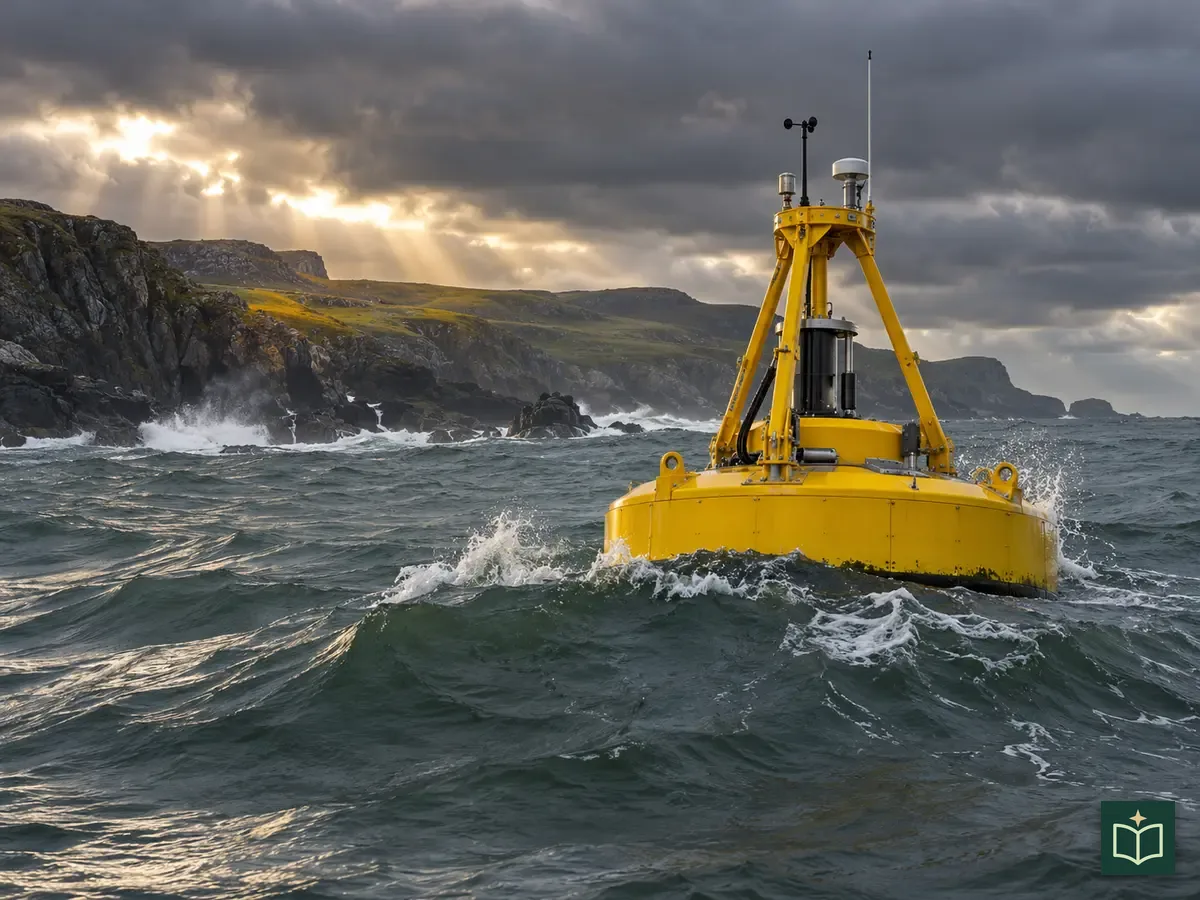
Tidal stream generators work more like underwater wind turbines, placed in fast-flowing channels. Because seawater is about 800 times denser than air, slower currents can turn a turbine with useful force. The MeyGen project in Scotland’s Pentland Firth has operated a small array of seabed turbines since 2016, and other devices have been tested in Orkney, Nova Scotia, France and China. Tidal stream avoids building large dams, which reduces environmental disruption, but the sea is a harsh place for machinery. Corrosion, marine growth, storms and the cost of maintenance far offshore are persistent engineering challenges for developers, and they push up the cost of every megawatt-hour.
The great advantage
Unlike wind and solar power, tides are almost perfectly predictable. Their timing and height can be calculated years in advance from astronomy. That predictability makes tidal power valuable for grid planners, even though output still varies through each day and across the monthly cycle of spring and neap tides. Different sites along a coast reach high tide at different times, so combining several could smooth supply. Tidal plants also last a long time: La Rance has operated for more than half a century. These attributes explain why governments with strong tidal resources, notably the United Kingdom, France, Canada and South Korea, keep supporting research.
Why so little is built
Despite these advantages, tidal energy supplies only a tiny fraction of world electricity. Only a handful of locations have tidal ranges or currents strong enough to be economic, and many are far from demand centres. Barrages are very expensive and can change estuary ecosystems, affecting sediment, fish migration and bird habitats; proposals such as a Severn Barrage in Britain have been studied repeatedly but never built. Tidal stream technology is still early in its development, with high costs per megawatt-hour. In the Gulf, the tidal range is generally modest, so the region’s marine energy focus has been on other resources such as solar and offshore gas.
What to watch
The future of tidal power depends on whether tidal stream costs can fall as wind and solar costs did, through larger turbines, standardised designs and bigger arrays. Some governments have offered dedicated support in auctions to help the industry reach scale. Island communities and remote coastal grids are promising early markets, since they often rely on expensive imported diesel. Environmental monitoring of existing turbines, including their effects on marine mammals and fish, will shape public acceptance. Tidal power is unlikely to become a large share of global supply, but it could become a useful, predictable component of electricity systems in well-endowed coastal regions.
Sources & further reading
Figures are rounded and widely published; check the linked organisations for the latest editions. These organisations do not endorse this website.