Bicycle makers with a method
Orville and Wilbur Wright ran a bicycle business in Dayton, Ohio. They studied earlier experimenters such as Otto Lilienthal, who died after a glider crash in 1896. The brothers concluded that the key unsolved problem was not lift or power but control: how to keep a machine balanced and steer it in three dimensions.
Wing warping and a wind tunnel
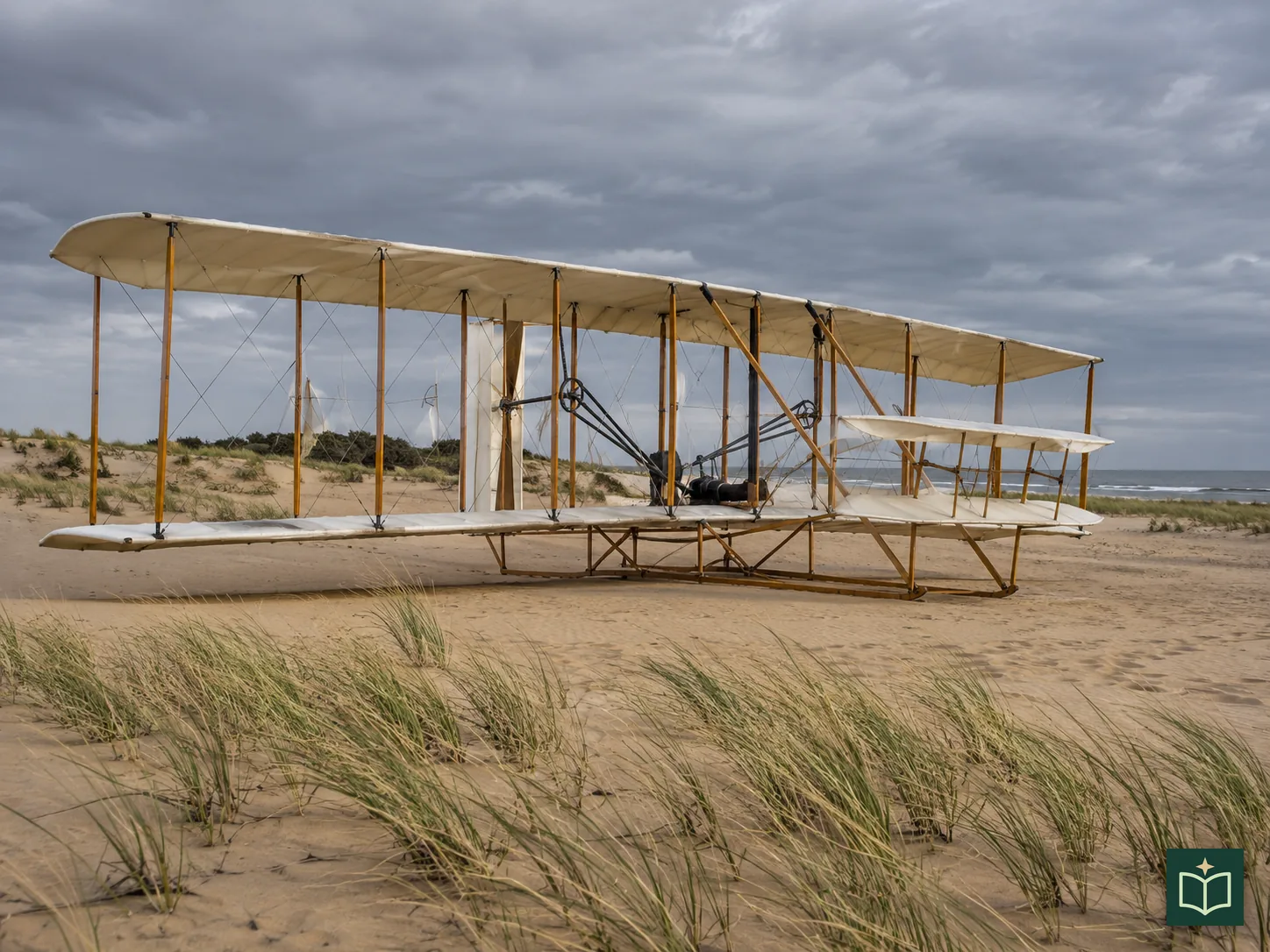
They developed wing warping, twisting the wingtips to roll the aircraft, linked with a movable rudder. After disappointing glider tests showed that published lift data were wrong, they built a small wind tunnel in 1901 and tested hundreds of wing shapes. Their own measurements guided the design of the successful 1902 glider.
The engine and the propellers
Finding no suitable lightweight engine, their mechanic Charlie Taylor built one of about 12 horsepower. The Wrights designed propellers as rotating wings, achieving high efficiency. On 17 December 1903, Orville flew for 12 seconds; by the fourth flight that day, Wilbur stayed up for 59 seconds over about 260 metres.
Slow recognition, fast progress
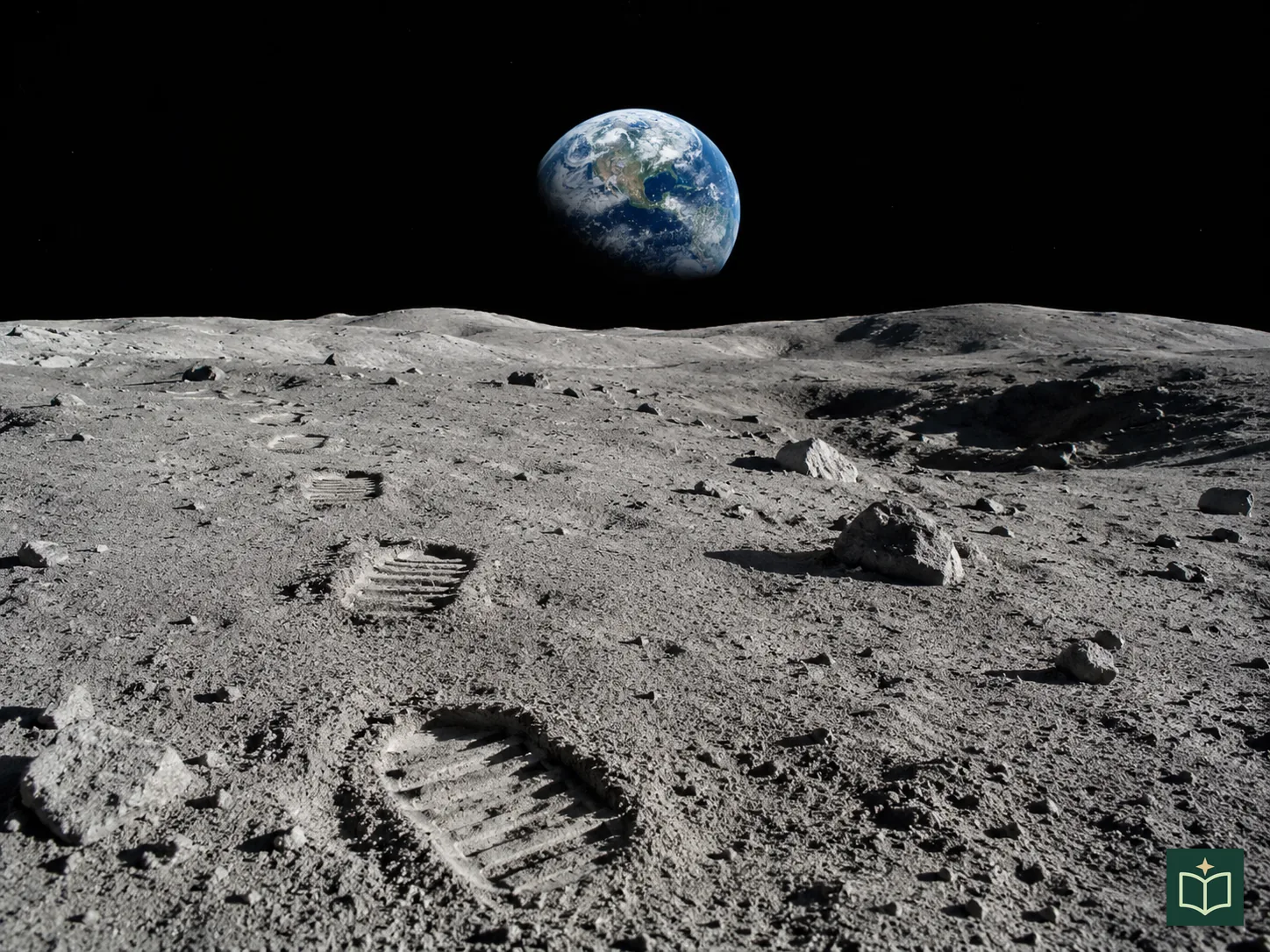
Few people paid attention at first. Public demonstrations in France and the United States in 1908 made the brothers famous. Aviation then advanced astonishingly fast: Louis Blériot crossed the English Channel in 1909, and within 66 years of Kitty Hawk, astronauts had landed on the Moon. The original Flyer is displayed at the Smithsonian.
Sources & further reading
- Smithsonian National Air and Space Museum · 1903 Wright Flyer ↗
- US National Park Service · Wright Brothers National Memorial ↗
Figures are rounded and widely published; check the linked organisations for the latest editions. These organisations do not endorse this website.