An old idea
Ancient Egyptian rulers dug canals linking the Nile to the Red Sea. The modern canal was promoted by French diplomat Ferdinand de Lesseps, whose company began work in 1859. Construction relied heavily on Egyptian forced labour in the early years, and many workers died. Later stages used dredgers and steam machinery.
A sea-level shortcut
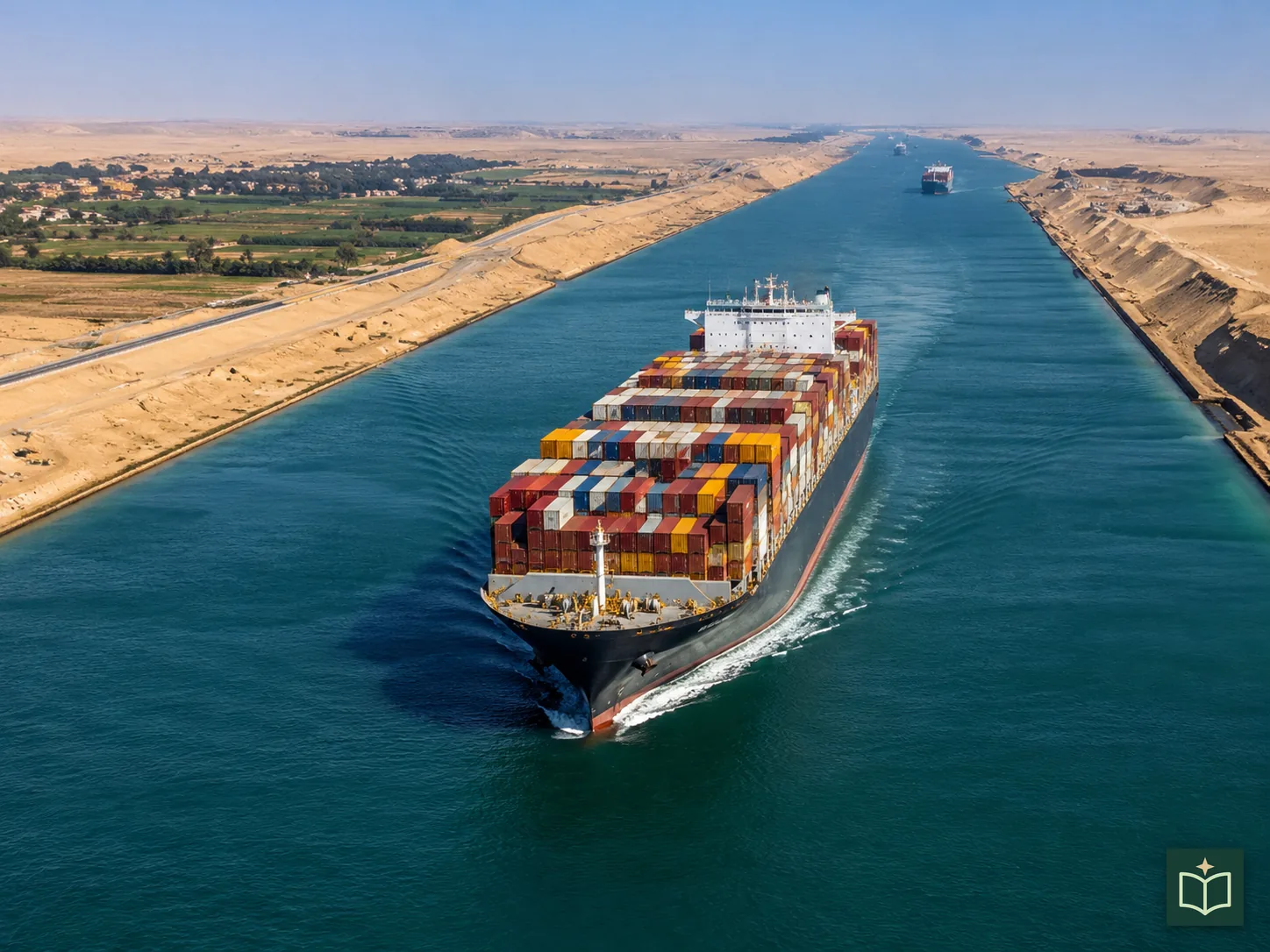
Because the Mediterranean and Red Sea are at similar levels, the canal needs no locks. It opened in November 1869 with lavish ceremonies. Voyages between Europe and Asia shortened dramatically, favouring steamships, which could refuel at coaling stations, over sailing ships, which struggled with the Red Sea’s winds.
Debt and control
Egypt’s ruler, burdened by debt, sold his shares to Britain in 1875. British forces occupied Egypt in 1882, partly to protect the route to India. In 1956, President Gamal Abdel Nasser nationalised the canal company. Britain, France and Israel invaded; pressure from the United States and the Soviet Union forced their withdrawal—a turning point for European empires.
A modern artery
The canal was closed from 1967 to 1975 after the Six-Day War. It has since been widened and deepened, with a major parallel channel added in 2015. In March 2021 the container ship Ever Given blocked it for six days, holding up hundreds of vessels. Security threats in the Red Sea have also diverted ships around Africa again at times.
Sources & further reading
Figures are rounded and widely published; check the linked organisations for the latest editions. These organisations do not endorse this website.