Before glasses
As people age, the eye's lens stiffens and focusing on close objects becomes harder, a condition called presbyopia. Medieval scholars sometimes used polished 'reading stones'—domes of glass or rock crystal—to magnify text. The eleventh-century scholar Ibn al-Haytham had already studied how lenses bend light.
Invention in Italy
Around 1290, glassmakers in northern Italy, probably in Pisa or Venice, began mounting two convex lenses in frames riveted together. A Dominican friar, Giordano da Pisa, mentioned in a 1306 sermon that the art of making spectacles had been discovered less than twenty years before. The inventor's name is unknown.
Spreading through Europe
Spectacles appear in paintings by the 1350s and became common goods sold by pedlars. Concave lenses to correct short sight followed in the fifteenth century. The printing press created a surge in readers—and in demand for glasses. Arms that hooked over the ears were a later, eighteenth-century improvement.
A quiet revolution
By letting scribes, merchants, jewellers and weavers keep working into old age, glasses extended skilled careers by decades. Today more than a billion people are estimated to need, but lack, basic glasses—one of the cheapest fixes for lost productivity in the world.
Sources & further reading
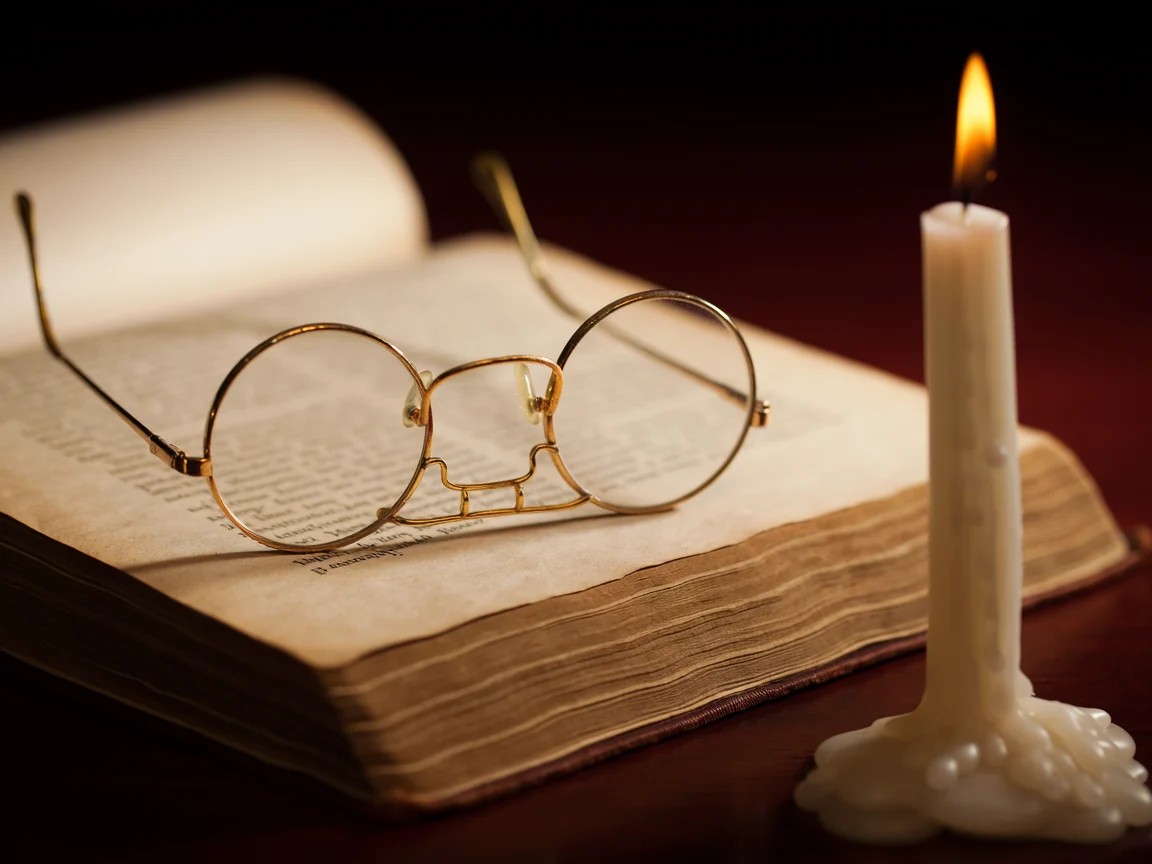
The exact place and inventor of the first spectacles are unknown. Photograph: original AI-generated illustration (Adobe Firefly). Reference organisations do not endorse this website.