Ancient and deep
Lake Baikal formed in a rift valley where the Earth's crust is pulling apart. At around 25 million years old, it is the oldest lake known, and with a maximum depth of about 1,642 metres, it is also the deepest.
A fifth of fresh water
Because it is so deep, Baikal holds about 23,000 cubic kilometres of water, roughly a fifth of the world's unfrozen fresh surface water. More than 300 rivers flow in, but only one, the Angara, flows out.
Unique life
Isolation has allowed unique species to evolve, including the nerpa seal, the oily golomyanka fish and many invertebrates found nowhere else. Baikal was named a UNESCO World Heritage Site in 1996.
Winter ice
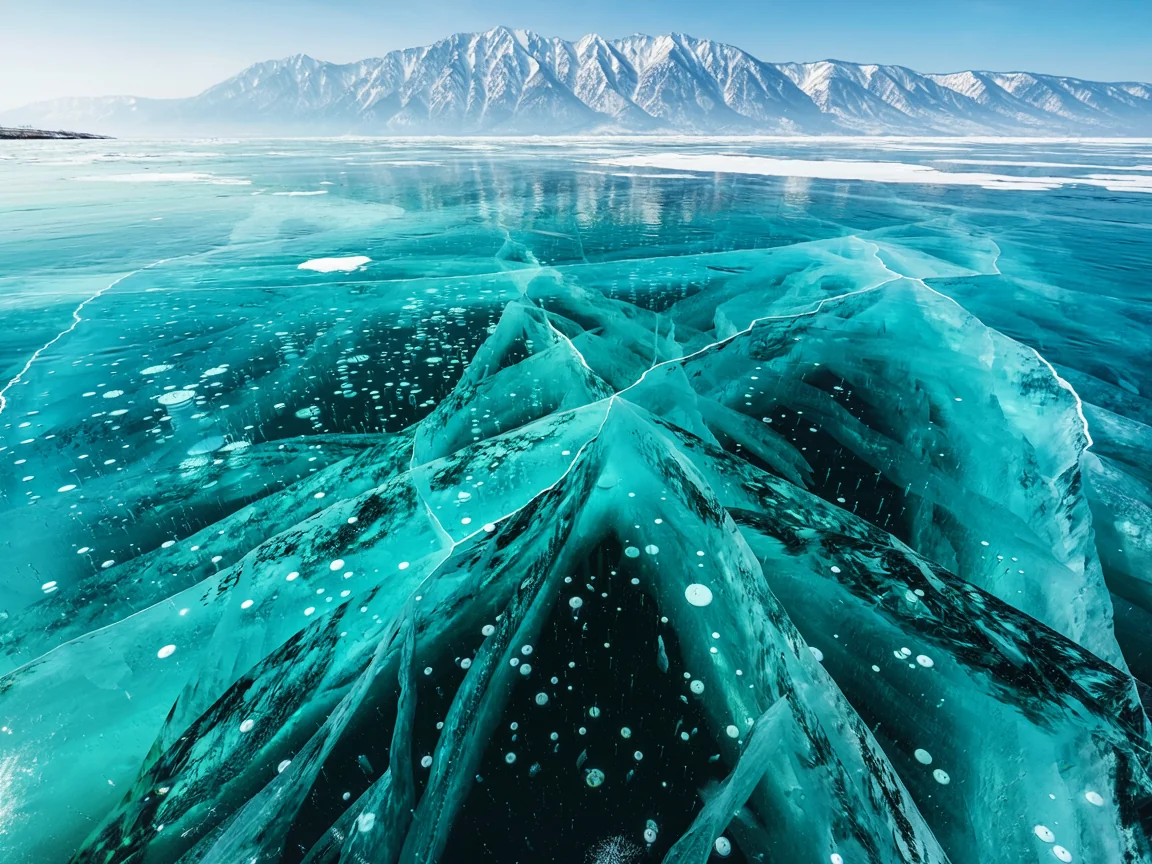
In winter, the lake freezes, with clear ice that can be more than a metre thick. Ice roads cross it, and trapped methane bubbles and cracks create striking patterns. Pollution and tourism pressure are concerns.
Sources & further reading
Photograph: original AI-generated illustration (Adobe Firefly). Reference organisations do not endorse this website.