From a frontier principality
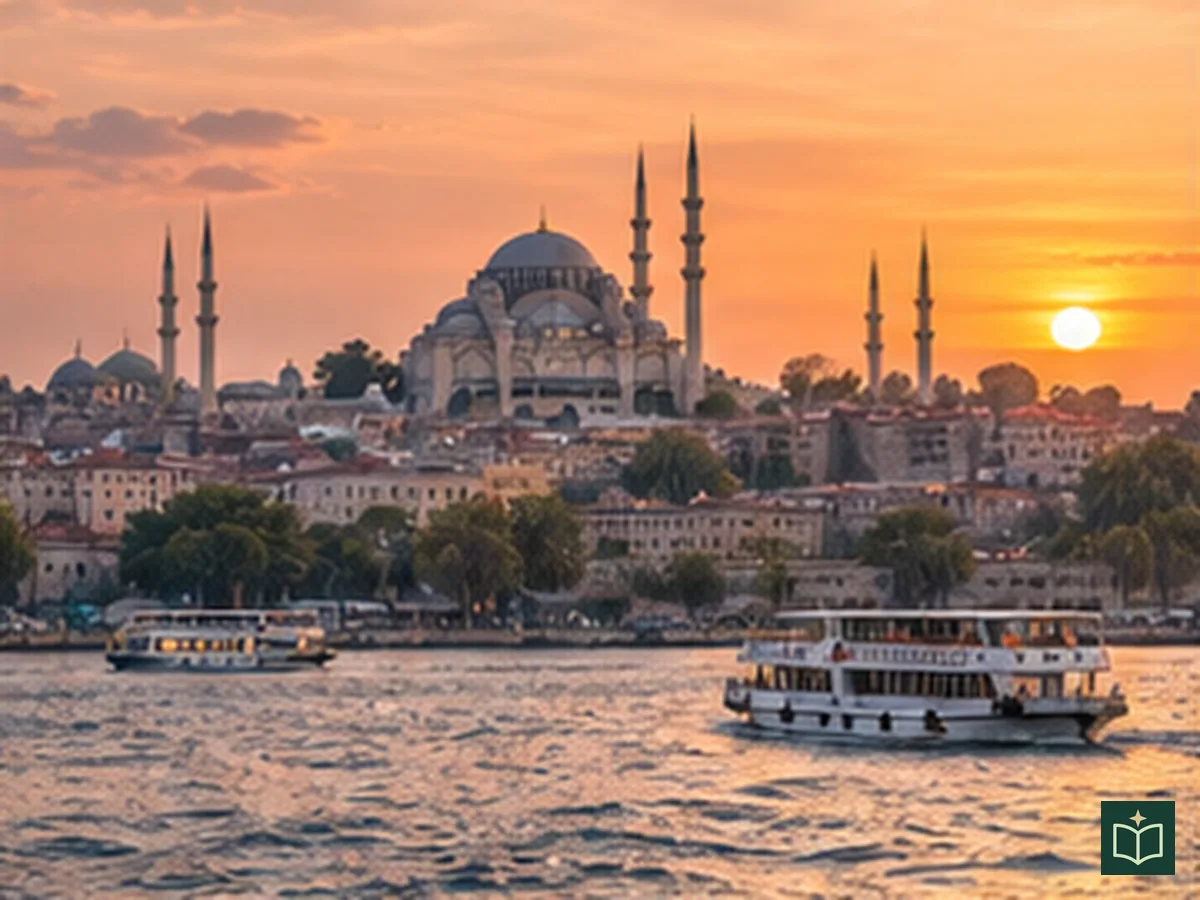
The Ottoman state began around 1299 as one of several small Turkish principalities in north-western Anatolia, on the frontier with the Byzantine Empire. Its founder, Osman I, gave the dynasty its name, Osmanlı in Turkish. His son Orhan took the city of Bursa in 1326 and made it a capital. In the 1350s Ottoman forces crossed into Europe, and within decades they controlled much of the Balkans, moving the capital to Edirne. A crushing defeat by the Central Asian conqueror Timur at Ankara in 1402 nearly destroyed the state, but it recovered. In 1453 Sultan Mehmed II captured Constantinople, which became the capital, later commonly called Istanbul.
At its height
In the sixteenth century the empire became a world power. Selim I conquered Syria and Egypt in 1516 and 1517, ending the Mamluk Sultanate and bringing the holy cities of Makkah and Madinah under Ottoman protection. His son Suleiman, who reigned from 1520 to 1566 and is known in Turkish as Kanuni, the Lawgiver, took Belgrade, Rhodes and much of Hungary, besieged Vienna in 1529, and added Baghdad and Iraq. Ottoman fleets operated across the Mediterranean, the Red Sea and into the Indian Ocean. At various times the empire spanned parts of three continents, from Hungary and the Crimea to Algeria, Yemen and Iraq.
How it was governed
The sultan stood at the top, advised by a council led by the grand vizier. A distinctive feature was the devshirme, a levy of Christian boys from the Balkans who were converted to Islam and trained for service in the palace, the administration or the elite infantry corps, the Janissaries. Talented recruits could rise to the highest offices. Cavalry soldiers were supported by timars, grants of revenue from land. Islamic courts, led by judges called kadis, applied sharia alongside sultanic law codes, known as kanun. Religious communities, including Orthodox Christians, Armenians and Jews, largely managed their own internal affairs, an arrangement later formalised as the millet system.
Change, not simple decline
Historians once described the Ottoman Empire after Suleiman as being in steady decline. That view has been heavily revised. The empire remained a major power for centuries, adjusting its army, finances and administration. Nevertheless, it faced growing pressure. A failed second siege of Vienna in 1683 led to the Treaty of Karlowitz in 1699, the first major loss of territory in Europe. Russia and Austria expanded at Ottoman expense, and nationalist movements in the Balkans, beginning with Serbia and Greece in the early nineteenth century, broke away. European economic power, supported by industrialisation and trade privileges, increasingly reshaped the empire’s economy and its relationship with neighbouring powers.
Reform and reaction
In response, Ottoman leaders launched far-reaching reforms. The Tanzimat, meaning reorganisation, began in 1839 and introduced new laws, legal equality for subjects of different religions, modern schools, a reorganised army and new systems of taxation. In 1876 the empire adopted its first constitution and parliament, though Sultan Abdulhamid II suspended them two years later. In 1908 the Young Turk revolution restored the constitution. Railways, telegraphs and newspapers spread, linking provinces from the Balkans to Baghdad and the Hejaz. Yet the empire also lost territory in wars with Russia, in North Africa and in the Balkan Wars of 1912 and 1913, and it carried heavy foreign debts.
The end of the empire
In 1914 the Ottoman Empire entered the First World War on the side of Germany and Austria-Hungary. It won notable victories, including at Gallipoli, but suffered huge losses, and the war brought immense suffering, including mass deportations and killings of Armenians. By 1918 the empire was defeated, and its Arab provinces came under British and French control. In Anatolia, a nationalist movement led by Mustafa Kemal fought the post-war settlement. The sultanate was abolished in 1922, the Republic of Turkey was proclaimed in 1923, and the caliphate was abolished in 1924. The empire’s legacy shapes borders, cities, cuisines, laws and languages across the region today.
Sources & further reading
Figures are rounded and widely published; check the linked organisations for the latest editions. These organisations do not endorse this website.