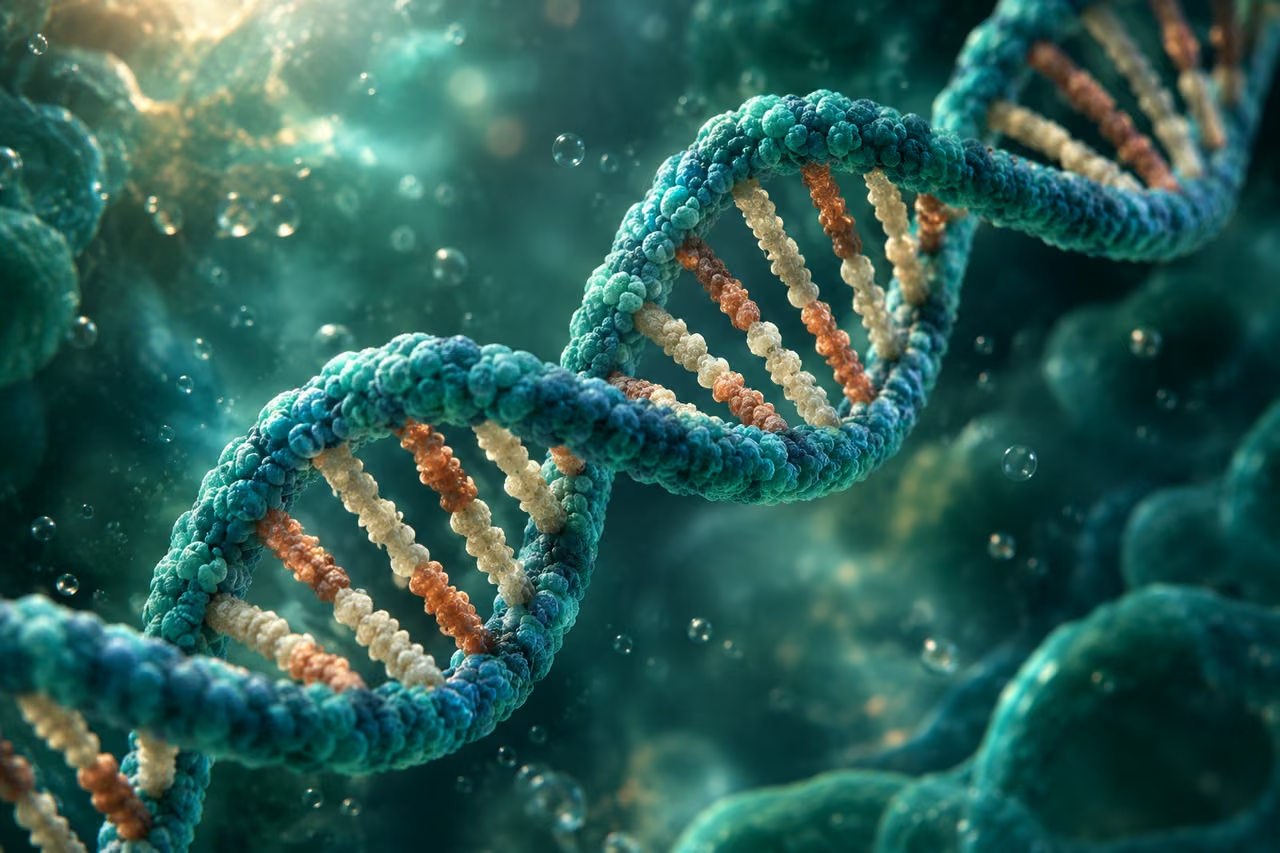
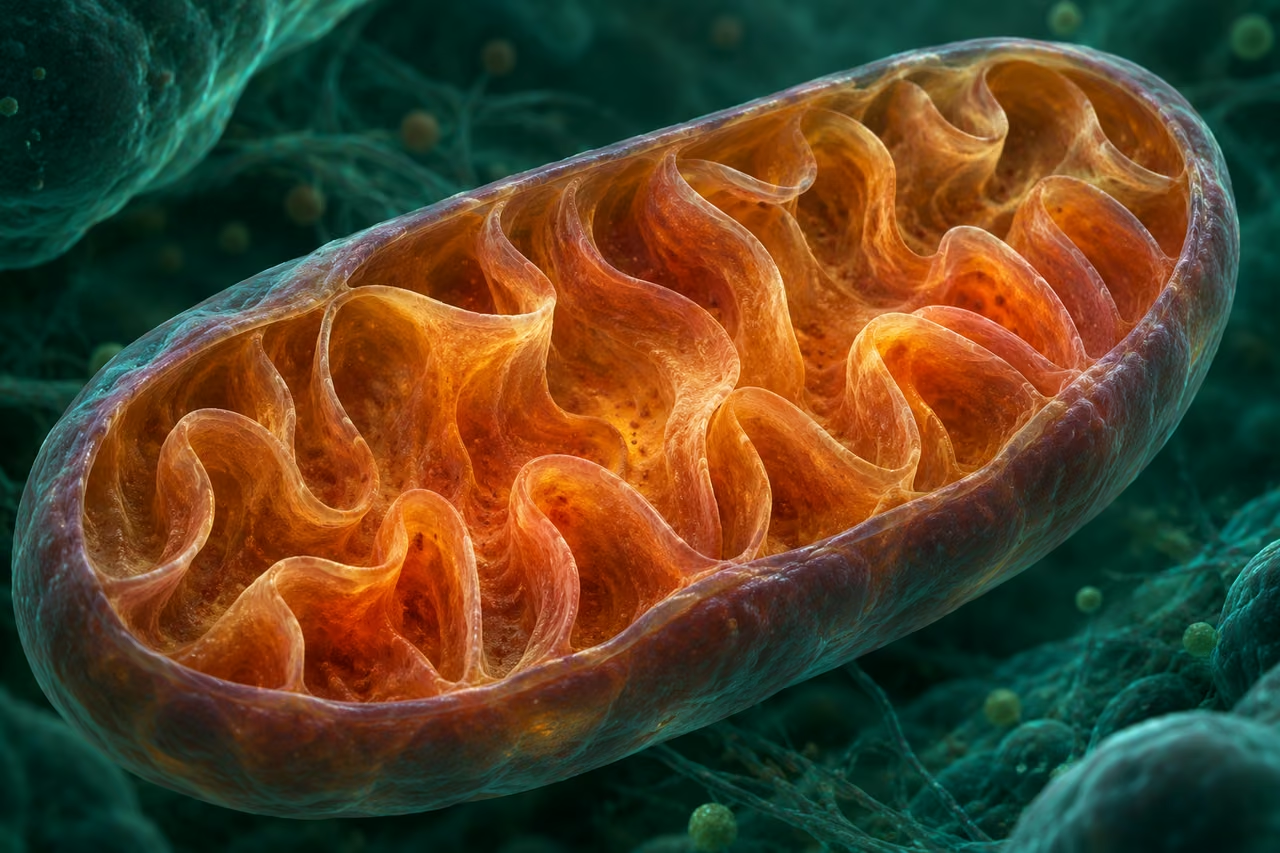
Sunlight begins with a nuclear balance sheet.
Deep inside the Sun, hydrogen becomes helium and a difference in rest mass becomes released energy.
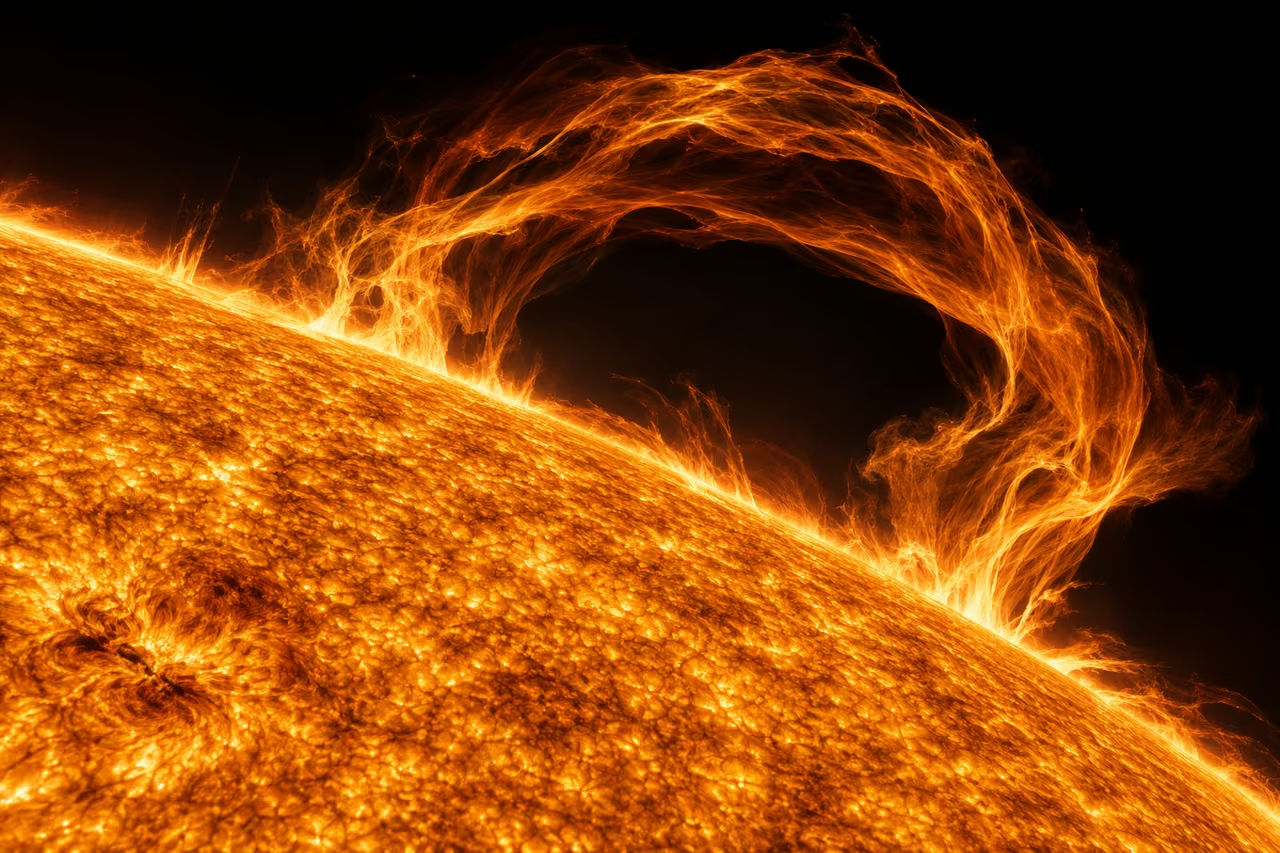
Conceptual AI illustration. Colours and scales are illustrative; not a documentary image or exact scientific model.
Sunlight begins in a place we cannot see directly. Understanding its engine means asking what releases energy, why the reaction proceeds, and how energy reaches the outside.
From mystery
to mechanism.
- 01
Create the conditions
The Sun’s own gravity confines a dense plasma. The core is extraordinarily hot, while electrically charged nuclei still repel one another.
- 02
Change the nuclei
The proton–proton chain begins by combining protons. Quantum tunnelling and nuclear interactions enable a sequence that ultimately builds helium from hydrogen.
- 03
Transport the energy
Released energy moves outward through the solar interior by radiation and convection before light escapes from the visible layers.
The engine and the outward journey
Swipe across the mechanism →
Hydrogen is processed into helium through reaction chains.
Radiation and moving plasma carry energy outward.
The visible layer is much cooler than the core.
Conceptual regions, not a scale model. Transport is not a single uninterrupted photon flight.
The accounting that makes a star shine
Fusion releases energy when the total rest mass of its products is lower than that of the initial reacting system. The difference appears as energy through E = mc². Energy is conserved: it changes form. A small mass difference matters because the conversion factor is enormous.
Why the chain does not happen instantly
Protons have the same positive charge and repel. The opening proton–proton reaction also involves the weak interaction, making it exceptionally slow. DOE describes it as the first step in the Sun’s primary nuclear cycle. Temperature alone is therefore an incomplete explanation; reaction probabilities, density and the star’s vast inventory of particles all belong in the account.
A star and a laboratory choose different routes
Much terrestrial fusion research focuses on deuterium and tritium, hydrogen isotopes whose reaction produces helium and a neutron. That is not the principal reaction chain powering the Sun. Nor is producing fusion energy the same achievement as operating a practical electricity plant: confinement, heat extraction, materials and an entire engineering system still matter.
Sources & further reading.
- NASA · Sun facts and interior structure
- DOE · Fusion reactions
- DOE · Proton-proton fusion: powering the Sun
Sources checked 15 November 2026. Explanations simplify complex systems and identify their limits. These organisations do not endorse Canvas of Knowledge.