The living archive inside you.
Inside your cells, a molecular sequence becomes messages, machinery and possibilities. The extraordinary part is how selectively it is used.
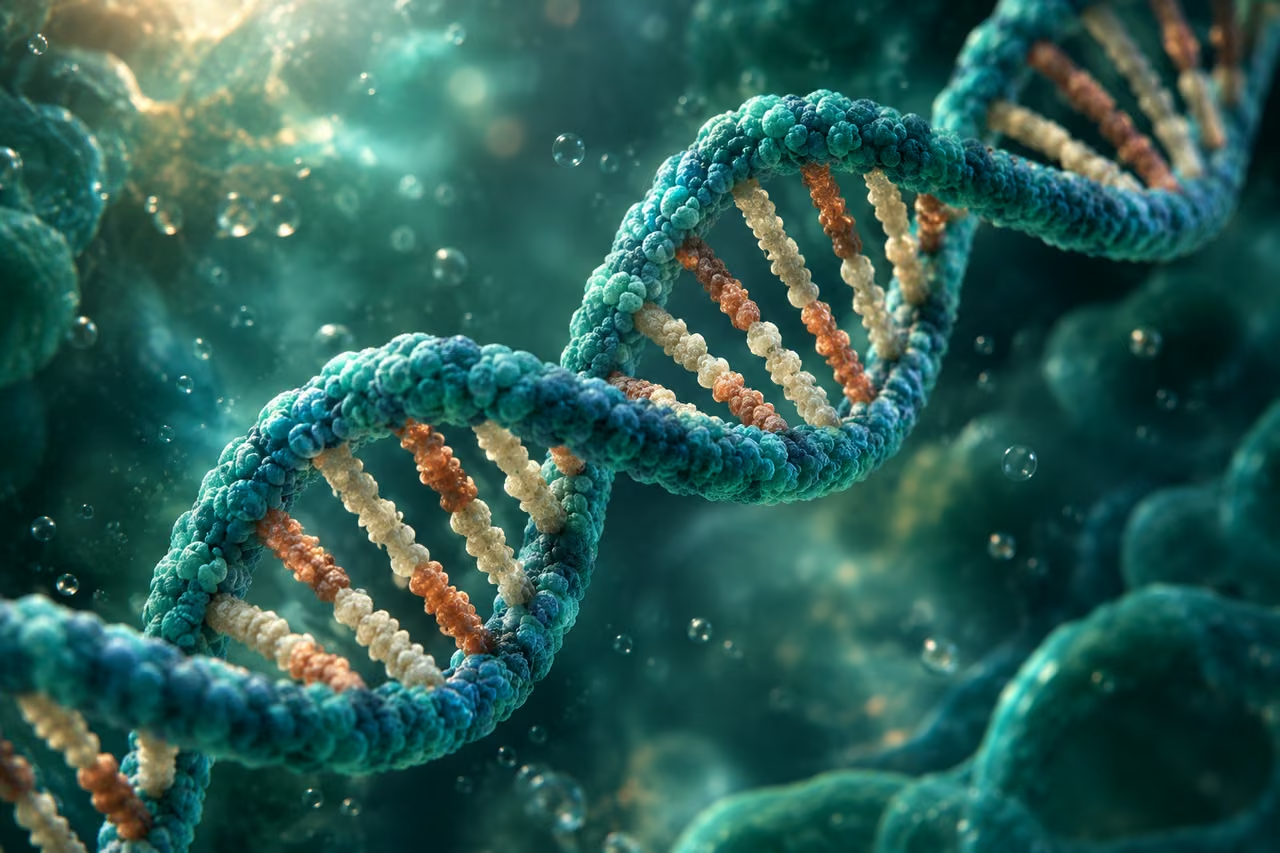
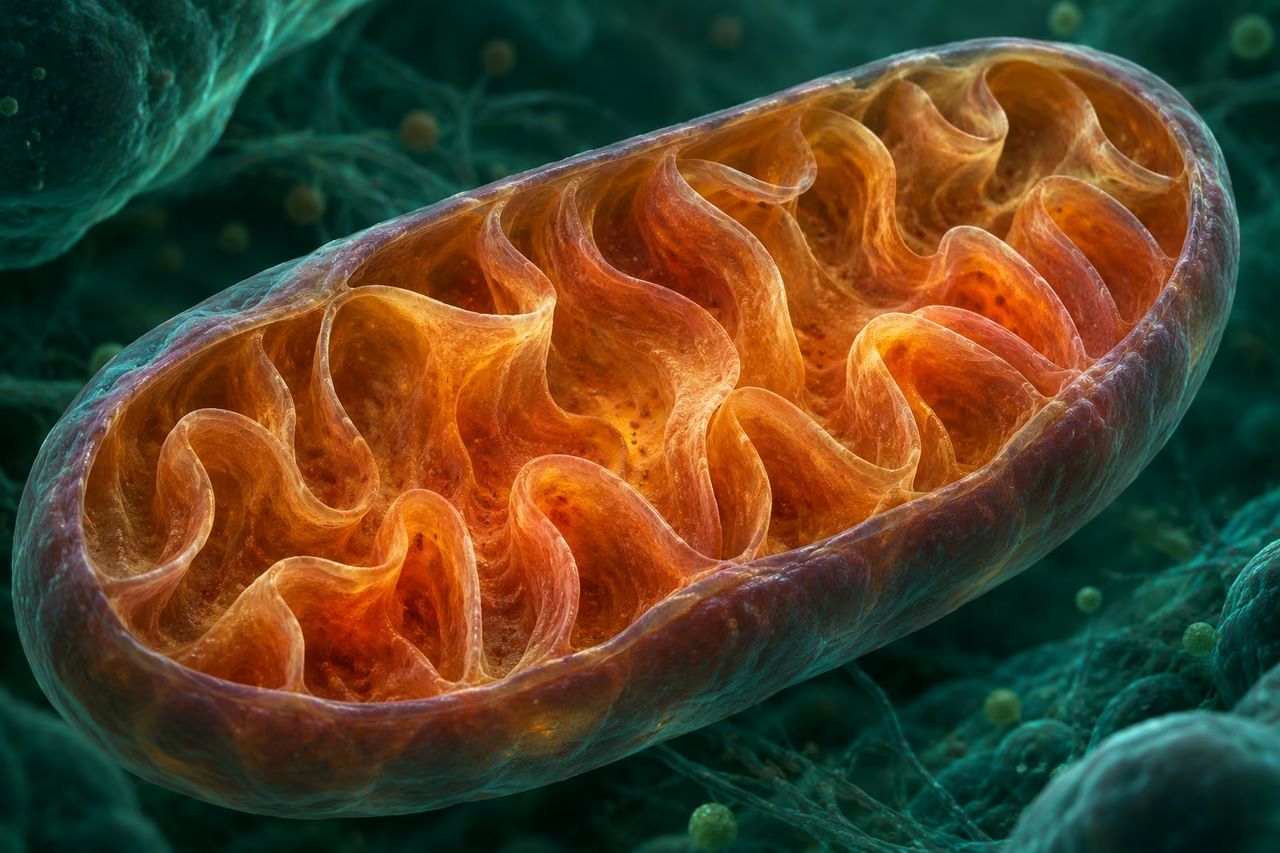
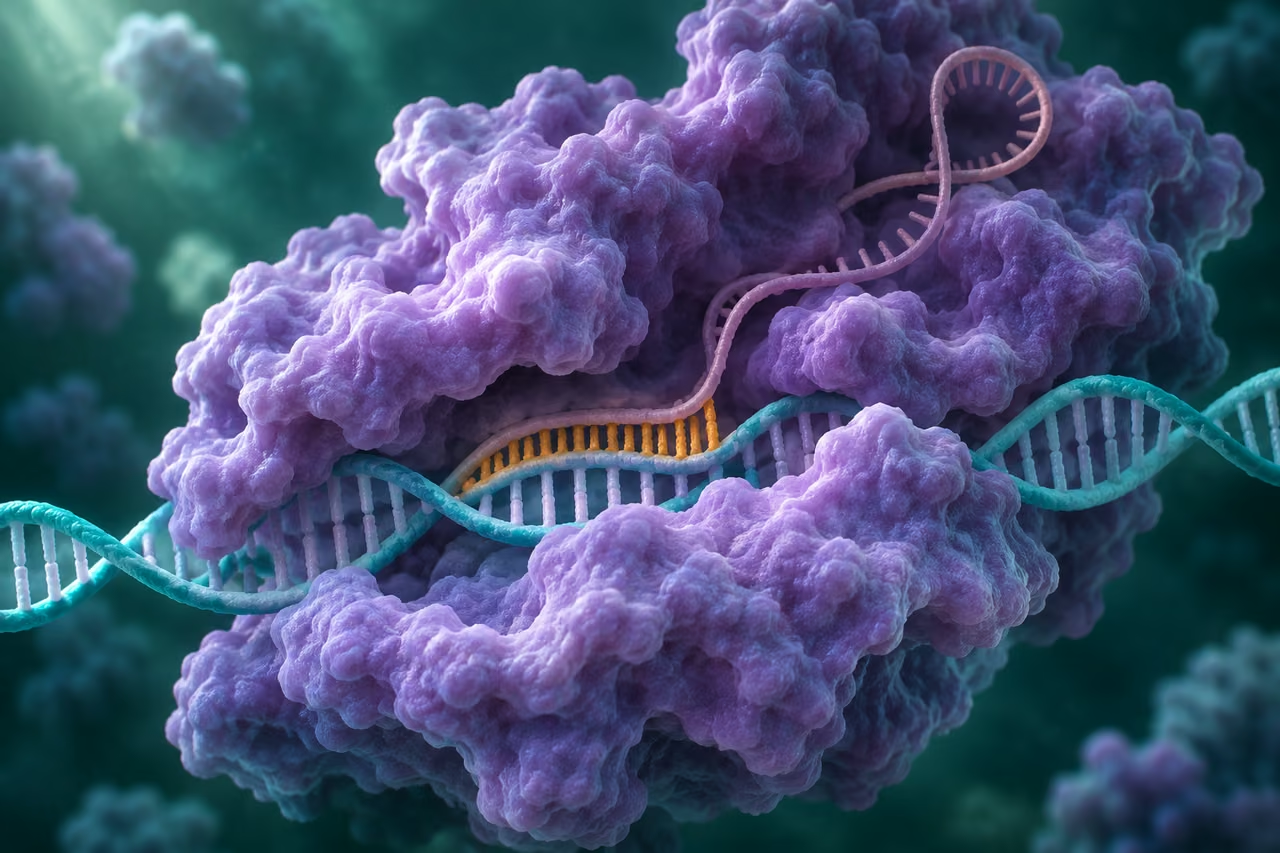
Conceptual AI illustration. Colours and scales are illustrative; not a documentary image or exact scientific model.
A nerve cell and a skin cell can carry essentially the same genetic archive while doing radically different jobs. Understanding that difference takes us beyond the familiar double helix to the regulation of information.
From mystery
to mechanism.
- 01
Store the sequence
DNA carries an ordered sequence of four chemical bases. Complementary pairing helps cells copy that information when they divide.
- 02
Make a working message
For a protein-coding gene, transcription produces an RNA message from DNA. The archive is used without turning the original molecule into protein.
- 03
Build and regulate
Cellular machinery translates the message into an amino-acid chain. Regulation controls which messages are made, when they appear and how much is produced.
From stored information to cellular work
Swipe across the mechanism →
Sequence held in a molecular archive
A working message for a protein-coding gene
An amino-acid chain that folds and functions
Conceptual sequence; molecules are not shown to scale. Regulation acts throughout.
One copy is not one cell
The headline is an approximate sequence size, not an exact count for every person or cell. Most human nucleated cells carry two copies of the nuclear genome, one inherited from each parent. DNA is organised into chromosomes; mitochondria also contain a much smaller, separate genome.
Access changes the outcome
DNA is packaged with proteins, including histones. Chemical modifications to DNA and associated proteins can influence gene activity without rewriting the DNA sequence. This epigenetic regulation helps explain how cells maintain different working identities. Think of an archive with controlled access, rather than a script read identically in every room.
Variation is not a verdict
People differ at many positions in their genomes, including larger structural differences. Many variants have no known functional consequence. Others matter in particular contexts. An observed trait can reflect many genes alongside development, environment and experience, so finding a sequence difference does not automatically explain a person.
Sources & further reading.
Sources checked 15 November 2026. Explanations simplify complex systems and identify their limits. These organisations do not endorse Canvas of Knowledge.