Animal, plant and rock
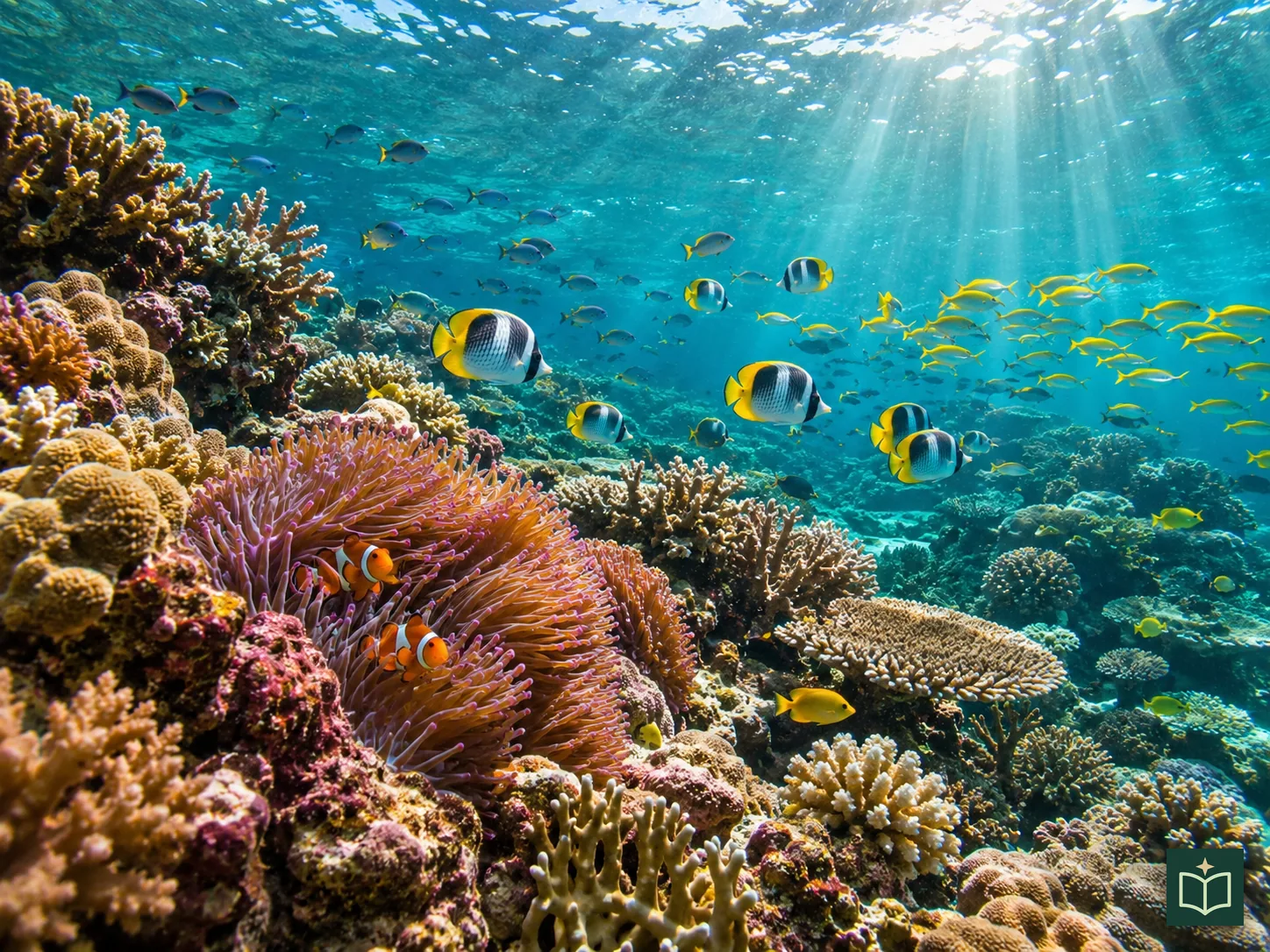
A coral is a colony of tiny animals called polyps. Inside their tissues live microscopic algae, zooxanthellae, which photosynthesise and pass sugars to the coral. In return, the algae get shelter and nutrients. This partnership powers the coral’s growth, which is why reef-building corals need clear, warm, sunlit water.
Where reefs grow
Most reef-building corals live in tropical seas between about 30° north and south. The Great Barrier Reef off Australia, the largest reef system, stretches about 2,300 kilometres. The Red Sea and the Arabian Gulf host reefs that tolerate unusually high temperatures and salinity, making them important for scientists studying heat-resistant corals.
Why they matter
Reefs protect coastlines by absorbing wave energy, support fisheries that feed millions of people, attract tourism, and are a source of compounds studied for medicines. They are also some of the most biologically diverse places on the planet, home to fish, molluscs, sponges, turtles and countless other creatures.
Under pressure
When water stays too warm for too long, corals expel their algae and turn white—bleaching. If heat persists, they may starve and die. Global mass bleaching events have become more frequent with ocean warming. Pollution, overfishing and coastal development add stress. Protection, water-quality improvements and restoration help, but limiting warming is considered critical.
Sources & further reading
Figures are rounded and widely published; check the linked organisations for the latest editions. These organisations do not endorse this website.