More than rain
The word monsoon comes from the Arabic mawsim, meaning season. It describes a seasonal reversal of winds, not just heavy rain. Arab and Indian sailors used the reliable winds for centuries to cross the Arabian Sea, sailing to India with the southwest winds and returning with the northeast winds.
How the summer monsoon works
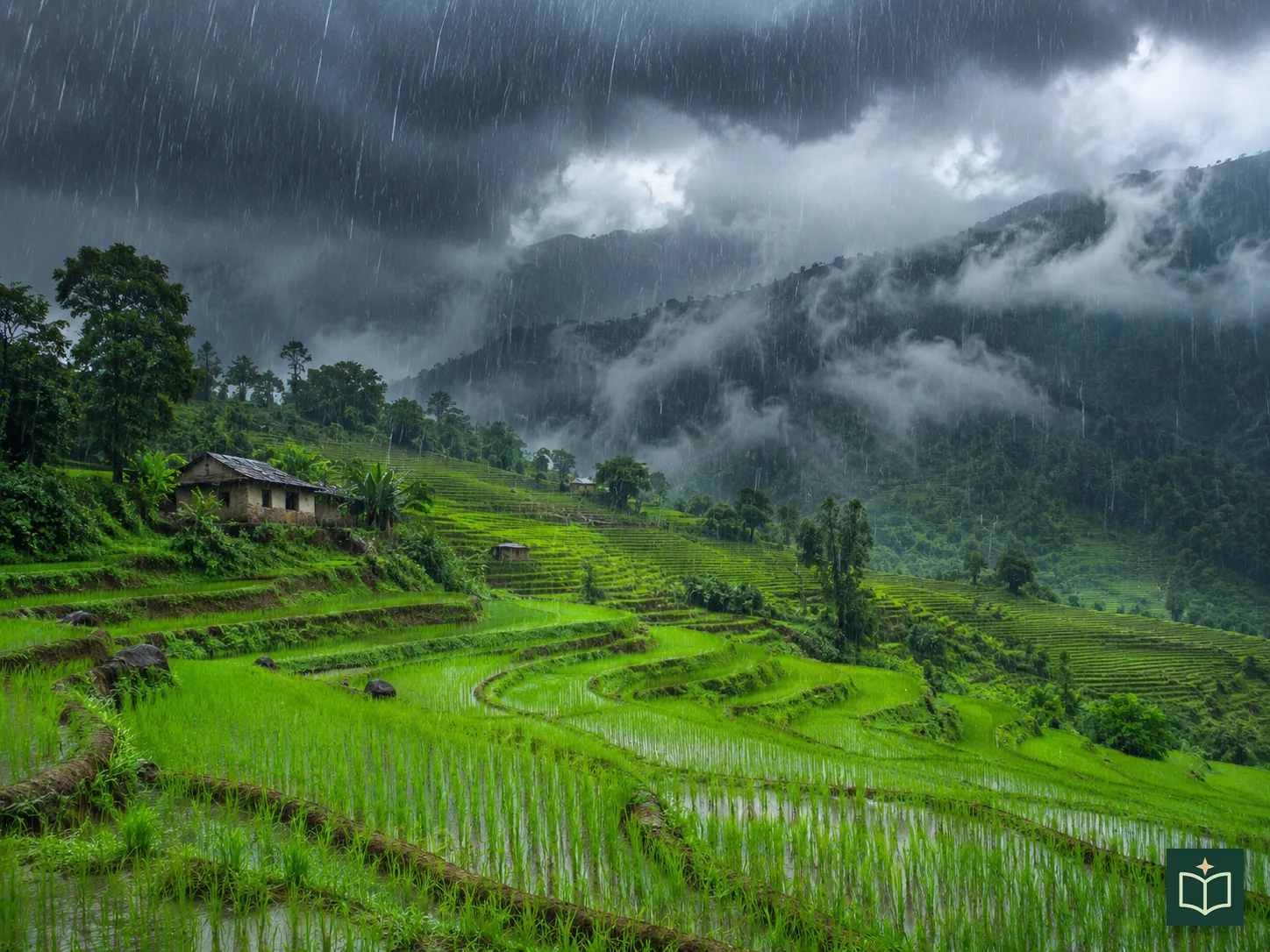
In late spring, the Indian subcontinent and Tibetan Plateau heat up strongly. Rising warm air lowers pressure over land, while the Indian Ocean stays cooler. Moist air flows inland, rises over the Western Ghats and the Himalaya, cools and releases torrential rain. Cherrapunji and Mawsynram in northeast India are among the wettest places on Earth.
A matter of timing
Farmers across South Asia plan sowing around the monsoon’s onset, which reaches Kerala around 1 June on average. A delayed or weak monsoon can mean drought and poor harvests; an unusually strong one can bring floods. Climate patterns such as El Niño often weaken the Indian monsoon, which is why forecasters watch the Pacific closely.
Monsoons worldwide
South Asia’s monsoon is the most famous, but monsoon systems also affect East Asia, West Africa, northern Australia and the southwestern United States. In the UAE and Oman, the southwest monsoon brings the khareef season of mist and drizzle to Dhofar. Scientists expect warming to make monsoon rainfall more variable, with more extreme downpours.
Sources & further reading
Figures are rounded and widely published; check the linked organisations for the latest editions. These organisations do not endorse this website.