Background
When British India was partitioned in 1947, the border cut across the Indus river system, leaving upstream headworks in India and much irrigated land in Pakistan. After years of tension, the World Bank brokered negotiations.
The division
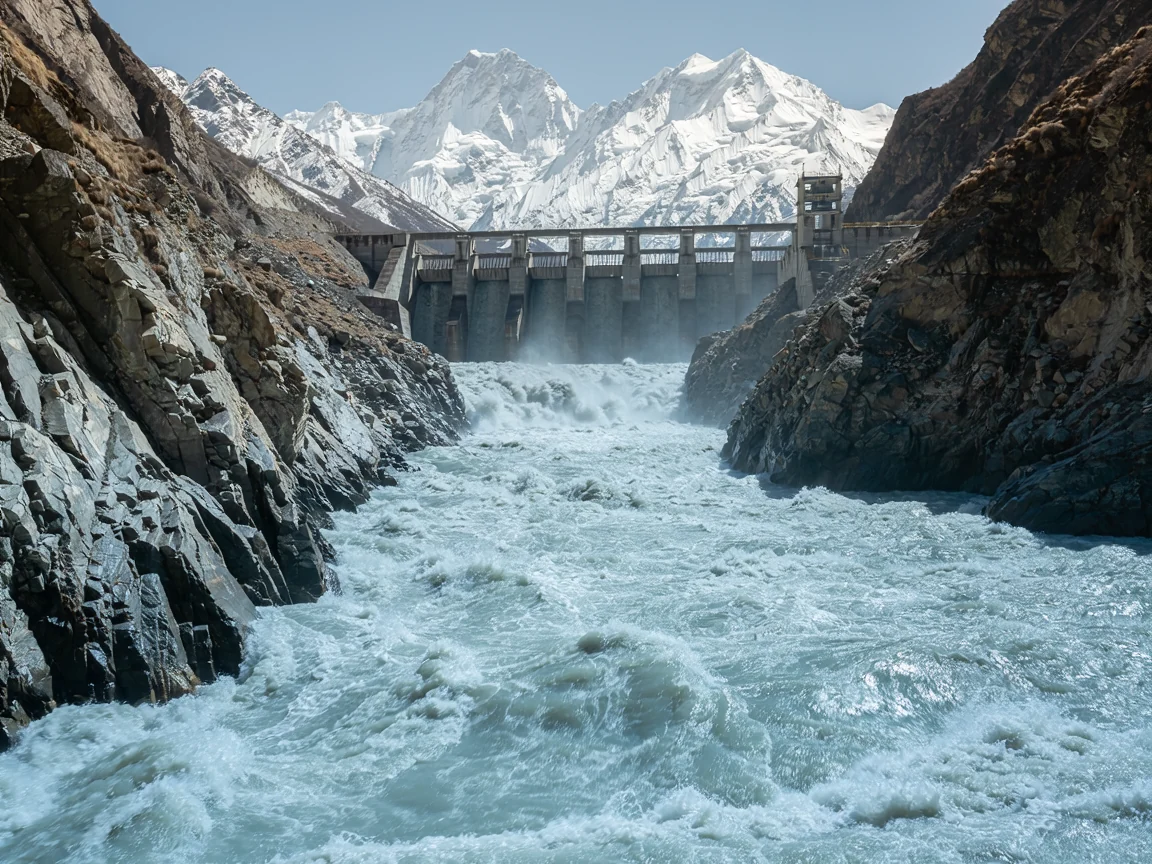
Under the treaty, India received exclusive use of the eastern rivers, while Pakistan received most of the flow of the western rivers. India may use the western rivers for limited purposes, including run-of-river hydropower that does not store large amounts of water.
Disputes
A Permanent Indus Commission exchanges data and meets regularly. Disagreements over Indian dams on the western rivers have been referred to a neutral expert and a court of arbitration.
Under strain
In April 2025, following an attack in Indian-administered Kashmir, India announced it was holding the treaty in abeyance. Pakistan rejected the move. The treaty contains no provision for unilateral suspension, and its future remains contested.
Sources & further reading
The treaty's status is disputed; check current sources. Photograph: original AI-generated illustration (Adobe Firefly). Reference organisations do not endorse this website.