The G7
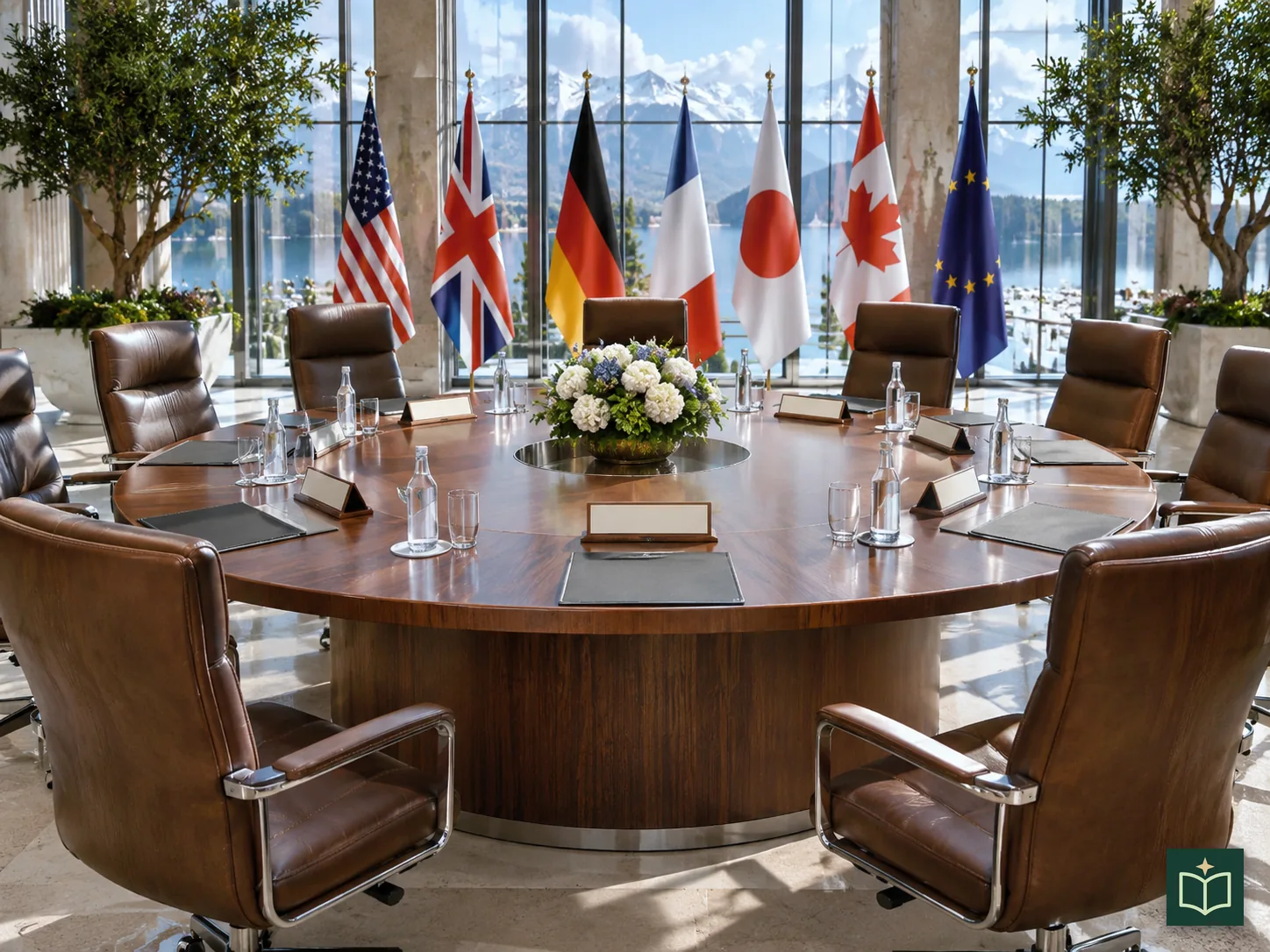
The Group of Seven grew from a 1975 meeting of leading industrial democracies during the oil shocks. Its members are Canada, France, Germany, Italy, Japan, the United Kingdom and the United States, with the European Union also taking part. Russia joined to form the G8 in 1997 but was suspended in 2014.
The G20
The Group of Twenty began in 1999 as a meeting of finance ministers and central bank governors after the Asian financial crisis. During the 2008 global financial crisis, it was elevated to a leaders’ summit to coordinate stimulus and banking reforms. Members include major emerging economies such as China, India, Brazil, Saudi Arabia and South Africa, plus the EU and, since 2023, the African Union.
How they work
Neither group has a permanent secretariat. The presidency rotates each year, and the host country sets the agenda and invites guest countries and organisations. The UAE has been invited as a guest country to several G20 summits. Commitments in final communiqués are political, not legally binding.
Why they matter
These forums let leaders coordinate responses to crises, agree on principles for issues like tax, debt relief and climate finance, and meet face to face. The G20’s 2021 agreement on a global minimum corporate tax, developed through the OECD, is one example. Critics question their legitimacy for countries not at the table.
Sources & further reading
Figures are rounded and widely published; check the linked organisations for the latest editions. These organisations do not endorse this website.