The International Court of Justice
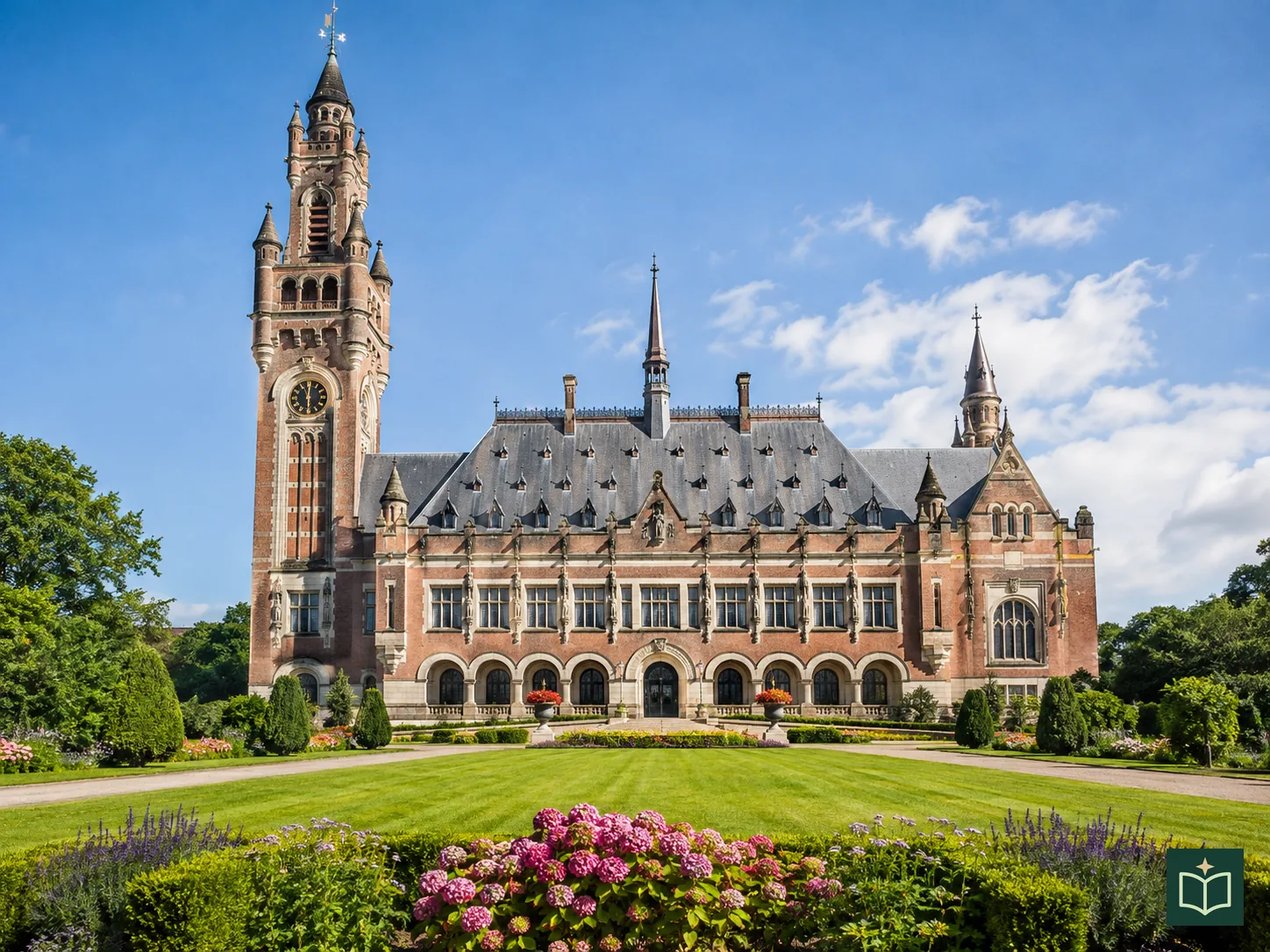
Created in 1945 as the UN’s principal judicial organ, the ICJ sits in the Peace Palace in The Hague. Only states can be parties. It handles disputes over borders, maritime boundaries, treaties and alleged breaches of conventions, and gives advisory opinions requested by UN bodies. Its judgments are binding on the parties in a case.
The International Criminal Court
The ICC was established by the Rome Statute, which entered into force in 2002. It is independent of the UN. It can prosecute individuals—including heads of state—for genocide, crimes against humanity, war crimes and the crime of aggression, when national courts are unwilling or unable to do so genuinely.
Who is bound
All UN members are parties to the ICJ’s Statute, but a state must still accept the court’s jurisdiction in a given case, for example through a treaty clause. The ICC has jurisdiction over crimes on the territory of, or by nationals of, its member states—about 125 countries—or situations referred by the UN Security Council. Major powers including the United States, China and Russia are not members.
The enforcement problem
Neither court has its own police force. ICJ judgments rely on states complying, with possible referral to the Security Council. The ICC depends on member states to arrest suspects and transfer them to The Hague, and several suspects have remained at large for years. Their authority rests largely on legitimacy and political support.
Sources & further reading
Figures are rounded and widely published; check the linked organisations for the latest editions. These organisations do not endorse this website.