Darkness was the default
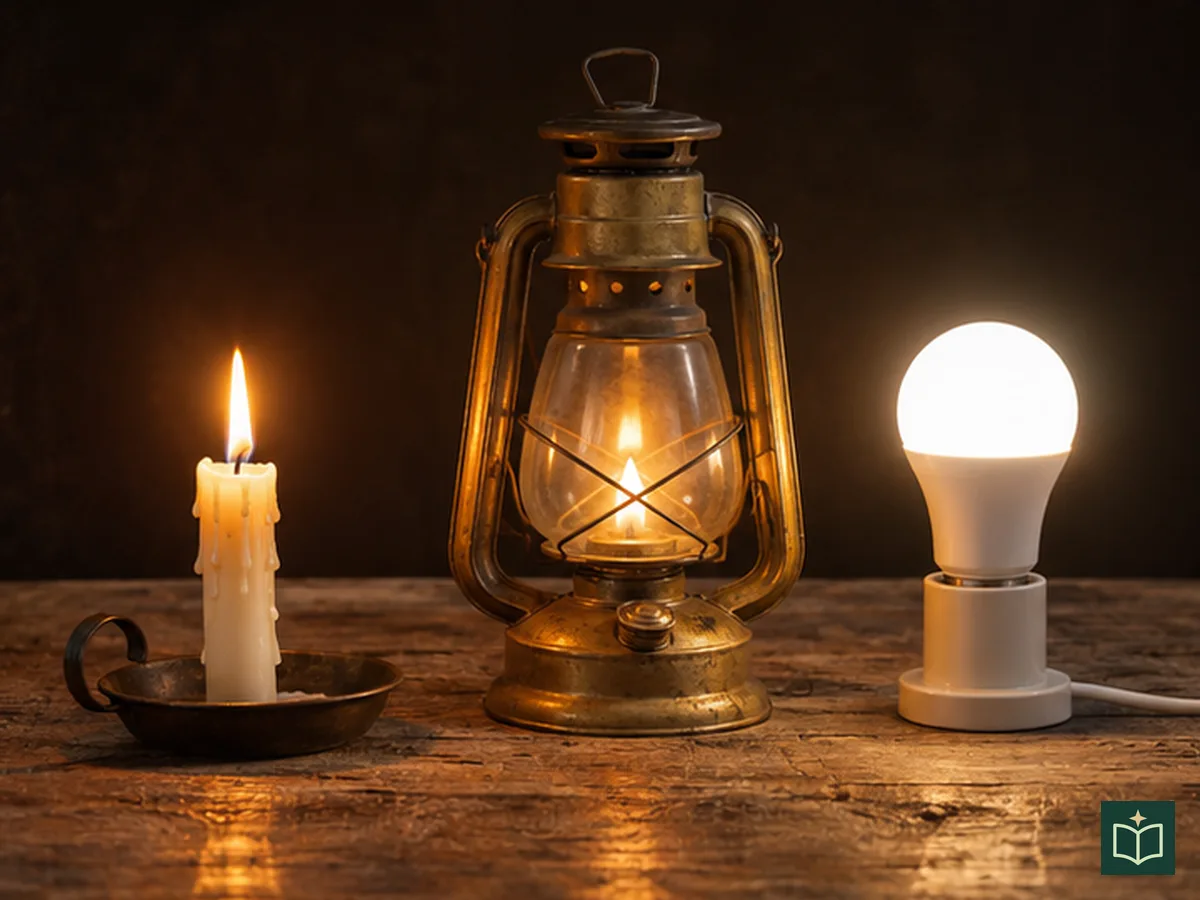
For most of history, nightfall ended the working day. Light came from fires, rushlights, simple oil lamps burning olive, sesame or animal fat, and candles made from tallow or beeswax. All of these were dim, smoky and expensive relative to income. A tallow candle gave a small, flickering flame and had to be trimmed constantly; beeswax candles burned cleaner but were a luxury for churches and the wealthy. Households rationed light carefully, gathering around a single source and going to bed soon after dark. Measuring this properly is difficult, because the useful thing is not the fuel but the light itself, measured in lumens, and how long it lasts.
Whales, kerosene and gas
From the eighteenth century, demand for brighter light drove new fuels. Spermaceti from sperm whales made bright, clean candles, and whale oil lit lamps across Europe and America, contributing to the overhunting of whales. Coal gas, piped through city streets from the early nineteenth century, lit factories, shops and public streets in London and other cities. Then, after the first commercial oil wells of the 1850s, kerosene refined from crude oil became the cheap lighting fuel of the late nineteenth century, carried in tins to homes around the world. Oil's first great market was light, not transport. Each step gave more light for less money, but all still relied on an open flame.
Electric light arrives
Arc lamps lit some streets in the 1870s, but they were too harsh for homes. The incandescent bulb, made practical by Thomas Edison, Joseph Swan and others around 1879, changed that. Electricity heated a thin filament until it glowed, with no smoke, little fire risk and a flick of a switch. Yet only a few per cent of its energy became visible light; the rest was heat. Fluorescent tubes from the 1930s and compact fluorescent lamps later improved efficiency several times over. Light-emitting diodes, or LEDs, made the biggest jump. They produce light directly from electrons crossing a semiconductor junction and now deliver well over 100 lumens per watt in common products.
A worked example
The economist William Nordhaus measured the history of lighting by the hours of work needed to buy a fixed amount of light. Widely quoted figures based on his research suggest that an hour of modest reading light cost around six hours of an average worker's labour with tallow candles around 1800, about fifteen minutes with kerosene around 1880, and less than a second today. Six hours is 21,600 seconds, so the fall to half a second is a factor of more than 40,000. Efficiency alone shows the same direction: a household lamp giving about 800 lumens needs roughly 60 watts as an incandescent bulb but around 9 watts as an LED.
Why the figures surprised economists
Nordhaus's point was not only that light became cheap. Standard price indices, which track the cost of fuels and lamps, badly understated how much better and cheaper light became, because they missed the improvement in the product itself. A kerosene lamp and an LED are both lighting, but the second delivers vastly more lumens per unit of energy and money. This matters for how we judge economic growth: measured incomes may understate gains in real living standards when new technologies transform everyday services. At the same time, cheaper light encouraged people to use far more of it, an example of demand rising as efficiency improves. Cities today glow at night in a way earlier generations could not afford.
What to watch now
LEDs have pushed lighting efficiency close to practical limits for white light, so the next gains will come mostly from controls: sensors that dim lights in daylight, switch off empty rooms and tune colour through the day. Lighting has fallen from a major share of electricity use in buildings to a modest one in many countries, freeing capacity for other needs. The flip side is light pollution, which affects sleep, wildlife and views of the night sky, and has prompted dark-sky rules in some places. For the hundreds of millions of people still without reliable electricity, small solar lanterns with LEDs are often the first step away from kerosene and candles.
Sources & further reading
Figures are rounded and widely published; check the linked organisations for the latest editions. These organisations do not endorse this website.