A military goal
In 2001, the US Congress set a goal for a third of US military ground vehicles to be unmanned by 2015, hoping to keep soldiers out of danger. Progress was slow, so the Defense Advanced Research Projects Agency, known as DARPA, tried an unusual approach: a public competition with a cash prize. Anyone, from universities to hobbyists, could enter a vehicle that drove itself across a long desert course without any human help.
The 2004 race
The first Grand Challenge took place in March 2004 over a course of about 240 kilometres from Barstow, California, to near the Nevada border, with a prize of one million dollars. Fifteen vehicles started. None came close to finishing. The furthest, Carnegie Mellon University's Sandstorm, a converted military Humvee, covered about 12 kilometres before getting stuck on a rock and catching fire. Many observers concluded that self-driving cars were decades away.
A second chance
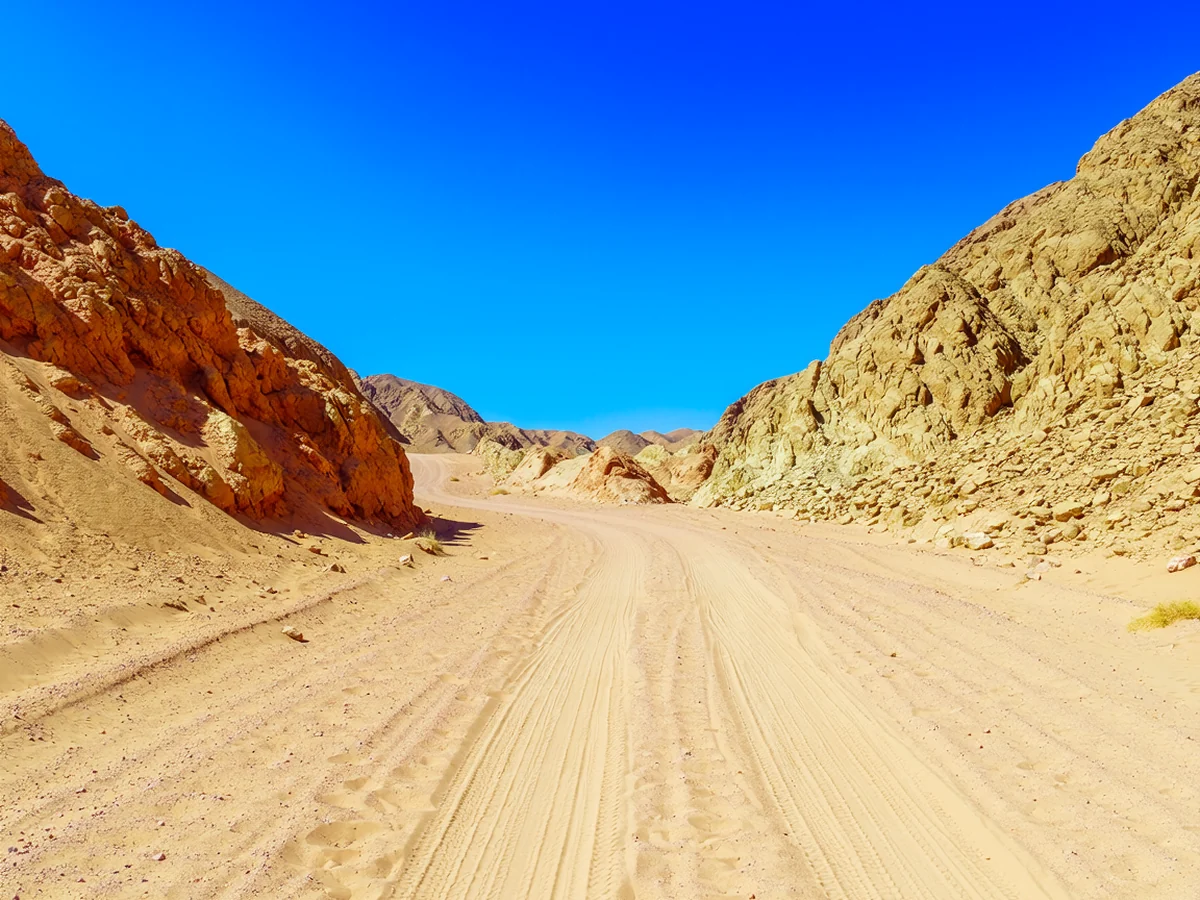
DARPA immediately announced a second race for October 2005, doubling the prize to two million dollars. This time, 23 teams reached the final event on a course of about 212 kilometres through the Mojave Desert, including narrow mountain passes, tunnels and dry lake beds. Teams had learned from 2004's failures and focused on better sensors, software and testing. The result was dramatically different.
Stanley wins
Five vehicles completed the 2005 course. The winner was Stanley, a modified Volkswagen Touareg built by a Stanford University team led by Sebastian Thrun, which finished in just under seven hours. Carnegie Mellon's two vehicles, Sandstorm and H1ghlander, came second and third. Stanley's key advantage was its use of machine learning: it learned from human driving data and combined laser scanners with cameras to judge which terrain was safe to drive on at speed.
How Stanley saw the road
Stanley carried five laser range finders on its roof, a colour camera, radar and GPS, all connected to six computers in the boot. The lasers mapped the ground directly ahead, but only up to about 25 metres, too short for high-speed driving. The team trained the system so that the camera learned what drivable terrain looked like from the laser data, extending its view much further and allowing it to drive faster safely.
The Urban Challenge
In 2007, DARPA moved the contest to a city setting. The Urban Challenge took place at a former air force base in California, where vehicles had to navigate streets, obey traffic laws, merge, park and avoid other cars, including human-driven ones. Carnegie Mellon's vehicle Boss, a modified Chevrolet Tahoe, won, followed by Stanford's Junior and Virginia Tech's Odin. Six vehicles completed the course.
From race to industry
The races created a community of engineers with rare expertise. In 2009, Google started a secret self-driving car project led by Sebastian Thrun, recruiting many Grand Challenge veterans, including Chris Urmson from Carnegie Mellon. That project became Waymo, now one of the world's leading robotaxi companies. Other veterans helped lead autonomous vehicle efforts at Uber, Aurora, Argo AI and major car makers, shaping the industry for two decades.
Technologies that emerged
The races accelerated technologies now common in cars: spinning laser scanners called lidar, detailed digital maps, software that fuses data from many sensors and machine learning for perception. Velodyne's rotating lidar, first used by a team in the 2005 race and widely adopted in 2007, became the iconic sensor on early self-driving prototypes. Many driver-assistance features in today's cars, such as lane keeping and adaptive cruise control, benefited from this research.
Harder than it looked
The Grand Challenges made self-driving seem close, and in the 2010s many companies predicted fully driverless cars within a few years. Real roads proved far more complex than desert courses, with unpredictable pedestrians, bad weather and rare situations that are hard to anticipate. Progress has been slower than early forecasts, but robotaxis now carry paying passengers without safety drivers in several cities in the United States and China, and trials have begun in the Gulf.
The power of prizes
The Grand Challenge is often cited as one of the most successful examples of a prize competition driving innovation. By setting a clear, ambitious goal and opening it to anyone, DARPA attracted creativity and investment far beyond the prize money. Similar challenges have since been used for robotics, spaceflight and AI. The UAE has also used competitions, such as autonomous racing and drone challenges, to encourage innovation in AI and robotics.
Sources & further reading
- DARPA · The Grand Challenge ↗
- Wikipedia · DARPA Grand Challenge ↗
- Stanford · Stanley: the robot that won the DARPA Grand Challenge ↗
Distances are approximate and rounded. Photograph: original AI-generated illustration (Adobe Firefly). Reference organisations do not endorse this website.