A festival for Zeus
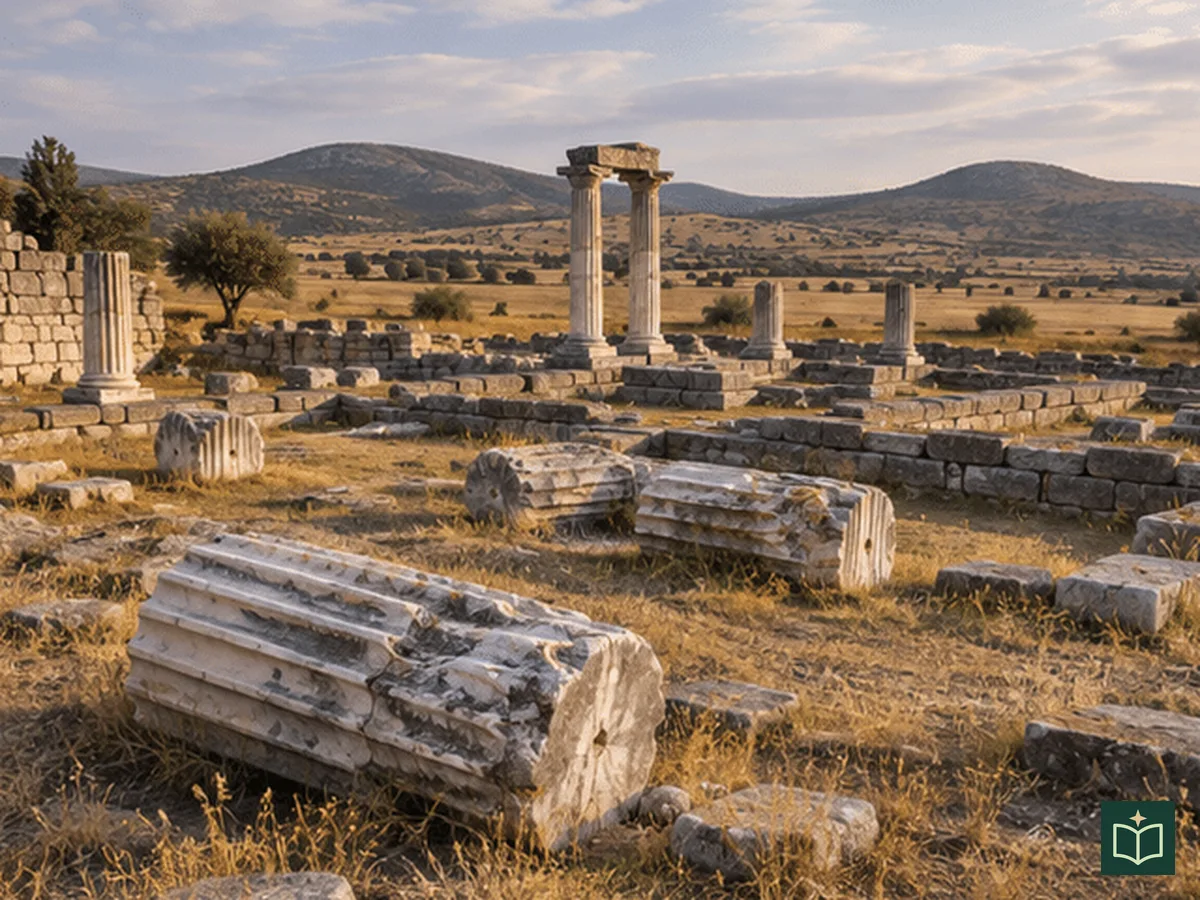
The ancient Olympic Games were held at Olympia, a sanctuary of Zeus in the western Peloponnese of Greece, not a city but a sacred site in a river valley. Greek tradition dated the first games to 776 BC, and that year became the starting point of a calendar counted in Olympiads, four-year cycles. The games were part of a religious festival. Athletes and spectators came to honour Zeus, king of the gods, with sacrifices, processions and contests. The centrepiece of the sanctuary was the temple of Zeus, which from the fifth century BC housed a huge gold and ivory statue of the god, later counted among the Seven Wonders.
From one race to many events
At first, according to ancient accounts, there was a single event: the stadion, a sprint of one length of the stadium, about 192 metres. Other events were added over the following two centuries. A two-length race and a long-distance race came next, followed by the pentathlon, combining running, jumping, discus, javelin and wrestling. Boxing, chariot racing and horse racing followed, and then the pankration, a brutal mix of boxing and wrestling with few rules. A race in armour was added later still. By the fifth century BC the festival lasted five days, with sacrifices, a great feast and contests for boys as well as men.
Who could compete and watch
Competitors had to be free Greek men; under Roman rule, Roman citizens were admitted too. They competed naked, which Greeks regarded as a sign of Greek identity. Athletes travelled to Elis, the city that ran the games, a month early to train under the eye of officials, and swore an oath to compete fairly. Married women were barred from watching the men’s contests, according to the ancient writer Pausanias. Women could, however, win the chariot race as owners of the horses, as the Spartan princess Kyniska did in the early fourth century BC. A separate festival at Olympia, the Heraia, held running races for unmarried girls.
The sacred truce
Before each festival, heralds travelled through the Greek world to announce the dates and proclaim a sacred truce, the ekecheiria. It did not stop all wars, but it protected athletes, officials and spectators travelling to and from Olympia, and banned armed forces from entering the territory of Elis. Breaking it was serious. The historian Thucydides records that in 420 BC Sparta was fined and excluded from the games after being accused of sending troops during the truce. The idea of an Olympic truce was revived in modern times, and since 1993 the United Nations has adopted resolutions before each Games calling on countries to observe it.
Olive wreaths and bronze fines
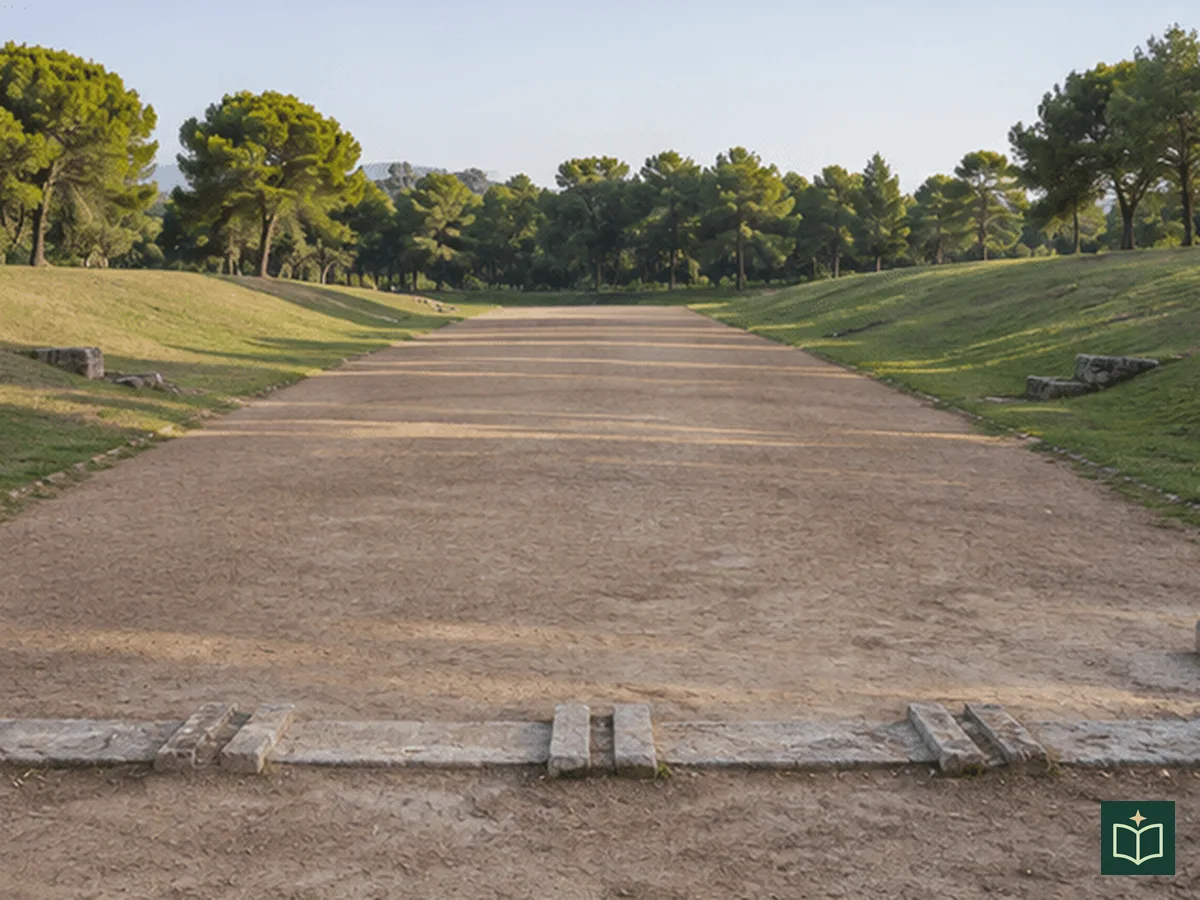
The only official prize was a crown of wild olive leaves, cut from a sacred tree near the temple of Zeus. Back home, however, victors could receive rich rewards from their cities, such as free meals for life, statues and poems in their honour. Cheating happened. Athletes caught bribing opponents were fined, and the money paid for bronze statues of Zeus, known as Zanes, set up along the path to the stadium, each inscribed with the offender’s name. The stadium itself was a simple earth bank where tens of thousands of spectators sat or stood on the ground, enduring summer heat, crowds and scarce water.
How the games ended
The games continued under Roman rule, with emperors sometimes taking part; Nero famously entered in AD 67 and was declared winner of a chariot race even though he fell. The end came gradually as Christianity became the empire’s religion. The emperor Theodosius I banned pagan festivals in the 390s, and AD 393 is traditionally given as the last games, though some activity may have continued a little longer. Over the following centuries, earthquakes, floods and the river buried much of Olympia. Excavations from the nineteenth century revealed the site, which UNESCO listed in 1989, and inspired the revival of the modern Olympic Games in Athens in 1896.
Sources & further reading
Figures are rounded and widely published; check the linked organisations for the latest editions. These organisations do not endorse this website.