The largest tropical forest
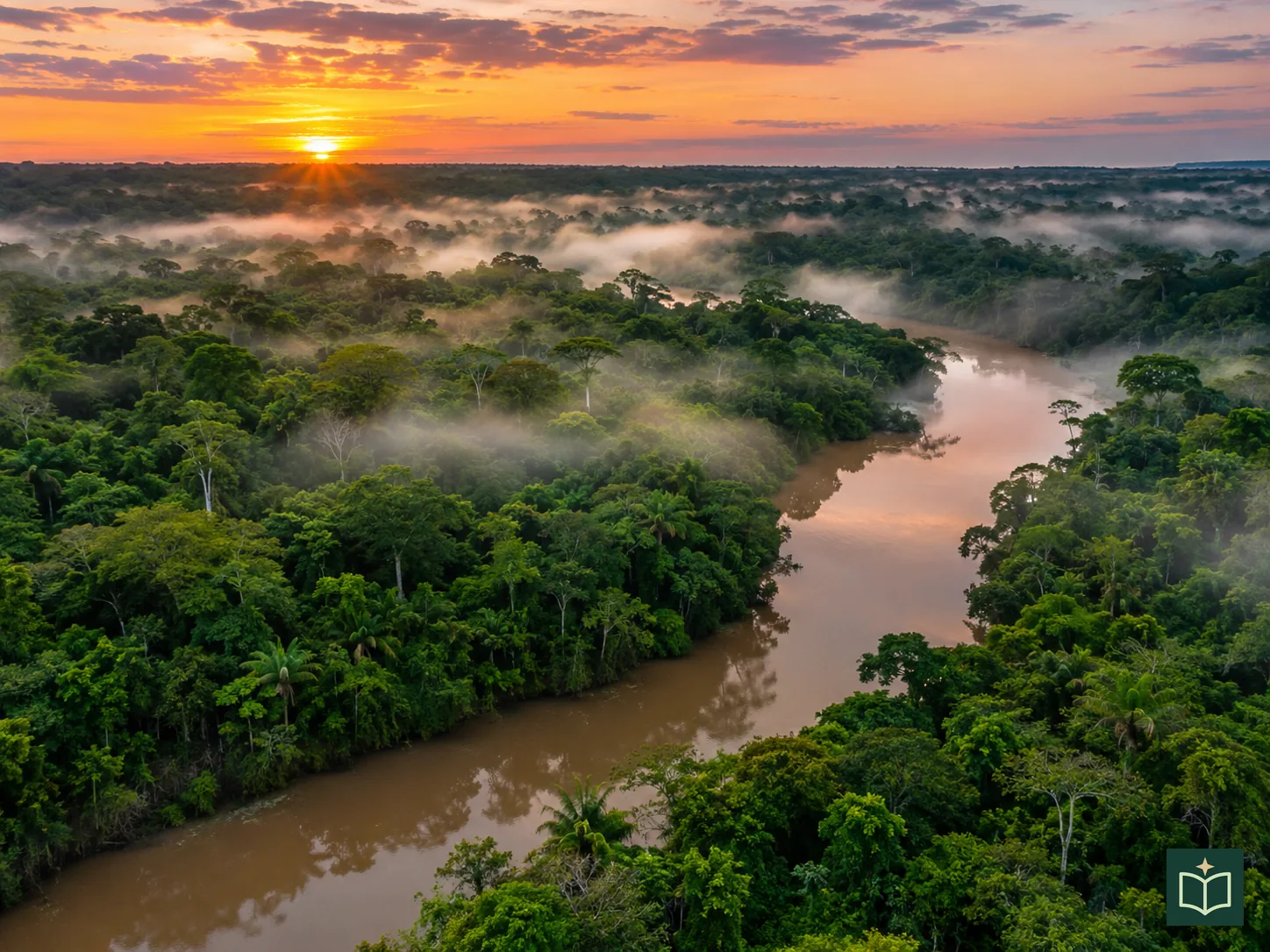
The Amazon rainforest spans about 5.5 million square kilometres across Brazil, Peru, Colombia and six other countries. It holds an estimated 10% of the world’s known species, from jaguars and river dolphins to thousands of tree species. The Amazon River carries more water to the sea than any other river, roughly a fifth of all river discharge to the oceans.
Flying rivers
A large tree can release hundreds of litres of water a day into the air. Moisture blown inland from the Atlantic rains down, is taken up by trees and released again, repeating the cycle across the basin. Scientists call these moisture currents ‘flying rivers’. They help supply rain to farmland and cities far to the south, including parts of Brazil and Argentina.
A carbon store
The forest stores vast amounts of carbon in its trees and soils. Healthy forest absorbs carbon dioxide as it grows, but fires and deforestation release it. Studies indicate that some heavily deforested and degraded parts of the southeastern Amazon now release more carbon than they absorb.
A possible tipping point
Deforestation, driven largely by cattle ranching, farming and logging, combines with drought and fire to stress the forest. Researchers warn that beyond a certain level of forest loss, parts of the Amazon could shift towards drier savannah-like ecosystems. Indigenous territories, which cover a large share of the basin, show notably lower deforestation rates.
Sources & further reading
Figures are rounded and widely published; check the linked organisations for the latest editions. These organisations do not endorse this website.