How height is defined
The Council on Tall Buildings and Urban Habitat (CTBUH) is the main referee. Its standard measure is height to the architectural top, from the lowest pedestrian entrance to the top of the building, including spires but excluding antennas, flagpoles and other functional equipment that could be added or removed. Rankings above use this measure.
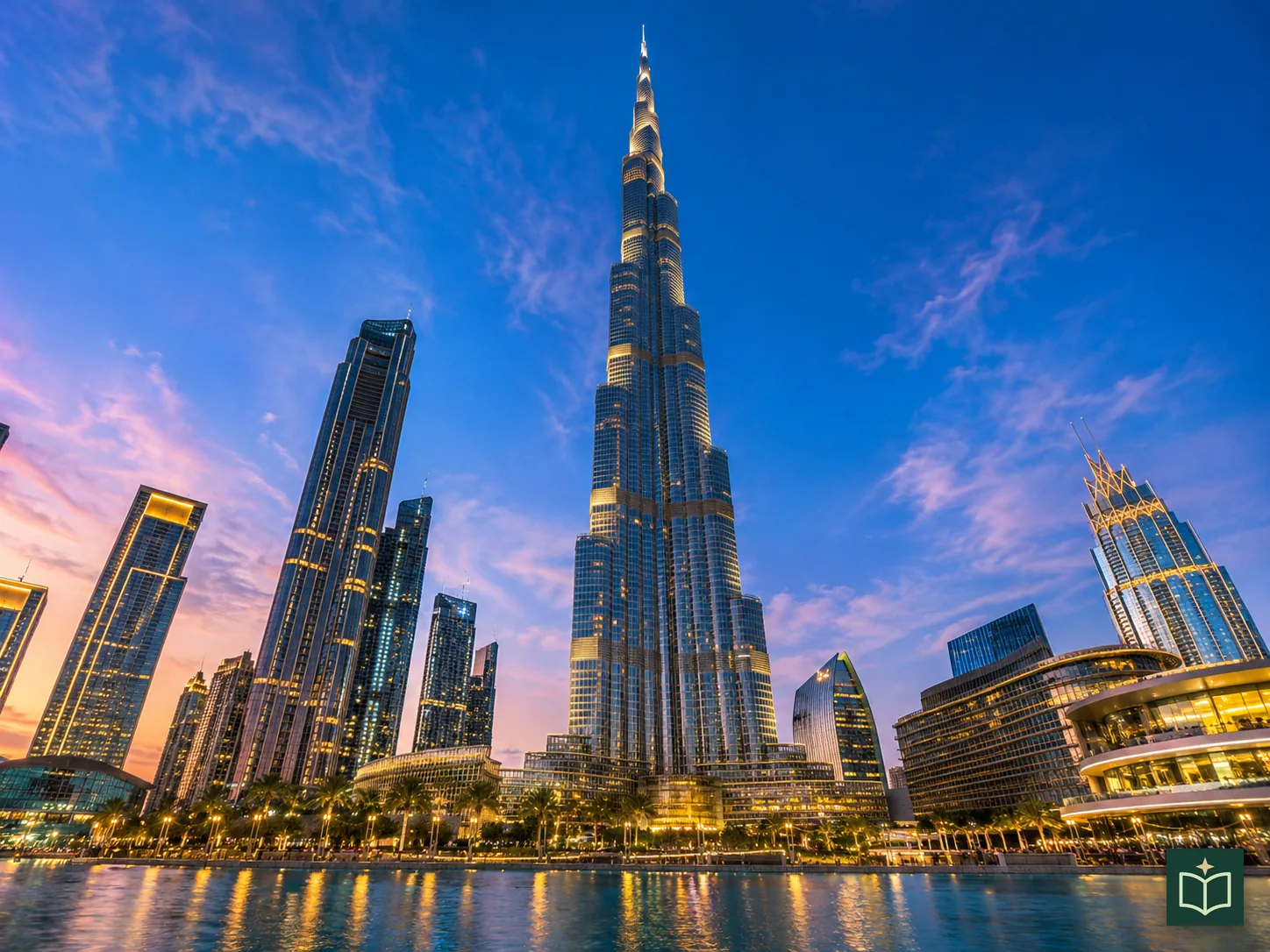
Burj Khalifa
Designed by Skidmore, Owings & Merrill and completed in 2010, Burj Khalifa’s Y-shaped plan, inspired partly by a desert flower, helps it resist wind. Its setbacks spiral upward to confuse the wind and reduce vortex shedding. It contains residences, offices and a hotel, and its observation decks rank among the highest in the world.
Asia’s skyline race
Most of the world’s supertall towers—over 300 metres—have been built in Asia and the Middle East since 2000. China leads in sheer numbers of supertall buildings. Merdeka 118 in Kuala Lumpur, completed in 2023, took second place, overtaking the Shanghai Tower, whose twisting form reduces wind loads.
What comes next
Jeddah Tower in Saudi Arabia, under construction, is planned to exceed 1,000 metres. Height records attract attention, but engineers increasingly focus on efficiency, elevator design, wind behaviour and sustainability. Very tall buildings require advanced materials, deep foundations and careful planning for evacuation and fire safety.
Sources & further reading
Figures are rounded and widely published; check the linked organisations for the latest editions. These organisations do not endorse this website.