Polar deserts
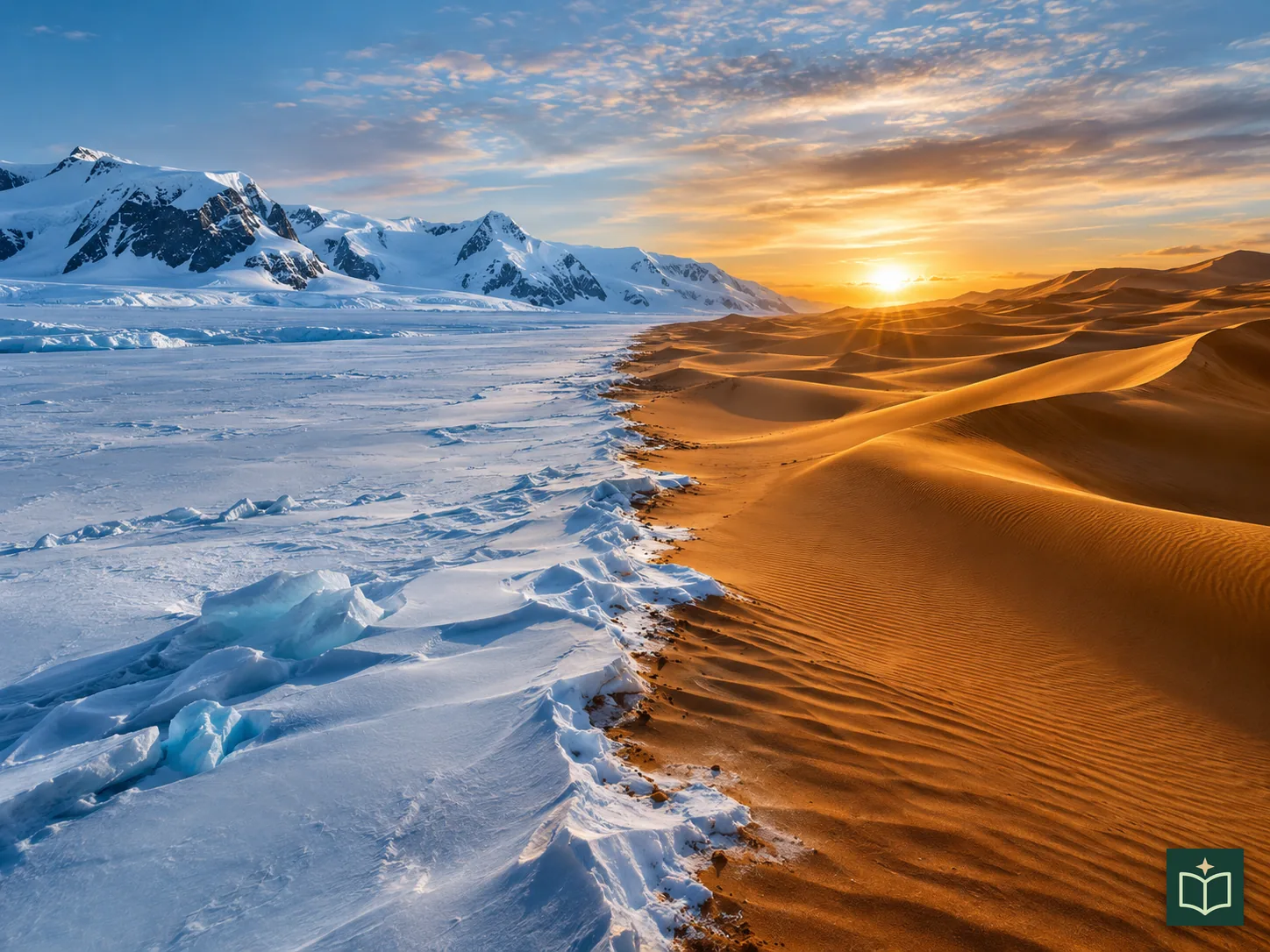
Antarctica receives very little precipitation—on average less than 200 millimetres a year, and far less in its interior—making it the largest desert on Earth. The Arctic also qualifies. Ice accumulates there over thousands of years because so little melts, not because much snow falls.
The Sahara
Covering much of North Africa, the Sahara is the largest hot desert, roughly comparable in size to the United States or China. Its landscapes include sand seas, rocky plateaus and volcanic mountains. Around 6,000 years ago, during the African Humid Period, much of it was green, with lakes and grasslands.
The Arabian Desert
The Arabian Desert covers much of the Arabian Peninsula, including the Rub’ al Khali, the largest continuous sand sea on Earth. It spans Saudi Arabia, the UAE, Oman, Yemen and neighbouring countries. Oases, wadis and coastal plains have supported settlements and trade for millennia.
Cold and rain-shadow deserts
The Gobi, across Mongolia and northern China, has very cold winters and lies in the rain shadow of the Himalaya. Patagonia’s desert sits in the rain shadow of the Andes. Because desert boundaries blur into semi-arid land, area estimates in different references vary, sometimes substantially; figures here are rounded approximations.
Sources & further reading
Figures are rounded and widely published; check the linked organisations for the latest editions. These organisations do not endorse this website.