How trenches form
Ocean trenches mark subduction zones, where dense oceanic crust bends and sinks into the mantle beneath another plate. Most are found around the Pacific, along the Ring of Fire. They are long and narrow, often thousands of kilometres in length, and closely linked to earthquakes and volcanic island arcs.
The Challenger Deep
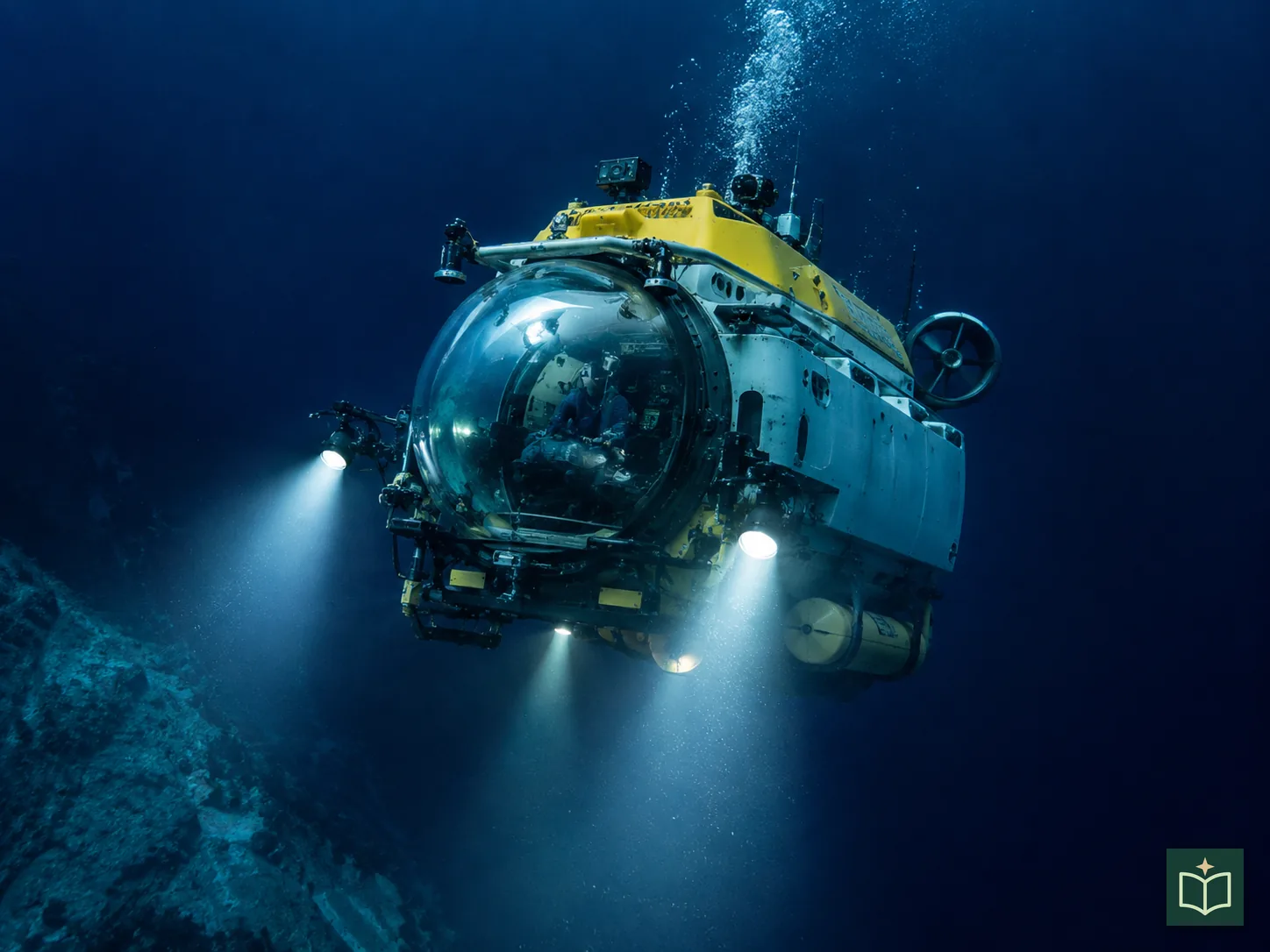
The deepest known point is the Challenger Deep in the Mariana Trench, about 10,900 metres down. It was first reached by Jacques Piccard and Don Walsh in the bathyscaphe Trieste in 1960, and later by filmmaker James Cameron in 2012. Since 2019, several crewed dives have reached it, along with many uncrewed vehicles.
The deepest five
The Tonga Trench’s Horizon Deep is the second-deepest known point. The Kermadec, Philippine and Kuril–Kamchatka trenches also exceed or approach 10 kilometres. Precise depths vary between surveys because of sonar methods, tides and corrections for water density. The list above shows approximate deepest points; the order of some trenches varies between sources.
Life in the dark
Despite cold, darkness and crushing pressure, trenches host life: amphipods, sea cucumbers and snailfish, which have been filmed at around 8,300 metres. Scientists have also found plastic debris and pollutants at trench bottoms, a reminder of how far human influence reaches.
Sources & further reading
- NOAA Ocean Exploration · How deep is the ocean? ↗
- Five Deeps Expedition · Results (Geoscience Data Journal, 2021) ↗
Figures are rounded and widely published; check the linked organisations for the latest editions. These organisations do not endorse this website.