A question of motion and attraction
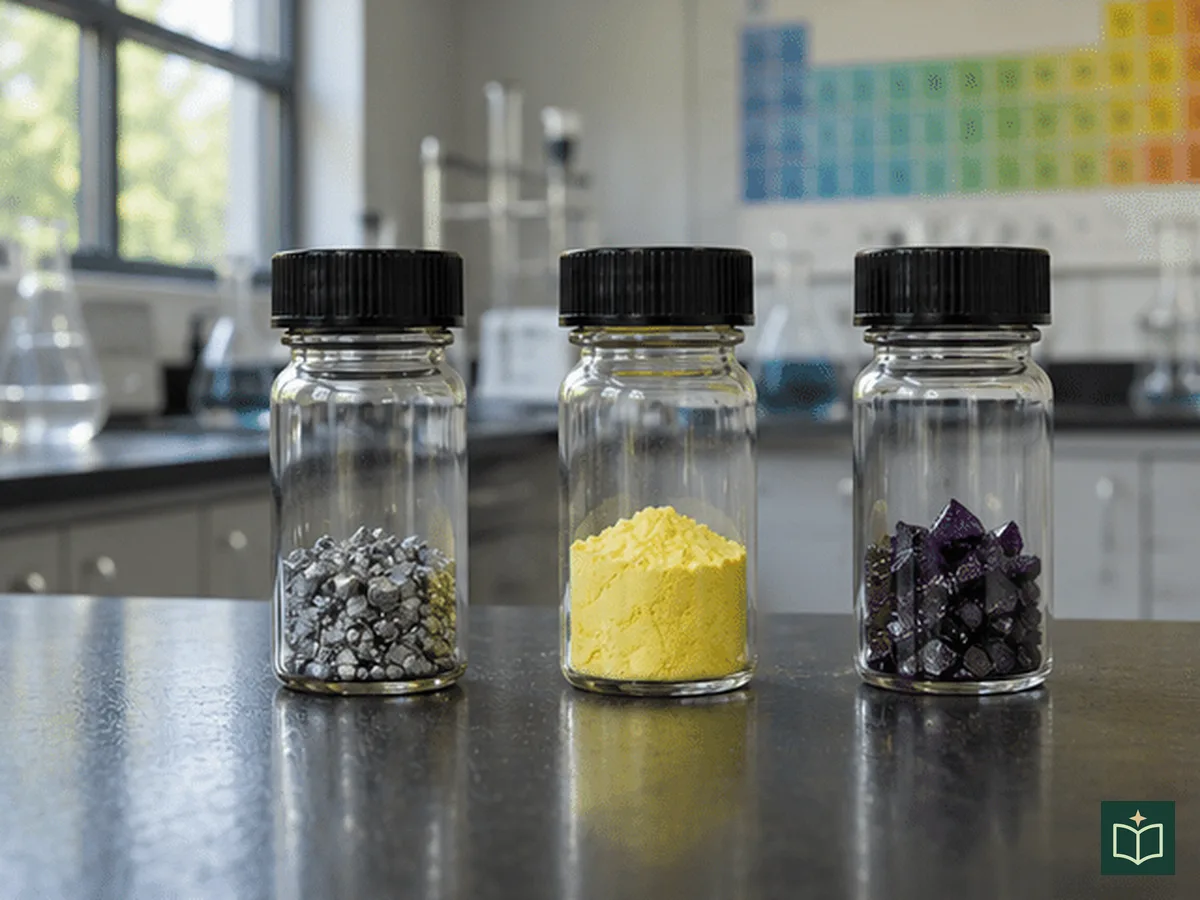
Every substance is made of particles, atoms or molecules, that attract one another and are constantly moving. Temperature is a measure of the average energy of that motion, and the state of a substance depends on which side wins. In a solid, attraction dominates: particles are held in fixed positions, vibrating in place, so the solid keeps its shape. In a liquid, particles have enough energy to slide past one another while staying close, so a liquid flows and takes the shape of its container but keeps its volume. In a gas, particles move fast enough to break free almost entirely, spreading out to fill any space available, with mostly empty space between them.
What happens at a melting point
Heat a block of ice and its temperature rises until it reaches 0°C. Then something curious happens: although heat keeps flowing in, the temperature stops rising until all the ice has melted. The energy is going into breaking the bonds that hold water molecules in their rigid crystal, not into making them move faster. This hidden energy is called latent heat. The same pause occurs at the boiling point, where molecules must break free of the liquid entirely. Boiling one kilogram of water at 100°C takes about 2,260 kilojoules, almost seven times the roughly 334 kilojoules needed to heat it from 20°C to 100°C. That is one reason steam scalds so badly.
Evaporation, boiling and pressure
Particles do not need to reach the boiling point to escape. At any temperature, some molecules at a liquid's surface move fast enough to break away, which is why puddles and laundry dry in the sun. This is evaporation, and it carries heat away, cooling what is left behind. Boiling is different: bubbles of vapour form throughout the liquid, which happens when its vapour pressure matches the pressure of the air above, so changing the pressure changes the boiling point. Some substances skip the liquid stage altogether. Dry ice, solid carbon dioxide, turns straight into gas at normal pressure, a process called sublimation, and frost forms by the reverse route, deposition.
Plasma, the fourth state
Heat a gas far enough and collisions between its atoms become so violent that electrons are knocked loose. The result is plasma: a hot, electrically charged mixture of free electrons and positive ions. Plasma conducts electricity and responds strongly to magnetic fields, behaving very differently from an ordinary gas. On Earth we see it in lightning, in the glow of neon signs and in the auroras. Beyond Earth it is the norm. The Sun and other stars are made of plasma, as is much of the thin gas between stars, which is why plasma is often described as the most common state of visible matter in the universe. Fusion reactors aim to confine plasma hotter than the Sun's core.
Stranger states
Physicists have found further states under extreme conditions. Cool certain atoms to within a millionth of a degree of absolute zero and they can merge into a Bose–Einstein condensate, in which thousands of atoms behave as a single quantum object. First made in a laboratory in 1995, it earned the 2001 Nobel Prize in Physics. Some materials become superconductors or superfluids when very cold, carrying current without resistance or flowing without friction. At the other extreme, the crushing pressure inside neutron stars packs matter into forms found nowhere on Earth. Everyday materials blur the categories too: glass is a rigid solid without an orderly crystal structure, and liquid crystals in many screens sit between liquid and solid.
Myths and everyday puzzles
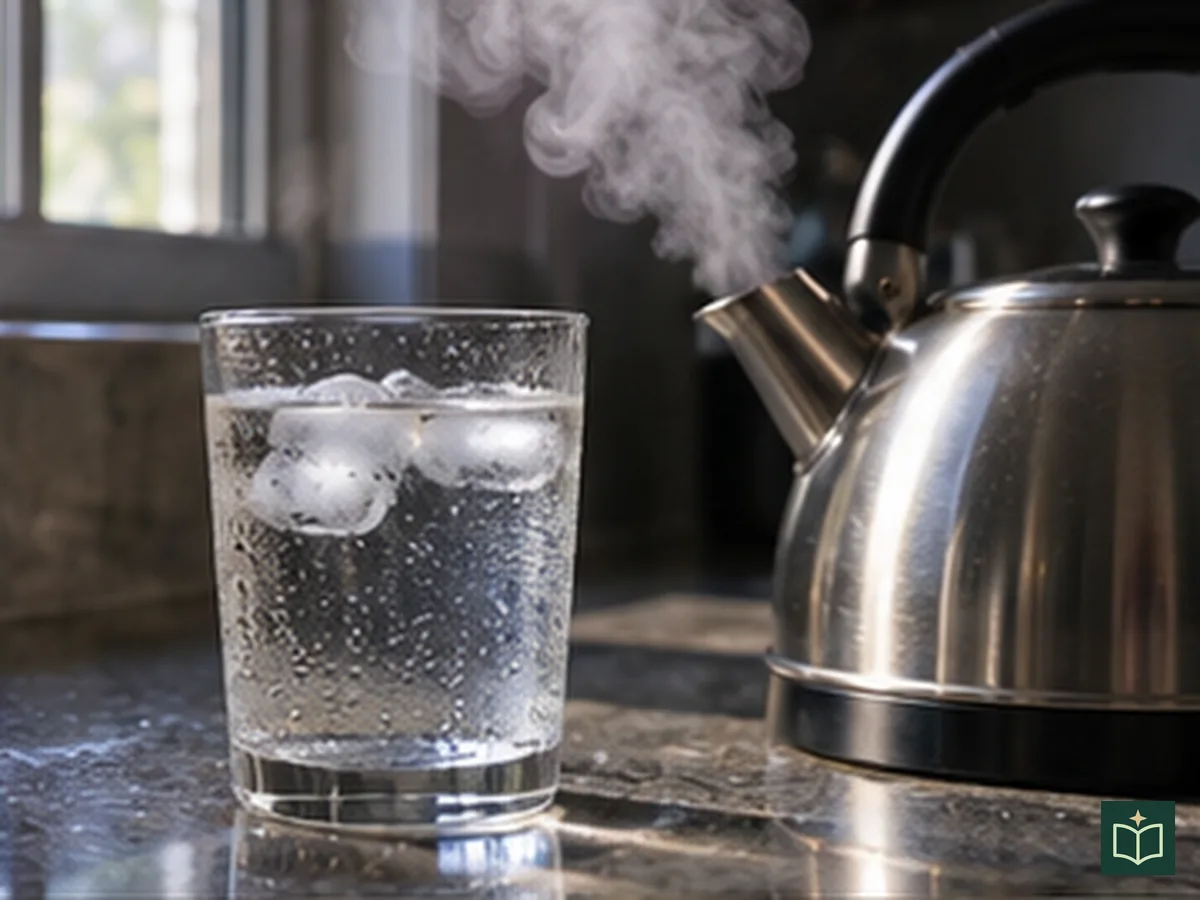
A few misconceptions persist. The white cloud above a kettle is not steam, which is invisible, but tiny droplets of water that have condensed in cooler air. Old window panes that are thicker at the bottom did not flow over the centuries; they were made unevenly, and glass at room temperature flows far too slowly for that. Gases are not weightless: a cubic metre of air at sea level weighs a little over a kilogram. Understanding states of matter explains everyday puzzles, from why a cold drink gathers droplets on a humid Gulf evening to why ice packs keep food cold for hours. Each is the same contest between attraction and motion.
Sources & further reading
Figures are rounded and widely published; check the linked organisations for the latest editions. These organisations do not endorse this website.