A vitamin that is really a hormone
Vitamin D is unusual among vitamins because the body can make it rather than relying wholly on food. Its main job is to help the intestine absorb calcium and phosphate, the minerals that build and maintain bone. Without enough of it, children can develop rickets, in which growing bones soften and bend, and adults can develop osteomalacia, a softening that causes aches and raises fracture risk. Because the active form travels in the blood and acts on distant tissues, many scientists describe vitamin D as a hormone. Receptors for it are found in muscle, immune cells and many other tissues, although the strength of its links to conditions beyond bone is still being studied.
How skin makes it
The process begins in the outer layers of the skin, which contain a cholesterol-like molecule called 7-dehydrocholesterol. When ultraviolet B light, with wavelengths of roughly 290 to 315 nanometres, strikes it, the molecule is converted into previtamin D3, which body heat then rearranges into vitamin D3. This form is inactive. The liver adds a chemical group to make 25-hydroxyvitamin D, the form doctors measure in a blood test, and the kidneys then produce calcitriol, the active hormone. The skin has a built-in safeguard: with prolonged exposure, excess previtamin D breaks down into inactive compounds, so sunlight alone cannot cause vitamin D poisoning.
Why the Gulf still falls short
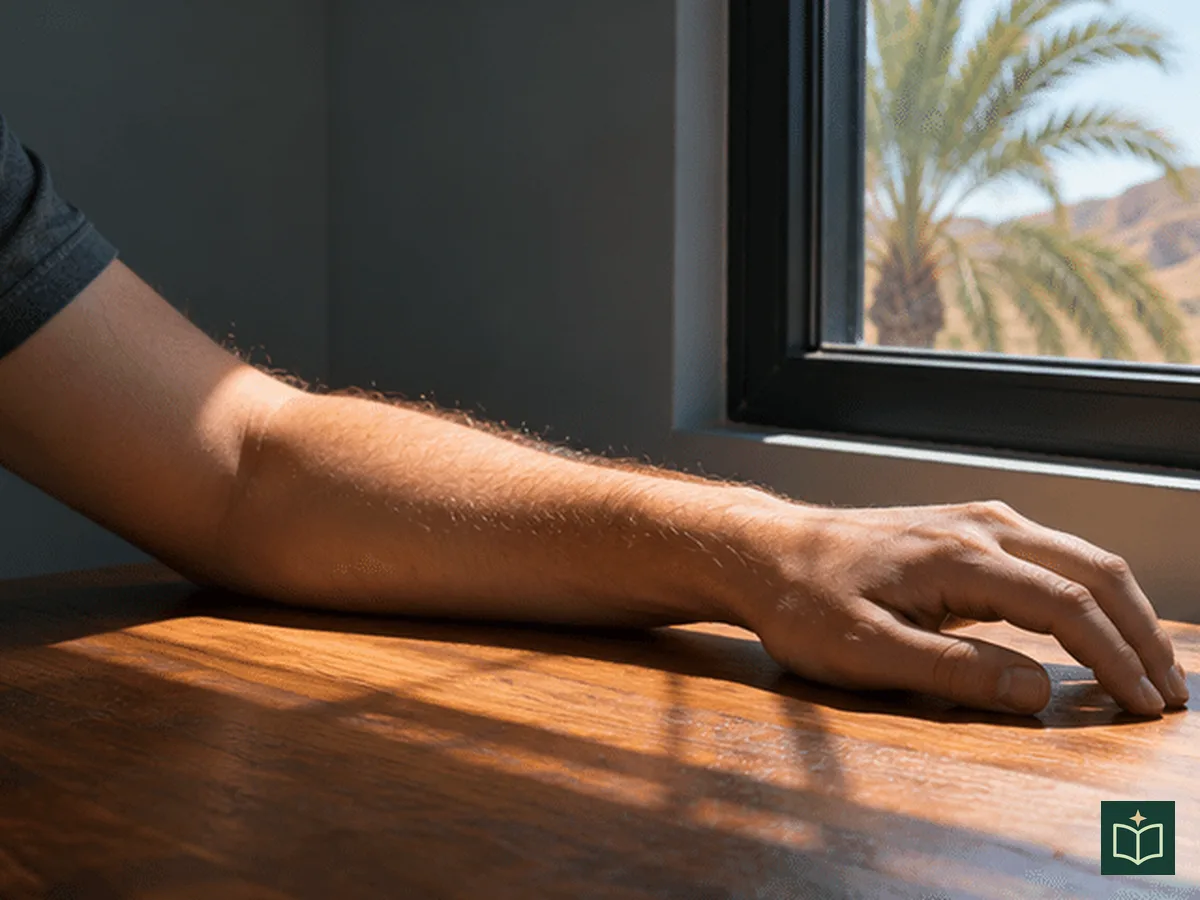
Studies in the UAE, Saudi Arabia, Qatar and neighbouring countries have repeatedly found that a large share of adults and children tested have low vitamin D levels, despite some of the sunniest weather on Earth. Several habits explain the paradox. For much of the year the midday heat drives people indoors, into air-conditioned homes, offices, malls and cars. Window glass blocks almost all ultraviolet B light, so sitting by a sunny window does not help. Clothing that covers most of the skin, widely worn for cultural and practical reasons, leaves little surface exposed. Sunscreen, essential against skin cancer, also reduces production when applied thoroughly.
The angle of the Sun matters
Ultraviolet B is easily absorbed by the atmosphere, so how much reaches the ground depends on the Sun's height. When the Sun is low, in early morning or late afternoon, its light passes through more air and little ultraviolet B survives. A rough rule of thumb used by some researchers is that if your shadow is longer than you are tall, your skin is making little vitamin D. In the Gulf, the hours of strongest ultraviolet B are exactly the hours many people avoid outdoors. Darker skin, rich in the protective pigment melanin, also needs longer exposure than lighter skin to make the same amount.
Food and supplements
Few foods are naturally rich in vitamin D. Oily fish such as salmon, sardines and mackerel are among the best sources, along with egg yolks, liver and mushrooms exposed to ultraviolet light. Some countries fortify milk, yoghurt, cereals or margarine, and fortified products are increasingly common on Gulf supermarket shelves. Because diet alone often falls short, supplements are widely used, particularly for babies, pregnant women, older people and anyone who spends little time outdoors. Doses and testing should be guided by a doctor or pharmacist, because vitamin D is fat-soluble and stored in the body, and taking very high doses for long periods can raise blood calcium to harmful levels.
Balancing sun and safety
The aim is not to seek sunburn, which raises the risk of skin cancer and does not produce more vitamin D once the skin's limit is reached. Health bodies generally suggest that short, regular periods of sun on uncovered skin such as the arms and face, avoiding burning, contribute meaningfully, with exact advice varying by skin type, season and latitude. In hot climates, cooler months and brief outdoor time near the middle of the day may help, alongside diet and supplements where needed. The broader lesson is that the body's chemistry responds to a specific slice of the light spectrum, so living under a bright sky is not the same as receiving it.
Sources & further reading
Figures are rounded and widely published; check the linked organisations for the latest editions. These organisations do not endorse this website.