A ladder of visits
Countries distinguish between several kinds of visit, and the label signals how much importance the host attaches to the occasion. At the top is the state visit, made by a head of state at the formal invitation of another head of state, with the full range of ceremonial honours. Below it come official visits, often by heads of government, with some ceremony but less pageantry. Working visits focus on talks, with little or no ceremony, and private visits have no official programme at all. Because each country sets its own definitions and protocol, the categories differ slightly, but the hierarchy is widely understood by diplomats everywhere.
Why they are rare
State visits take months to prepare and involve the head of state's personal time, so hosts offer relatively few each year. The United Kingdom, for example, usually hosts only one or two incoming state visits annually, a scarcity that adds to their value as a diplomatic signal. Invitations are often extended a year or more in advance and timed to mark an anniversary, a new strategic partnership or the conclusion of major agreements. A state visit is typically a return gesture too: if one head of state has been received with full honours, a reciprocal invitation is expected at some point, keeping the relationship in balance.
The ceremony
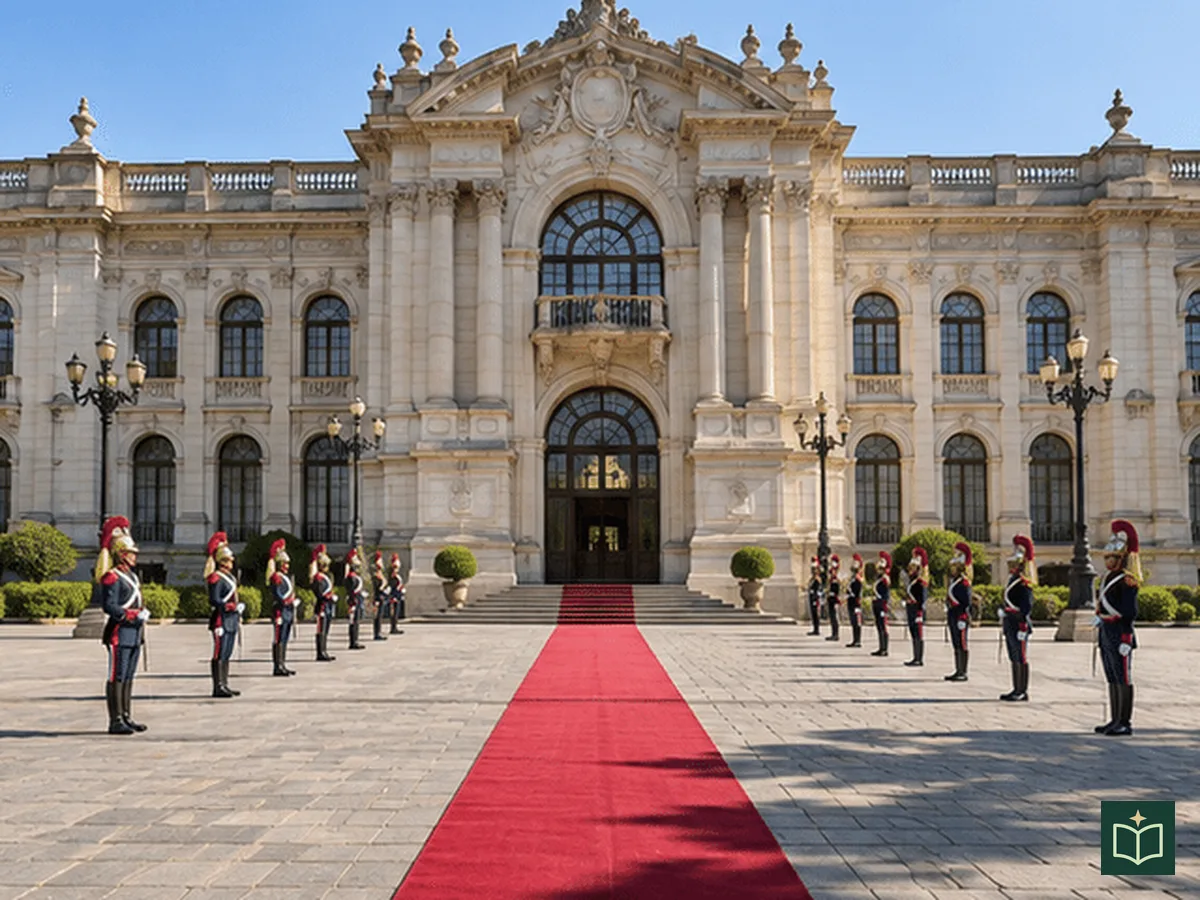
A state visit usually opens with a formal arrival ceremony. The guest is greeted by the host head of state, a military guard of honour is inspected, both national anthems are played and a gun salute, often of 21 rounds, may be fired. In Abu Dhabi, visiting heads of state are commonly received at the Qasr Al Watan presidential palace, with an honour guard and a ceremonial welcome. Other set pieces include laying a wreath at a national memorial, exchanging decorations and gifts and a state banquet with speeches. Every detail, from seating to the order of the speeches, is agreed in advance by the two countries' protocol teams.
The business behind the pageantry
Ceremony is only part of the programme. Leaders hold private talks, often followed by sessions with delegations of ministers and officials. Governments commonly use state visits to sign agreements and memoranda of understanding on trade, investment, energy, education or culture, since the occasion provides a fixed deadline that helps negotiators finish their work. Business delegations often travel with the visiting head of state, and investment forums may be organised on the side. Joint statements issued at the end set out what the two sides have agreed and how they describe their relationship, wording that diplomats study closely for signs of a deeper or changing partnership.
Who does what
In countries where the head of state is largely ceremonial, such as a constitutional monarch, the state visit's formal programme is led by the monarch, while political talks are conducted by the elected government. In presidential systems, the same person handles both the ceremonial and political sides. In the UAE, the President of the federation hosts and makes state visits, combining both roles, with ministers and federal entities preparing the agreements. Behind the scenes, protocol departments, security services and foreign ministries coordinate logistics, from airport arrangements and motorcades to translation, gifts and media access, often sending advance teams weeks ahead to rehearse each step.
Reading a visit
The details of a visit carry meaning. Whether it is designated a state, official or working visit, who greets the guest on arrival, the length of the stay and the honours offered are all deliberate choices. A visit by a head of state to a country for the first time, or after a long gap, can mark a new phase in relations. Observers also watch the agreements signed and the language of the joint statement. A common misconception is that the pageantry is mere spectacle. In fact, it is a carefully calibrated form of communication, showing both domestic audiences and the wider world how one country values another.
Sources & further reading
Figures are rounded and widely published; check the linked organisations for the latest editions. These organisations do not endorse this website.