One ocean, five names
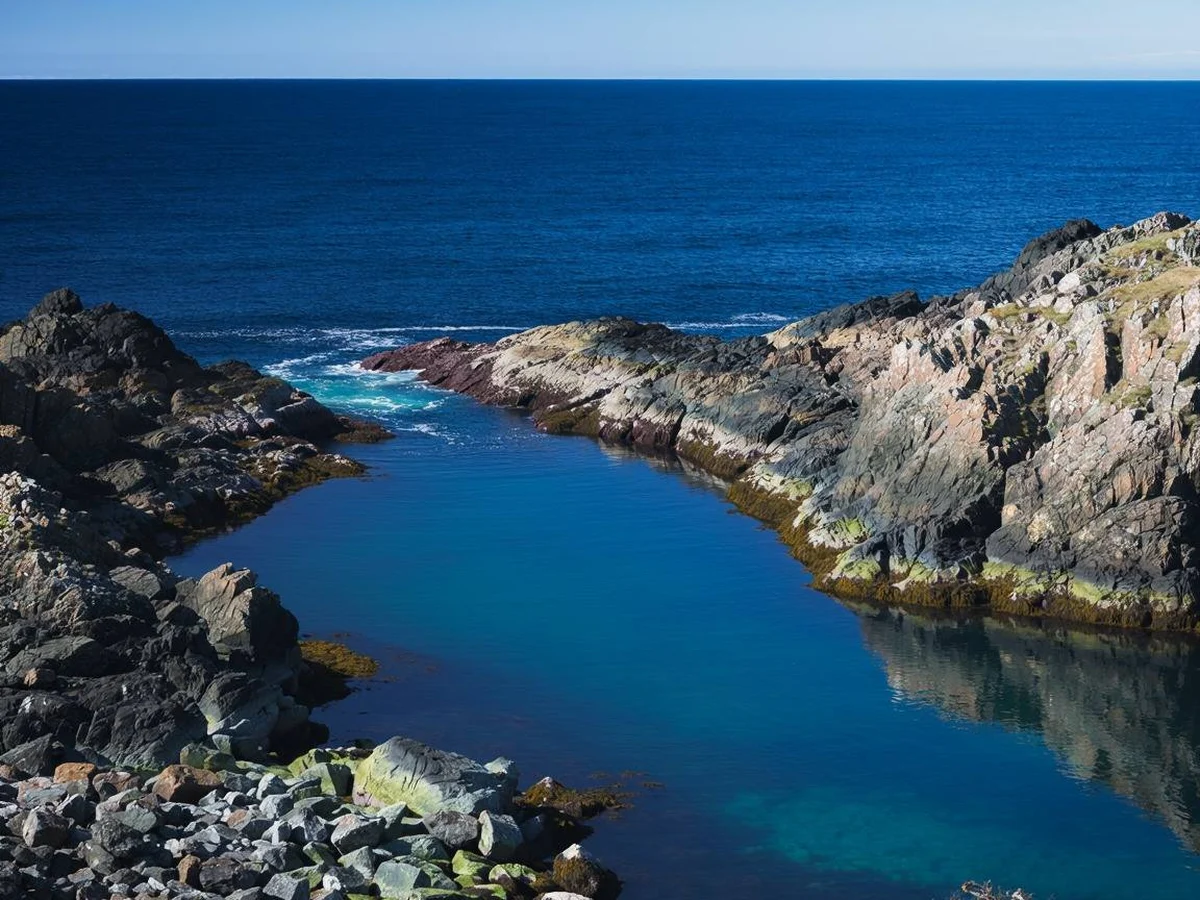
Salt water covers about 71% of Earth's surface, and it is all connected. Water can flow from the Arctic to the Southern Ocean without crossing land. Because of that, oceanographers sometimes talk about a single world ocean. For practical purposes, it is divided into five oceans: the Pacific, Atlantic, Indian, Southern and Arctic. Their borders are partly set by continents and partly by agreed lines of latitude or longitude, so the exact areas vary a little between sources.
What makes an ocean
An ocean is one of these great basins. Oceans are thousands of kilometres across and contain the deepest places on Earth. The Pacific alone is larger than all the land on the planet put together, and its Mariana Trench plunges to nearly 11,000 metres. Oceans have their own large current systems, such as the Gulf Stream in the Atlantic, which move heat around the globe. Their sheer size means they shape climate, weather and life on every continent.
What makes a sea
A sea is a smaller body of salt water, usually partly enclosed by land and connected to an ocean. The Mediterranean, linked to the Atlantic through the narrow Strait of Gibraltar, is a classic example. Others, such as the Arabian Sea, are open areas along the edge of an ocean. Seas tend to be shallower than oceans, and because land surrounds them, their temperature and saltiness can differ noticeably from the open water beyond.
A sea without shores
There are exceptions. The Sargasso Sea in the North Atlantic has no coastline at all. Instead, it is defined by ocean currents that circle around it, and it is famous for floating mats of golden-brown seaweed called sargassum. It is an important breeding ground for European and American eels. The Sargasso Sea shows that geographers name seas for their distinct conditions and life, not only because land happens to wrap around them.
Seas that are really lakes
Some bodies of water are called seas even though they are not connected to any ocean. The Caspian Sea, between Europe and Asia, is the largest inland body of water on Earth and is usually classed as a lake, although it is slightly salty. The Dead Sea, on the border of Jordan, Israel and the West Bank, is also a salt lake, more than 400 metres below sea level and about ten times saltier than the open ocean.
The newest ocean
For a long time, most maps showed four oceans. The waters around Antarctica were split between the Pacific, Atlantic and Indian. Scientists argued that these southern waters behave differently, because they are driven by the Antarctic Circumpolar Current, which flows all the way around the continent. The International Hydrographic Organization proposed the Southern Ocean in 2000, and in 2021 the National Geographic Society began recognising it on its maps as the fifth ocean.
Why the difference matters
The words matter for maps, shipping and law. International rules divide marine areas into zones measured from a country's coastline, and enclosed or semi-enclosed seas have special provisions encouraging neighbours to cooperate. Scientists also study seas separately because they can warm faster or become more polluted than the open ocean, as water exchanges with it slowly. Clear names make it easier to compare data, plan rescue operations and protect fragile marine life.
How deep they go
Depth is another clear difference. The average depth of the world ocean is about 3,700 metres, and most of the sea floor is a vast, dark abyssal plain. Many seas sit on continental shelves and are far shallower: the Arabian Gulf averages only around 35 metres deep. Shallow water warms faster in summer, holds less oxygen when hot and is strongly affected by rivers, tides and evaporation.
The Gulf and the Arabian Sea
Closer to home, the waters around the UAE show both ideas. The Arabian Gulf is a shallow, partly enclosed body of water connected to the Gulf of Oman through the narrow Strait of Hormuz. The Gulf of Oman opens onto the Arabian Sea, which in turn is part of the Indian Ocean. So a boat leaving Fujairah heading east is moving from a gulf into a sea and then into one of the world's great oceans.
Sources & further reading
- NOAA · What's the difference between an ocean and a sea? ↗
- National Geographic · Southern Ocean ↗
- Wikipedia · Sargasso Sea ↗
Areas are approximate; definitions of ocean and sea boundaries vary between organisations. Photograph: original AI-generated illustration (Adobe Firefly). Reference organisations do not endorse this website.