A trading city in the desert
Hegra, also known as al-Hijr and Mada'in Salih, lies in the north-west of Saudi Arabia, about 20 km north of the oasis town of AlUla. It was the second city of the Nabataean kingdom, whose capital was Petra in today's Jordan. The Nabataeans were Arab traders who grew rich from caravan routes carrying incense, spices and other goods between southern Arabia and the Mediterranean. Hegra stood on that route, with wells and farmland that supported a sizeable town. Its houses, built of mud brick, have largely vanished. What survives in spectacular form are the tombs carved into the sandstone outcrops scattered across the plain.
How the tombs were carved
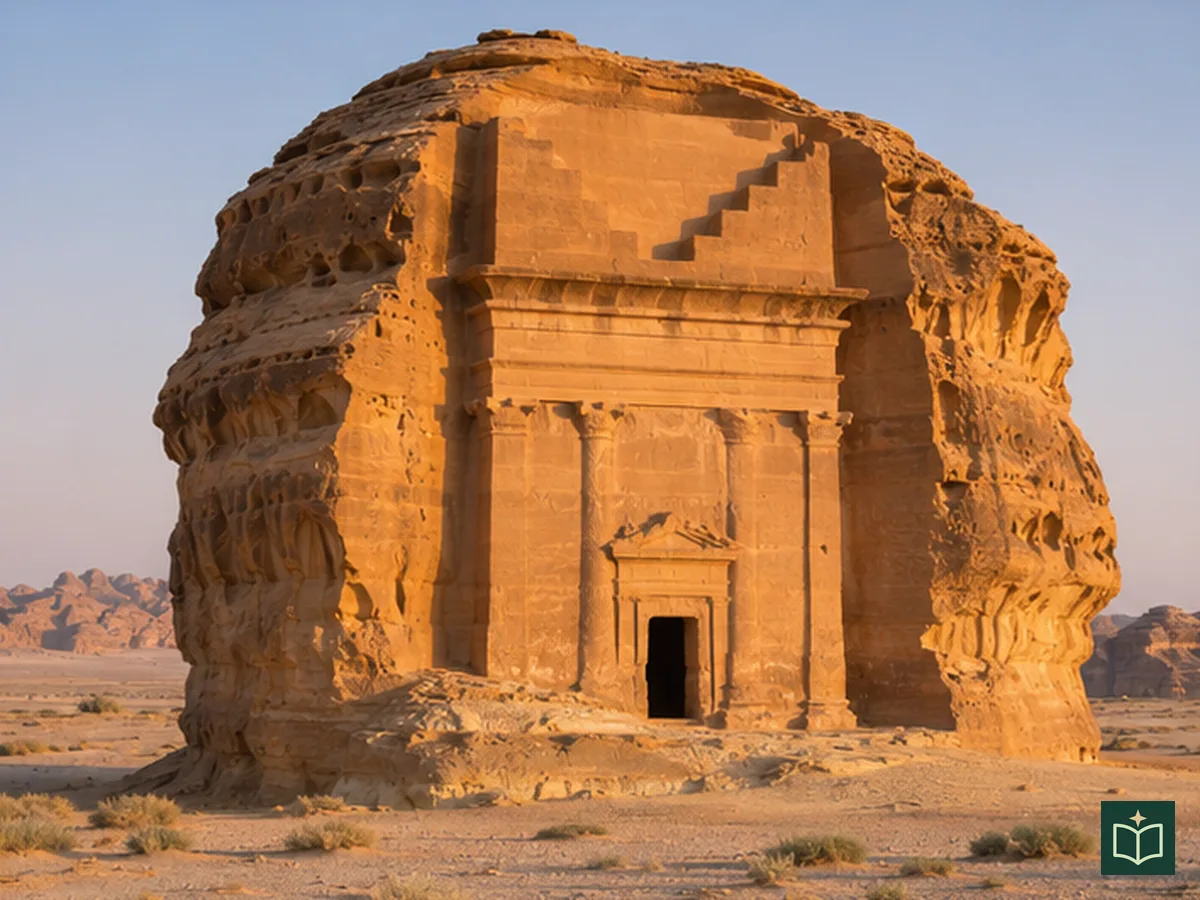
Nabataean masons carved tomb façades directly into the rock face rather than building them from blocks. They began at the top, cutting the crowning decoration first, and worked downwards, using the uncut rock below as their working platform. This removed the need for scaffolding and meant that unfinished tombs show finished upper parts above rough rock. Behind each façade, a doorway leads into a chamber cut into the hill, with niches and graves for several family members. The soft sandstone made carving relatively easy, but it also weathers quickly, which is why conservation of the façades is a constant concern.
A mixed style
The façades combine local and foreign ideas. Many are crowned by rows of step-like shapes, a motif with roots in Mesopotamian and Arabian architecture. Others add classical elements borrowed from the Hellenistic and Roman world, such as pilasters, pediments and decorative urns. Carved eagles, sphinx-like figures, snakes and faces appear on some doorways. The size and elaboration of a tomb reflected the owner's wealth and rank. The most famous, Qasr al-Farid, stands alone on its own rock outcrop and was never fully finished, leaving visible tool marks at its base. It shows the carving process frozen part-way through, a rare glimpse of ancient working methods.
Inscriptions that name the dead
Above many doorways, framed panels carry inscriptions in Nabataean Aramaic. They typically name the owners, state who may be buried inside, give the date by the year of the reigning Nabataean king, and set out fines payable to the king or to the god Dushara for anyone who sells the tomb or buries an outsider. Several were made for women in their own right. These texts make Hegra unusually well documented, letting historians date many tombs to between about 1 BC and AD 75. The Nabataean script used in them is also an ancestor of the Arabic alphabet, which gives the inscriptions wider importance.
Gods, feasts and Rome
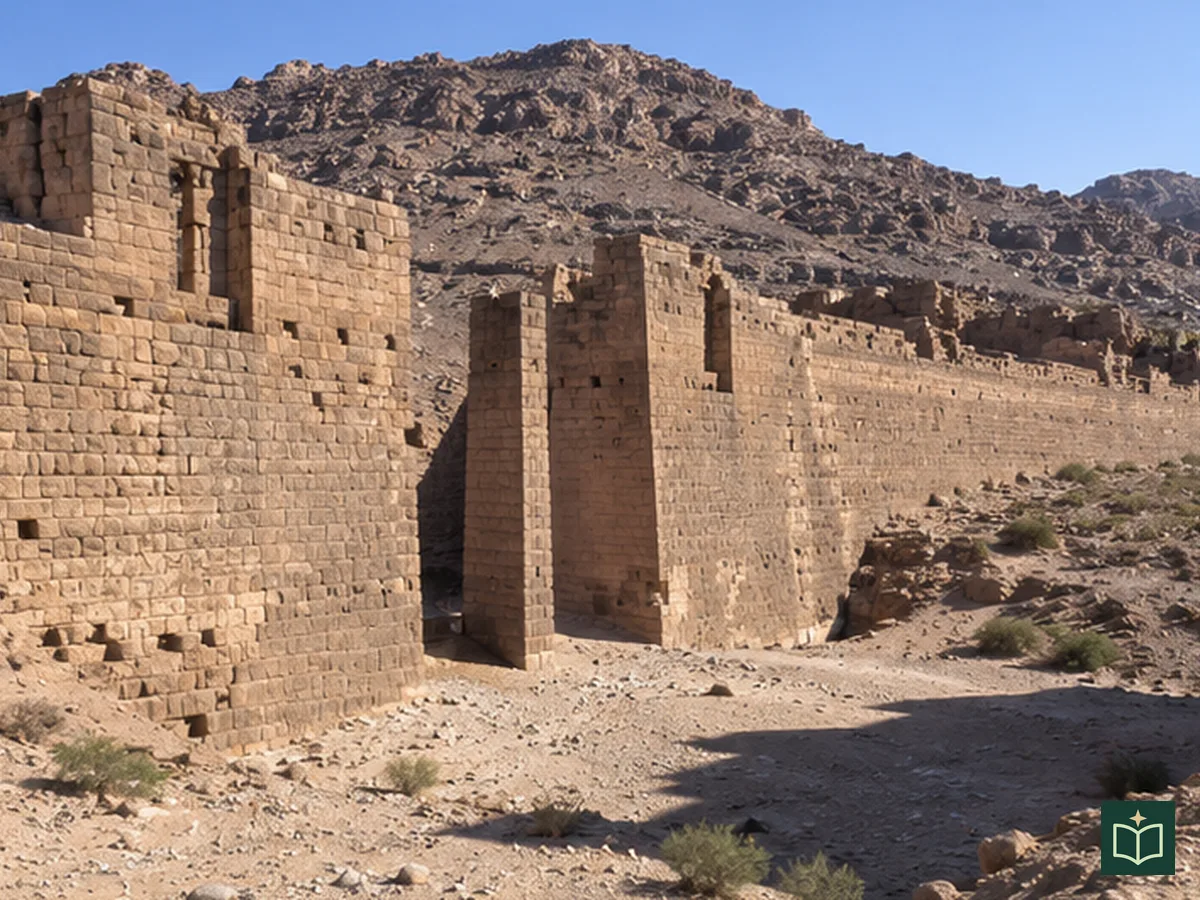
Beyond the tombs, Hegra has religious and civic remains. The Jabal Ithlib outcrop contains a narrow passage and a rock-cut hall known as the Diwan, probably used for ritual banquets, along with small niches for divine symbols. In AD 106 Rome annexed the Nabataean kingdom, making it the province of Arabia, and Hegra came under Roman control. A Latin inscription records repairs to the town wall in the second century. As trade routes shifted towards the sea, the town declined. Later Islamic tradition associates the site with the people of Thamud, mentioned in the Quran, which kept its name alive in memory.
World Heritage and tourism
In 2008 Hegra became Saudi Arabia's first UNESCO World Heritage Site, recognised as the best-preserved Nabataean site after Petra. For visitors, the difference is atmosphere: Petra's tombs crowd a narrow valley, while Hegra's stand apart on an open sandy plain, each outcrop a separate monument. Since opening to wider tourism in recent years, the site has become central to the development of AlUla as a heritage destination, alongside earlier Dadanite and Lihyanite sites nearby. Archaeological teams continue to excavate the residential area, cemeteries and water systems, gradually rebuilding a picture of daily life in a city long known only for its dead.
Sources & further reading
Figures are rounded and widely published; check the linked organisations for the latest editions. These organisations do not endorse this website.