Two kinds of storm
When strong winds sweep across dry land, they can lift loose material into the air. If most of that material is sand, the event is called a sandstorm. If it is mostly finer particles of silt and clay, it is called a dust storm. In everyday speech, especially in desert regions such as the Arabian Peninsula, the two terms are often used for the same event. Scientists, though, care about the difference because the particles behave very differently.
How big is sand?
Geologists define sand as grains between 0.0625 and 2 millimetres across, about the size of a grain of table salt or smaller. Silt is finer, and clay finer still, less than about 0.002 millimetres. Dust storms are mainly made of silt and clay. A single grain of sand can weigh thousands of times more than a particle of fine dust, so the wind treats them in completely different ways.
Sand moves low
Because sand grains are heavy, the wind usually cannot keep them in the air for long. Instead, grains jump and bounce along the ground in a process called saltation, rarely rising more than a metre or two. When they land, they knock other grains into the air. That is why, during a sandstorm, the air near your legs can be thick with stinging sand while the sky above is still visible. Saltation also builds and moves sand dunes.
Dust goes high and far
Fine dust particles are light enough to be carried high into the atmosphere by rising air. They can reach several kilometres in altitude and stay aloft for days or weeks. Dust from the Sahara regularly crosses the Atlantic to the Caribbean and South America. NASA scientists have estimated that winds carry around 180 million tonnes of Saharan dust out of Africa each year, with some of it fertilising the Amazon rainforest.
Walls of dust
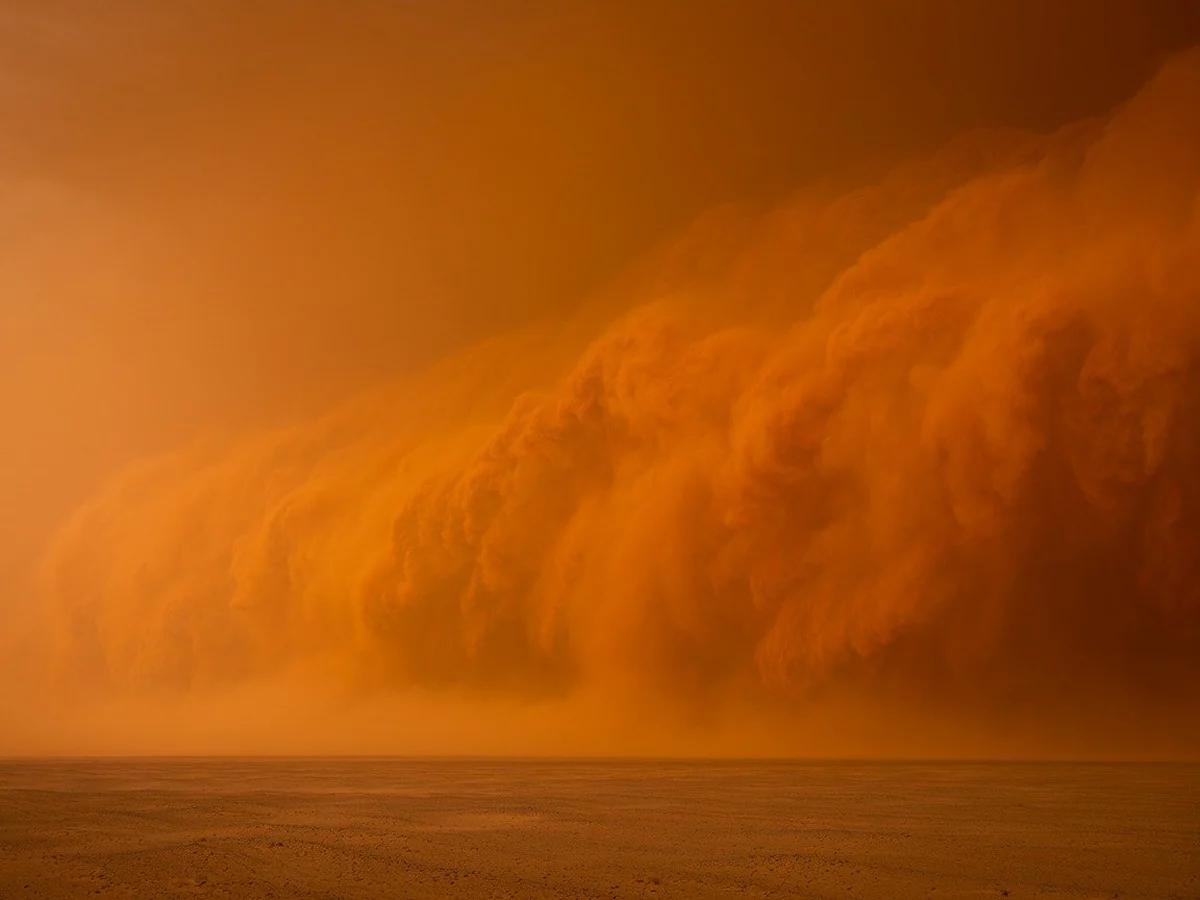
The most dramatic dust storms are haboobs, towering walls of dust pushed ahead of thunderstorms by strong downdraughts of cold air. They can be hundreds of metres or even kilometres high and arrive suddenly, turning day into night within minutes. Haboobs occur in Sudan, the Arabian Peninsula, parts of the United States and Australia. Large-scale dust storms can also be driven by strong regional winds such as the shamal in the Gulf.
Storms in the UAE
In the UAE, dust and sand events are most common in late spring and summer, when the land is hot and dry and the shamal wind blows from the north-west. They can reduce visibility sharply on roads, delay flights and affect air quality. The National Centre of Meteorology issues warnings for blowing dust and low visibility, and drivers are advised to slow down, use headlights and keep a safe distance.
Health effects
Both sand and dust can irritate the eyes, nose and throat, but fine dust is more harmful to health because it can be breathed deep into the lungs. Particles smaller than 10 micrometres, known as PM10, and especially those smaller than 2.5 micrometres, PM2.5, are linked to breathing and heart problems. People with asthma, older adults and young children are most at risk during dust events and are often advised to stay indoors.
Effects beyond health
Dust storms have wider effects too. They can reduce the output of solar panels by covering them with a dusty layer, which is why solar plants in desert regions use cleaning robots. They can damage machinery and disrupt aviation. At the same time, dust plays a role in nature, carrying minerals such as iron and phosphorus to oceans and forests, where they support plankton and plant growth far from the deserts where they began.
Staying safe
During a sandstorm or dust storm, the safest place is indoors with windows and doors closed. If you must go out, wear a well-fitting mask and protective glasses. Drivers should pull over safely if visibility becomes very poor, turn on hazard lights and wait for conditions to improve. Following weather warnings and planning travel around them helps avoid getting caught in the worst of the storm.
Sources & further reading
General information; follow local weather warnings during dust events. Photograph: original AI-generated illustration (Adobe Firefly). Reference organisations do not endorse this website.