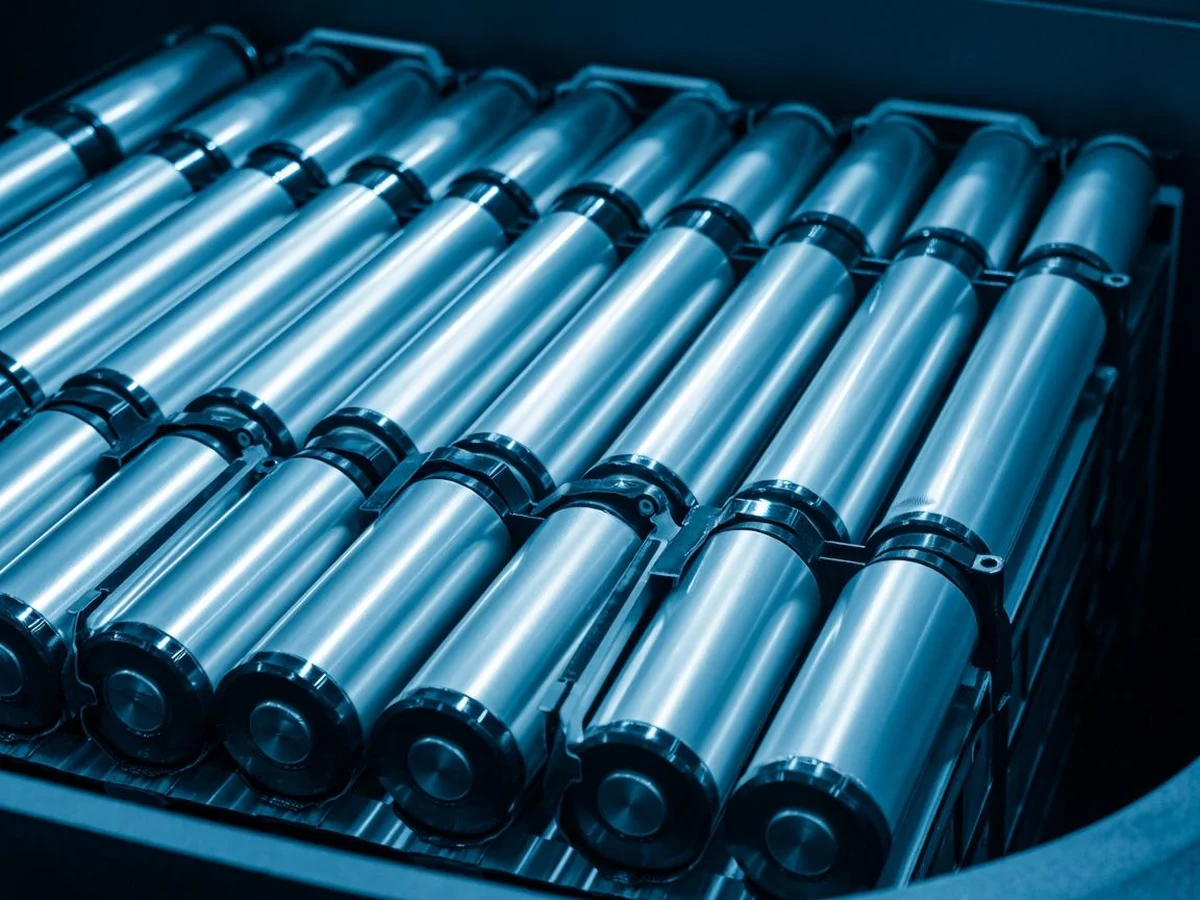
A battery in every pocket
Lithium-ion batteries are everywhere. They power smartphones, laptops, wireless earbuds, power tools, electric scooters and electric cars, and are increasingly used to store electricity for homes and power grids. Sony released the first commercial lithium-ion battery in 1991. In 2019, John Goodenough, M. Stanley Whittingham and Akira Yoshino shared the Nobel Prize in Chemistry for their work developing this technology, which the committee said had laid the foundation for a wireless, fossil-fuel-free society.
The main parts
Every lithium-ion cell has four main parts. The anode, the negative electrode, is usually made of graphite. The cathode, the positive electrode, is made of a lithium metal oxide or phosphate. Between them is an electrolyte, a liquid or gel that lets lithium ions move but blocks electrons. A thin porous separator keeps the two electrodes from touching. Metal foils, usually copper and aluminium, collect the current.
Charging
When you plug in a phone, the charger pushes electrons into the anode through the external circuit. At the same time, lithium ions leave the cathode, travel through the electrolyte and slot between layers of graphite in the anode, a process called intercalation. Energy is stored because the lithium is now in a higher-energy position, a bit like water pumped up into a reservoir. Charging slows near full to protect the battery.
Discharging
When you use the device, the process reverses. Lithium ions flow back through the electrolyte from the anode to the cathode, while electrons flow through the external circuit, powering the phone's screen, processor and radio. Because the ions and electrons must move together, a battery only works when there is a complete circuit. The voltage of a typical lithium-ion cell is around 3.6 to 3.7 volts.
Different chemistries
Lithium-ion is a family, not a single battery. Nickel manganese cobalt and nickel cobalt aluminium cathodes store a lot of energy in a small, light package, making them popular for phones and long-range cars. Lithium iron phosphate cells store a little less energy but are cheaper, last longer and are less prone to overheating, so they are widely used in many electric cars, buses and grid storage systems. Researchers are developing sodium-ion and solid-state batteries too.
Falling prices
One of the biggest changes in energy over the past decade has been the falling cost of batteries. According to BloombergNEF's annual surveys, average lithium-ion battery pack prices fell from more than 1,100 US dollars per kilowatt-hour in 2010 to about 115 dollars in 2024. Larger factories, better chemistry and improved manufacturing all helped. Cheaper batteries have made electric cars more affordable and allowed huge battery systems to support solar and wind power.
Why batteries wear out
Every time a battery is charged and discharged, small chemical changes occur. A thin layer forms on the anode, some lithium becomes trapped, and electrode materials slowly crack. Over hundreds or thousands of cycles, the battery holds less charge. Heat speeds up this ageing, which matters in hot climates such as the UAE. Avoiding full charges for long periods, keeping devices out of direct sun and not letting them sit at zero percent can help extend battery life.
Safety
Lithium-ion batteries are generally safe, but if damaged, poorly made or overheated, they can enter thermal runaway, where heat triggers reactions that produce more heat, leading to fire. That is why airlines restrict spare batteries in checked luggage, and why it is important to use approved chargers and never puncture or crush cells. Battery management systems in electric cars and devices constantly monitor temperature, voltage and current to keep cells within safe limits.
Energy in numbers
Battery capacity is often measured in watt-hours or milliamp-hours. A typical smartphone battery holds around 15 to 20 watt-hours, while an electric car battery may hold 50 to 100 kilowatt-hours, several thousand times more. Engineers also talk about energy density, the amount of energy stored per kilogram. Better energy density means lighter phones and longer driving range from the same battery weight.
Recycling and the future
Lithium-ion batteries contain valuable metals such as lithium, cobalt, nickel and copper, which can be recovered and reused. Recycling capacity is growing worldwide, and new rules in places such as the European Union require recycled content in future batteries. Engineers continue to improve energy density, charging speed and safety. Whatever the next breakthrough, the humble lithium ion shuttling between two electrodes is likely to keep powering the world for years to come.
Sources & further reading
- Nobel Prize · Chemistry 2019 ↗
- BloombergNEF · Battery price survey ↗
- Wikipedia · Lithium-ion battery ↗
General information; battery prices and performance vary by chemistry, supplier and year. Photograph: original AI-generated illustration (Adobe Firefly). Reference organisations do not endorse this website.