Not always red, not always tidal
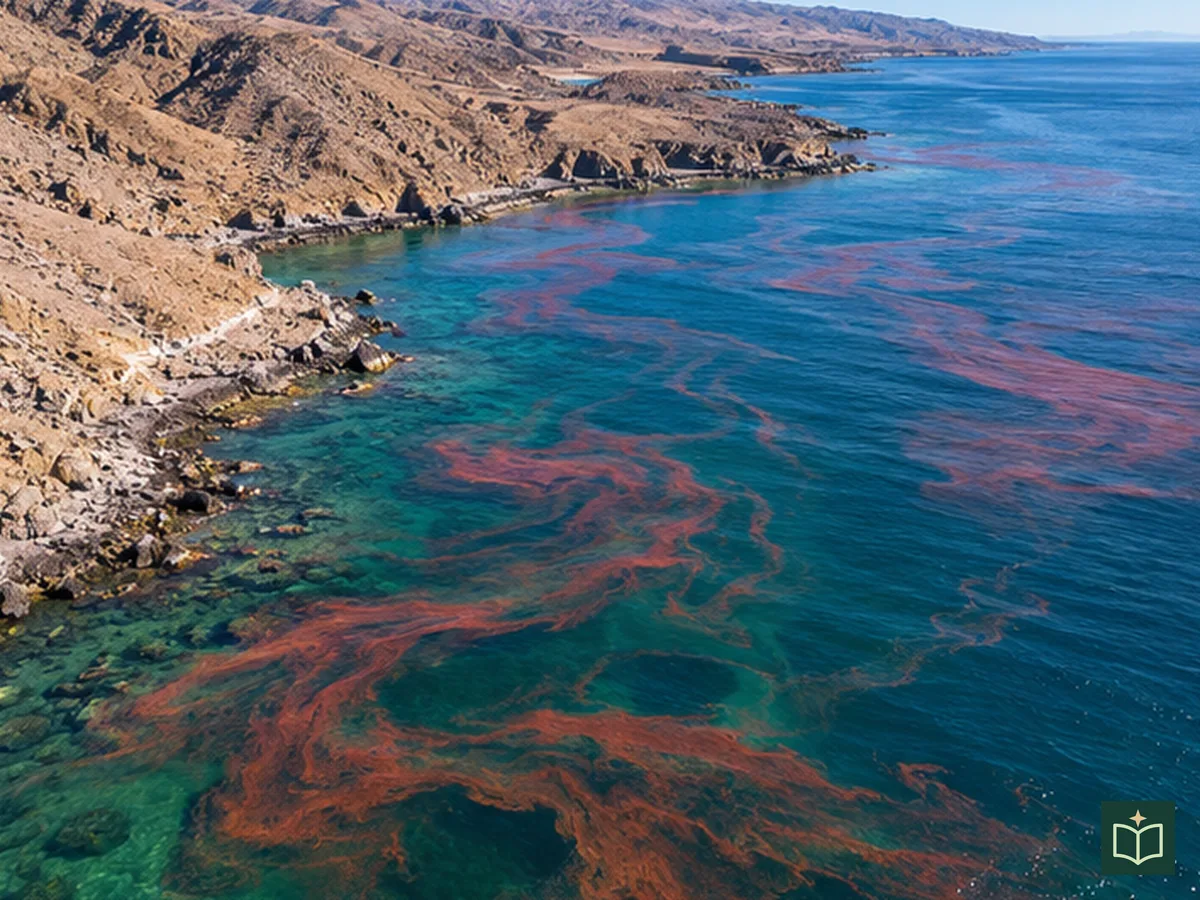
The term red tide describes patches of sea discoloured by vast numbers of microscopic algae. The water may turn red, brown, orange or green depending on the species and its pigments. The name is misleading on two counts: many blooms are not red, and they have nothing to do with tides. Scientists prefer the term harmful algal bloom when a bloom causes damage, whether through toxins, oxygen loss or clogging. Most phytoplankton blooms are natural and beneficial, forming the base of marine food chains. Only a small share of species cause problems, but when they do, the effects can reach fisheries, tourism, public health and water supplies.
The recipe for a bloom
Algae need light and nutrients, mainly nitrogen and phosphorus, to grow. Blooms often start when nutrients increase suddenly, through river runoff, sewage, agricultural fertiliser or the natural upwelling of deep, nutrient-rich water. Warm temperatures speed up growth, and calm, stratified conditions keep the algae near the sunlit surface instead of mixing them downward. Under the right combination, a population can double within a day or two, reaching millions of cells per litre. Currents and winds then concentrate the algae along fronts or coastlines, creating visible streaks and patches. Some species also form resting cysts on the sea floor, which can seed new blooms in later years.
How blooms do harm
Blooms cause damage in three main ways. Some species produce toxins. These can build up in shellfish, leading to illnesses such as paralytic shellfish poisoning in people who eat them, or drift in sea spray, irritating the lungs of beachgoers. Florida’s recurring blooms of Karenia brevis are a well-known example. Second, when a dense bloom dies, bacteria decomposing the algae consume large amounts of oxygen, leaving water so depleted that fish and other animals suffocate. Third, some algae clog or damage fish gills directly, even without toxins. Fish farms are especially vulnerable, because caged fish cannot swim away from the affected water.
The Gulf’s great bloom
In 2008, a large bloom of the dinoflagellate Margalefidinium polykrikoides, then known as Cochlodinium, spread through the Gulf of Oman and into the Arabian Gulf. It persisted for months into 2009, discolouring the water, killing large numbers of fish and damaging coral reefs off Oman and the UAE’s east coast. It also hit an essential service. Several desalination plants in the UAE and Oman had to reduce output or temporarily shut down, because the algae clogged intake filters and threatened to foul the membranes used to purify water. For a region that relies heavily on desalinated seawater, the event was a warning about a less obvious vulnerability.
Green tides of the Arabian Sea
Since the early 2000s, scientists have recorded increasingly large winter blooms of Noctiluca scintillans in the northern Arabian Sea and the Gulf of Oman. This species often contains green symbiotic algae, turning the water a vivid green. By night, it can create sparkling blue bioluminescence along beaches, sometimes called sea sparkle. Noctiluca can thrive in water low in oxygen, and researchers have linked its spread to changes in winter mixing and oxygen levels in the Arabian Sea. Although not usually toxic itself, it can reach densities that harm fisheries by depleting oxygen and releasing ammonia, and it has also affected water intakes along the coast.
Watching and responding
Blooms cannot be prevented entirely, but they can be monitored. Satellites track changes in ocean colour, revealing blooms as they form and drift. Coastal agencies sample water for harmful species, close shellfish beds when toxins are detected and warn the public. Desalination operators use pre-treatment systems such as dissolved air flotation to remove algae before water reaches membranes, and they can adjust intake operations during a bloom. Reducing nutrient pollution from sewage and farming helps in many regions. As seas warm and coasts develop, scientists expect bloom patterns to change, which makes understanding them more important for both ecosystems and daily life.
Sources & further reading
Figures are rounded and widely published; check the linked organisations for the latest editions. These organisations do not endorse this website.