A map that explains itself
Many place names in the UAE and the wider Gulf are built from a handful of everyday Arabic words describing the land. Once you know them, the map starts to read like a description of the coast, mountains and desert. Ras means head or headland, Jebel means mountain or hill, Khor means creek or inlet, and Wadi means valley or dry riverbed. Others include Ain for spring, Jazira for island and Mina for port. The definite article Al, meaning the, appears often, and Abu and Umm, meaning father of and mother of, are common in names that link a place with a defining feature.
Ras: the headland
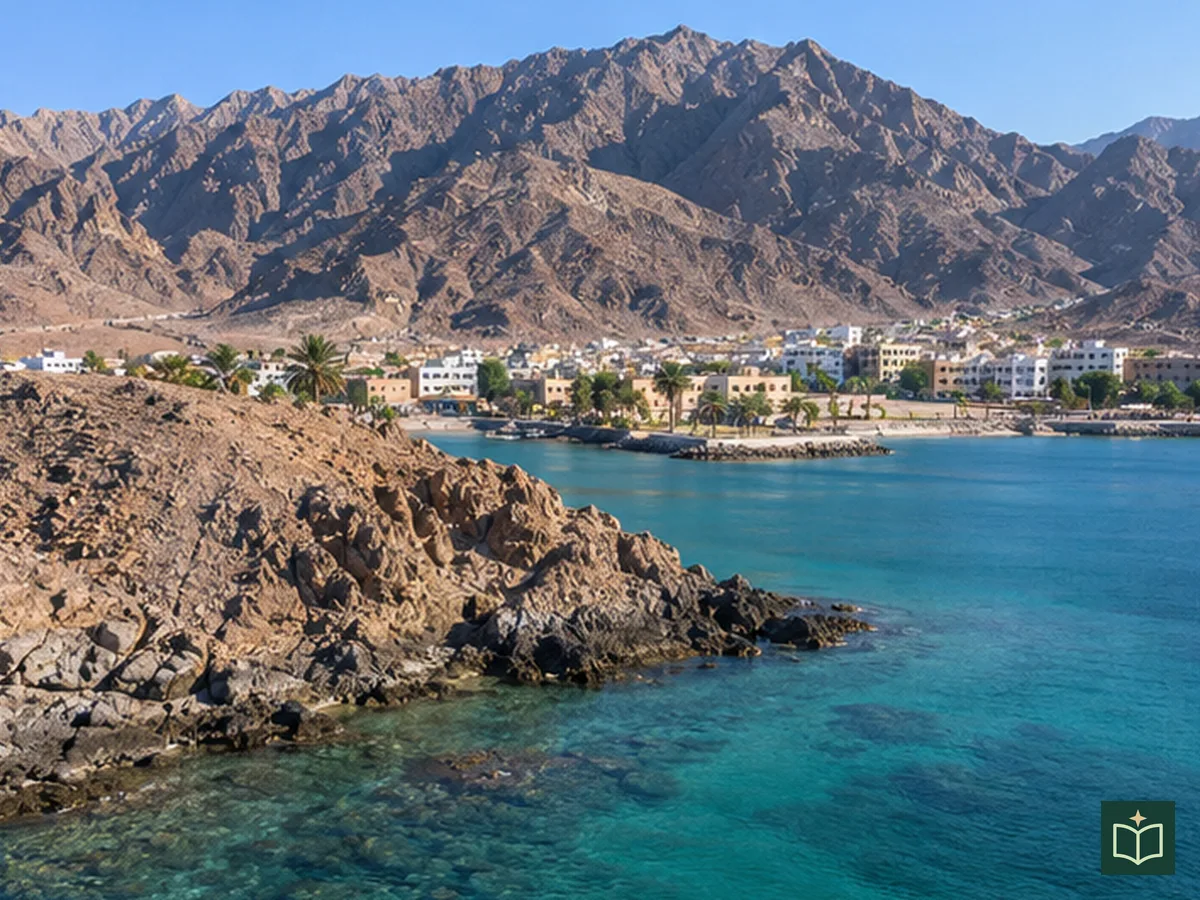
Ras literally means head, and in place names it usually marks a headland or the end point of something. Ras Al Khaimah is commonly translated as the headland, or top, of the small tent, and local accounts explain the name in more than one way. In Dubai, Ras Al Khor marks the head of the creek, the inland end of Dubai Creek, where a wildlife sanctuary of mudflats and mangroves now shelters flamingos. Across the region, Ras appears on many capes and points, such as Ras Musandam at the tip of the peninsula overlooking the Strait of Hormuz, where it signals a coastline jutting into the sea.
Jebel and Hajar: the mountains
Jebel, also spelled Jabal, means mountain or hill, and it is used for anything from a towering peak to a modest rise. Jebel Jais in Ras Al Khaimah holds the highest point in the UAE, Jebel Hafeet rises above Al Ain on the Oman border, and Jebel Ali is named after a low hill near the coast that gave its name to today’s port and industrial zone. The mountain range itself is called Al Hajar, from the Arabic for rock or stone, a fitting description of its bare, rugged slopes. Height is not what makes a jebel; prominence above the surrounding land is.
Khor and Wadi: water in the landscape
A khor is a creek, inlet or tidal channel. Khor Fakkan and Khor Kalba on the east coast sit beside such inlets, and Dubai Creek is known in Arabic as Khor Dubai. Across the border, Khor Al Adaid in Qatar is an inland tidal sea surrounded by dunes. A wadi is a valley or seasonal riverbed that is dry most of the year but can flood after rain. Wadi Wurayah in Fujairah, Wadi Bih in Ras Al Khaimah and Wadi Shawka are popular for hiking. Ain, meaning both eye and spring, gives Al Ain its name, after the springs that fed its oases.
People, animals and colours
The second half of a name often records who or what marked the place. Abu Dhabi is usually translated as father of the gazelle, linked to a traditional story of hunters following a gazelle to fresh water on the island. Umm Al Quwain is often rendered as mother of the two powers, interpreted as land and sea. Jazirat Al Hamra means the red island, describing a former island village in Ras Al Khaimah. Sharjah comes from a word for east. Some names, including Dubai, have no agreed origin; several explanations exist, and historians still debate them. Where uncertainty remains, it is better to present the possibilities than to pick one.
Why spellings vary
Visitors often notice that the same name appears in several forms: Jebel and Jabal, Khor and Khawr, Ras and Ra’s, Al and El. This happens because Arabic has 28 letters, some representing sounds that English lacks, and because there is no single system for writing Arabic in Latin script. Spoken Gulf Arabic also differs from formal Arabic, which affects how vowels are heard and written. Official signs in the UAE have gradually standardised many spellings, but older maps and documents preserve alternatives. Understanding the core words helps make sense of both, turning a confusing road sign into a small lesson in geography and heritage.
Sources & further reading
Figures are rounded and widely published; check the linked organisations for the latest editions. These organisations do not endorse this website.