Why leaves look green
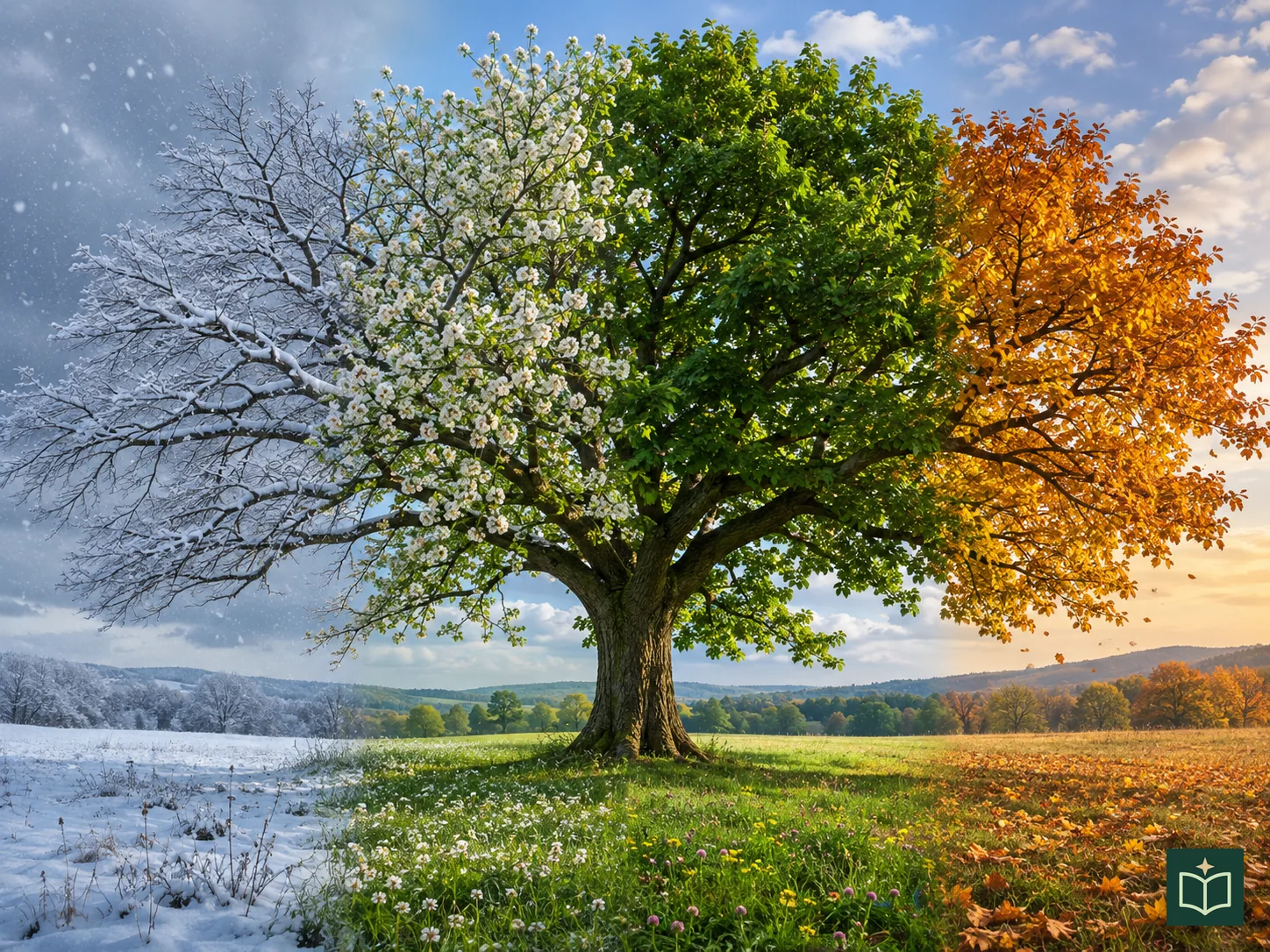
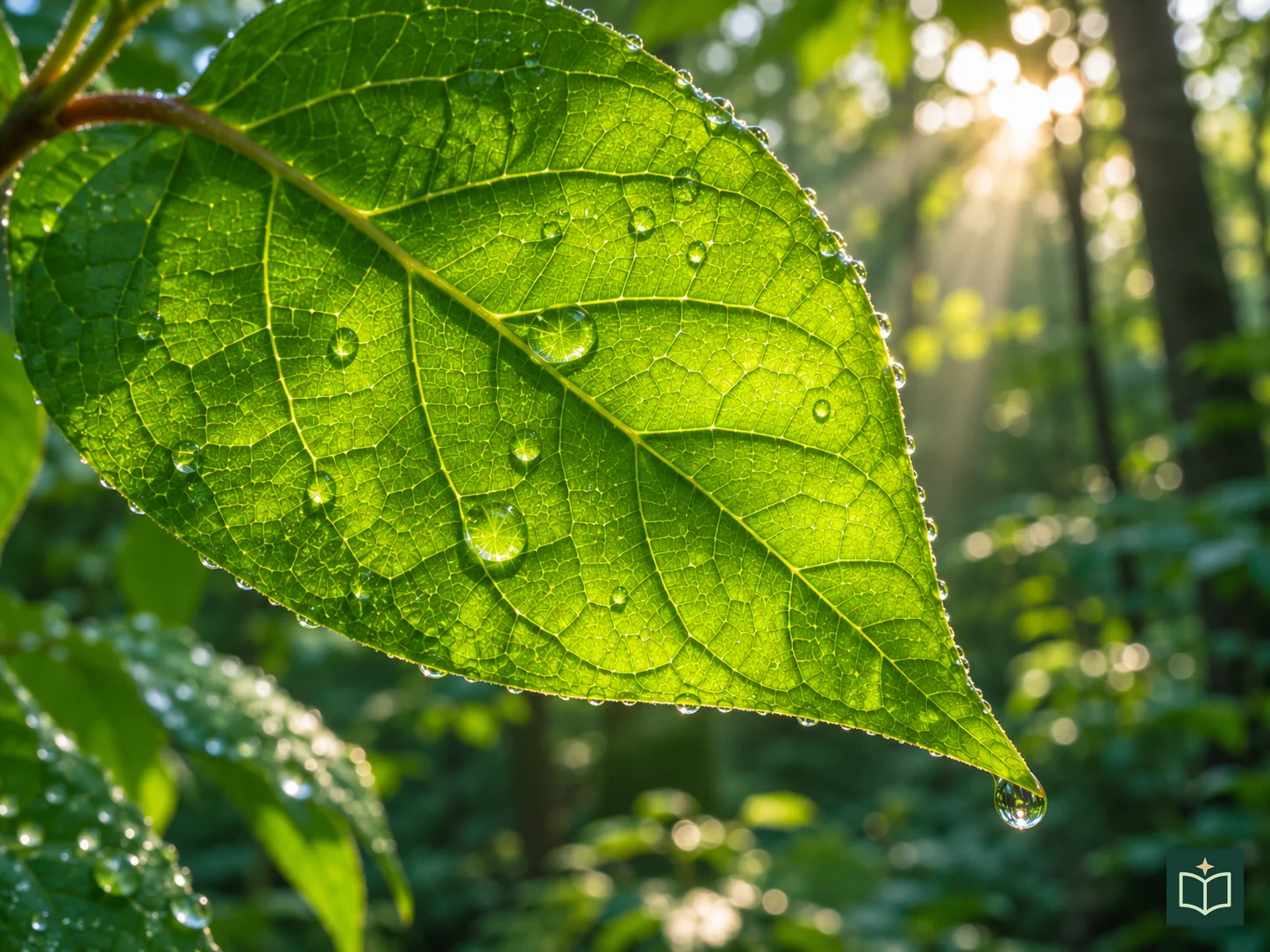
Chlorophyll, the main pigment inside chloroplasts, absorbs strongly in the blue and red parts of sunlight. It reflects much of the green light, which is why most leaves look green to us. Other pigments, such as carotenoids, capture extra wavelengths and protect the leaf from excess light. In autumn, when chlorophyll breaks down in many trees, those yellow and orange pigments become visible.
Two linked stages
The process runs in two connected stages. In the light-dependent reactions, energy from sunlight splits water, releases oxygen and charges two energy carriers, ATP and NADPH. In the second stage, the Calvin cycle, the plant spends that energy to attach carbon dioxide from the air to existing molecules and build sugars. The second stage does not need light directly, but it depends on the first.
Where the oxygen comes from
Experiments with labelled oxygen atoms showed that the oxygen plants release comes from water, not from carbon dioxide. That is a useful correction to a common assumption. The carbon in the sugar comes from the air: a tree’s trunk is built largely from carbon dioxide that drifted in through tiny pores on its leaves, called stomata.
Why it matters beyond the leaf
Plants, algae and some bacteria are the primary producers at the base of most food chains. Ocean phytoplankton carry out a large share of global photosynthesis alongside land plants. The process also pulls carbon dioxide from the atmosphere, which is why forests and oceans are central to discussions about the carbon cycle and climate.
Sources & further reading
Figures are rounded and widely published; check the linked organisations for the latest editions. These organisations do not endorse this website.