A stretching force
Gravity weakens with distance. The ocean on the side facing the Moon feels a slightly stronger pull than Earth’s centre, while the far-side ocean feels a slightly weaker one. The result is a stretching, or tidal, force that raises water on both the near and far sides. As Earth rotates, a typical coastline passes through both bulges, giving two high tides and two low tides each tidal day.
Why the timing shifts
The Moon orbits Earth in the same direction Earth spins, so a point on Earth needs about 50 extra minutes to catch up with the Moon each day. That is why high tide arrives roughly 50 minutes later from one day to the next, with high waters about 12 hours and 25 minutes apart on many coasts.
Spring and neap tides
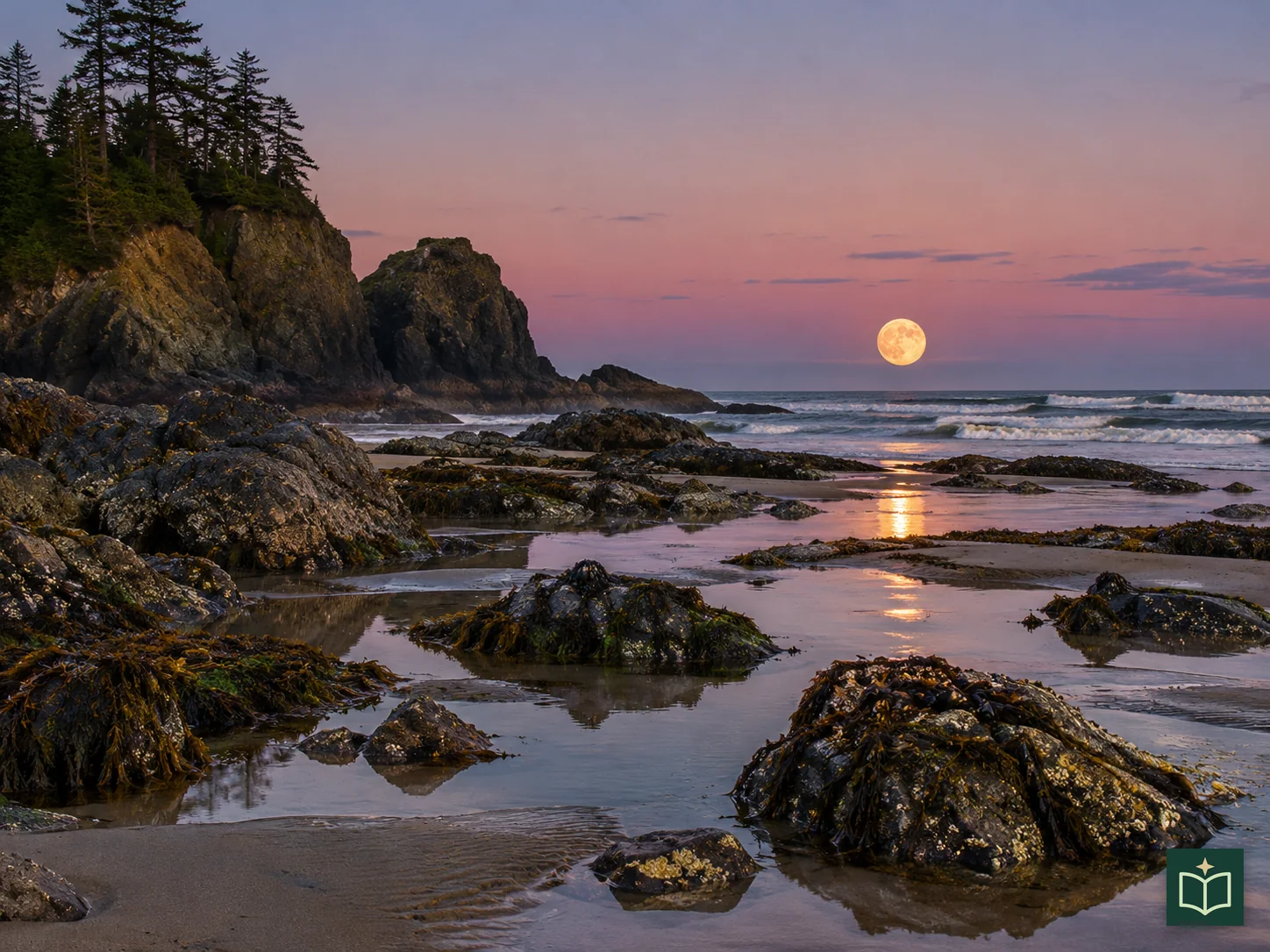
The Sun also raises tides, a little under half as strong as the Moon’s. Around new and full Moon, the Sun and Moon line up and their effects combine, creating spring tides with the largest range. At the quarter Moons they work at right angles, creating neap tides with the smallest range. The word spring here means to leap up, not the season.
Coastlines change everything
The simple two-bulge picture is only the start. Real tides are shaped by ocean basins, coastline shape and seabed depth. Some places have just one high tide a day. Funnel-shaped bays can amplify tides dramatically: the Bay of Fundy in Canada is often cited for a tidal range that can exceed 15 metres.
Sources & further reading
Figures are rounded and widely published; check the linked organisations for the latest editions. These organisations do not endorse this website.