Reclaiming land
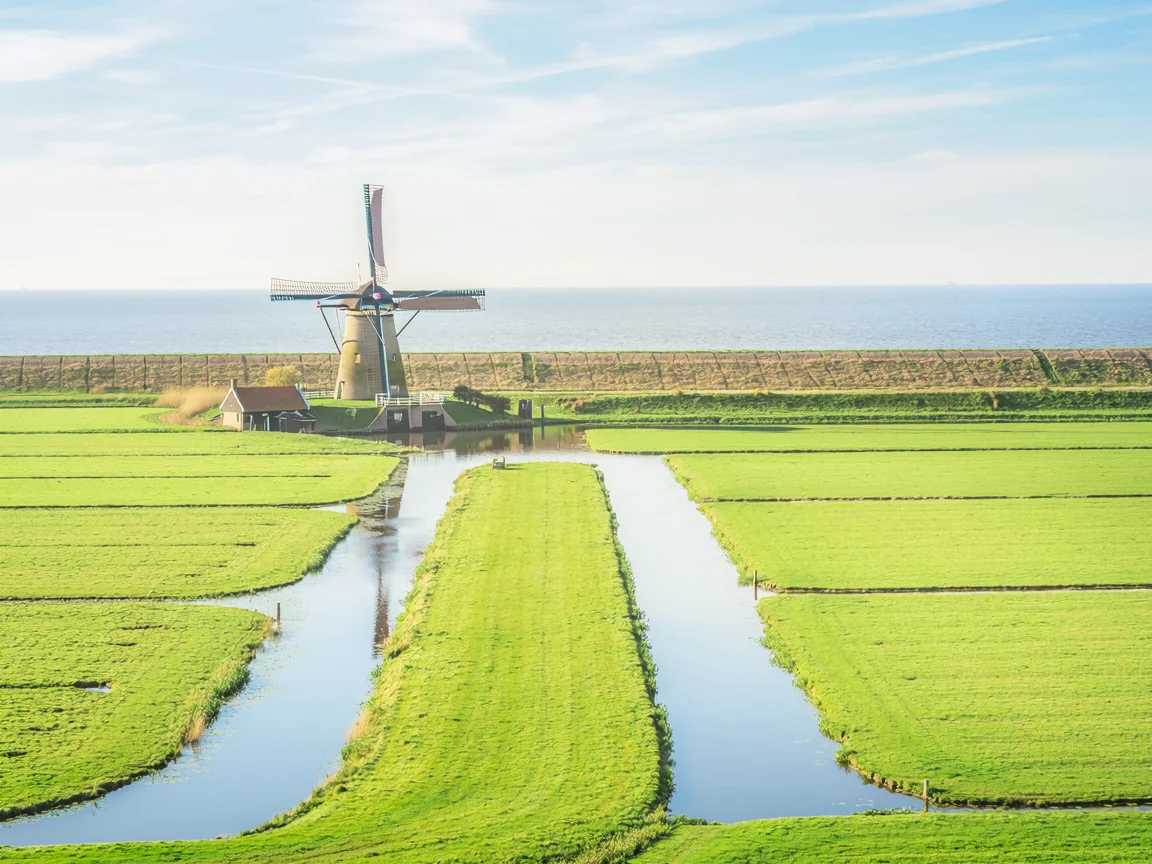
From the Middle Ages, communities built dykes around marshes and lakes and drained them, first with ditches, then with windmills from the fifteenth century onward. The Beemster polder, drained in 1612, is a UNESCO World Heritage Site.
Water boards
Local water boards, some dating back to the thirteenth century, manage dykes, canals and water levels. They are elected bodies with their own taxes, reflecting how central water is to Dutch life.
Big projects
The Afsluitdijk, completed in 1932, closed off the Zuiderzee, creating the freshwater IJsselmeer and new polders such as Flevoland. After a 1953 storm flood killed more than 1,800 people, the Delta Works built storm surge barriers in the southwest.
Living with rising seas
Draining makes peat soils compact and sink, so the land keeps getting lower. With sea levels rising, the Netherlands invests heavily in flood defences and, through programmes such as Room for the River, gives rivers more space to flood safely.
Sources & further reading
Photograph: original AI-generated illustration (Adobe Firefly). Reference organisations do not endorse this website.