The ingredients
Thunderstorms need moisture in the lower atmosphere, unstable air that keeps rising once lifted, and a trigger such as daytime heating, a weather front or air forced up mountains.
Building the cloud
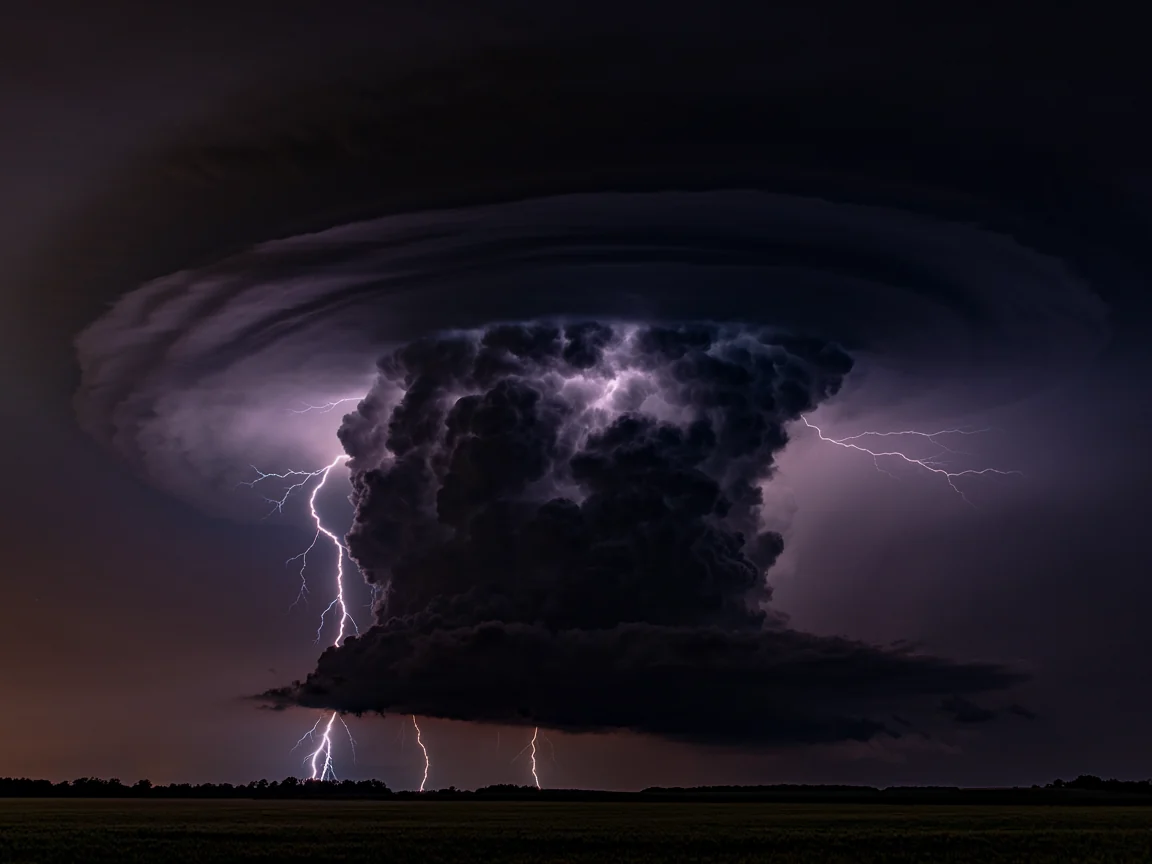
As warm air rises and cools, water vapour condenses, releasing heat that keeps the air rising. Cumulonimbus clouds can reach more than 12 kilometres high, spreading into an anvil shape at the top.
Lightning and thunder
Collisions between ice crystals and soft hail called graupel separate electric charges within the cloud. When the difference becomes large enough, lightning discharges, heating the air to around 30,000 °C and causing the rapid expansion we hear as thunder.
Severe storms
Some storms produce large hail, damaging winds, flash floods and tornadoes. Supercells, with rotating updrafts, are the most powerful. Weather services issue warnings based on radar and satellite data.
Sources & further reading
Photograph: original AI-generated illustration (Adobe Firefly). Reference organisations do not endorse this website.