Climate at the scale of a garden
A weather forecast gives one temperature for a whole city, but anyone who has crossed from a sunny car park into a shaded garden knows the reality is patchier. A microclimate is the distinct climate of a small area, from a few square metres to a few square kilometres, that differs from its surroundings. It may be warmer, cooler, wetter, drier or calmer. Microclimates arise because the factors that shape climate on a global scale, such as sunlight, airflow, moisture and the ability of surfaces to store heat, also vary over very short distances. Gardeners, farmers, architects and city planners all work with them deliberately.
Slopes and sunshine
The angle and direction of the ground matter enormously. In the Northern Hemisphere, a south-facing slope meets the sun more directly and warms faster than a north-facing one, which may stay in shadow for much of the winter. Vineyards along Germany’s Mosel valley cling to steep south-facing slopes for exactly this reason, ripening grapes at a latitude where flat land would struggle. In mountain valleys, snow lingers for weeks longer on shaded slopes. In the Southern Hemisphere the pattern flips, and north-facing slopes are the warm ones. Even a single wall can create a sun trap warm enough for fruit that would fail in the open.
Frost hollows and cold air
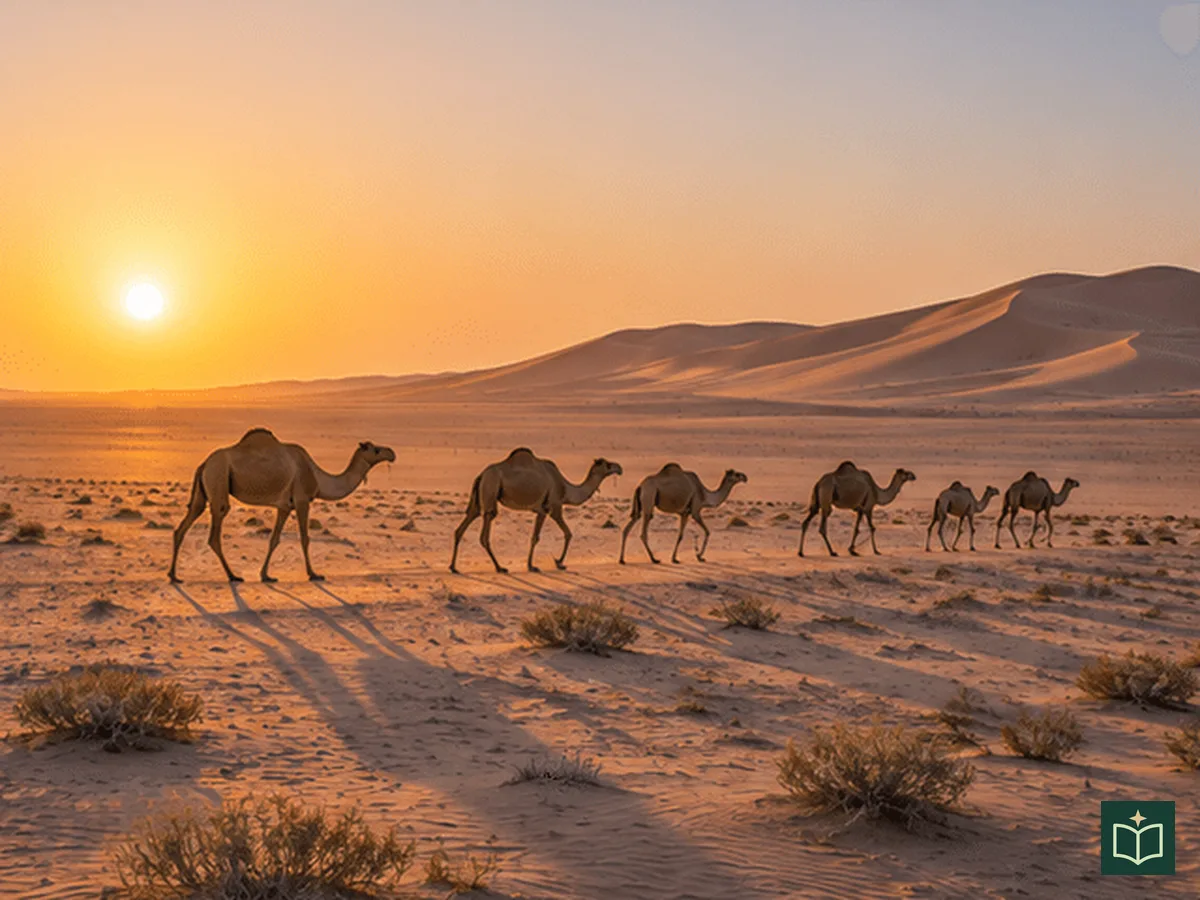
On clear, calm nights the ground loses heat rapidly, and the air touching it cools and becomes denser. Like water, this cold air flows downhill and collects in valleys and hollows. The bottom of a valley can therefore be several degrees colder than the slopes above, a pattern called a temperature inversion. Gardeners know these spots as frost hollows, where blossoms are killed while trees higher up the slope survive. Fruit growers plant orchards on hillsides, not valley floors, and sometimes run large fans or heaters to mix the air on frosty nights. In desert wadis, the same process makes winter nights surprisingly cold.
Water, plants and surfaces
Water warms and cools more slowly than land, so lakes and coasts soften temperature swings nearby. Plants cool their surroundings by shading the ground and by evaporating water through their leaves. Hard surfaces behave very differently. Dry sand, asphalt and dark stone absorb sunlight and can become far hotter than the air: on a summer afternoon in the Gulf, desert sand or a car park surface can exceed 60°C while official air temperature is in the mid-forties. That gap is one reason meteorologists measure air temperature in a shaded, ventilated screen roughly 1.25 to 2 metres above grass, so readings are comparable from place to place.
The cool courtyard
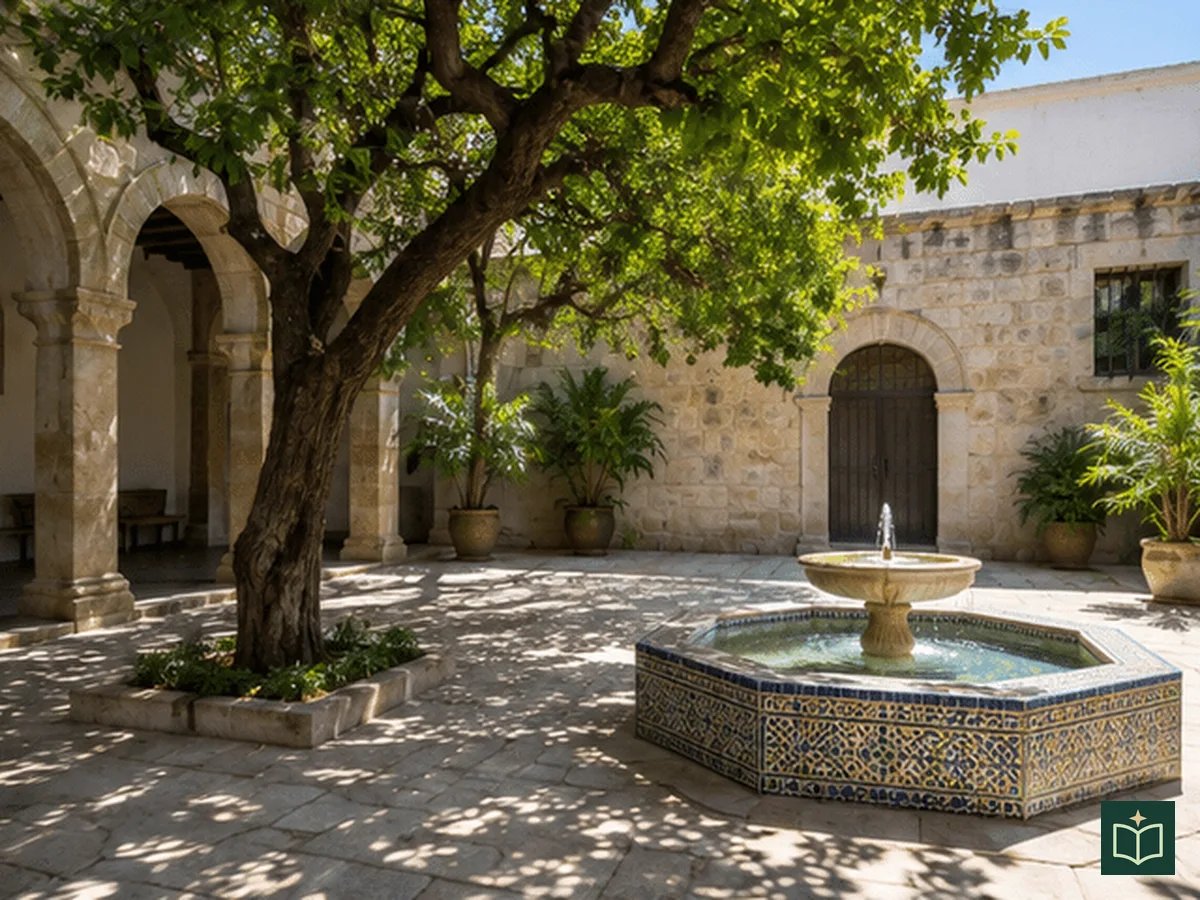
Traditional architecture across the Middle East and the Mediterranean is a master class in creating microclimates. A courtyard surrounded by thick walls is shaded for much of the day, and at night cool air settles into it from the open sky. Trees, a fountain or a small pool add evaporative cooling and humidity. Narrow, shaded alleys in old towns keep sun off the ground, and wind towers catch breezes above the rooftops. Modern Gulf developments borrow the same ideas with shaded walkways, planting and water features. Cities as a whole form their own larger microclimate, the urban heat island, but streets and courtyards can be shaped within it.
Why it matters
Microclimates explain why plants thrive in one corner of a garden and die in another, why a road freezes on a shaded bend but not on an open straight, and why an outdoor workplace can be far more dangerous than the official forecast suggests. They also offer tools. Planting shade trees, choosing pale paving and orienting buildings to catch breezes can cut local temperatures by several degrees, lowering both discomfort and energy use. Farmers choose fields, crops and planting dates to suit local conditions. As heat waves become more frequent, designing comfortable microclimates on a street-by-street scale is moving from a craft into a planning priority.
Sources & further reading
- World Meteorological Organization · Guide to instruments and methods of observation ↗
- Met Office (UK) · Microclimates ↗
- Britannica · Microclimate ↗
Figures are rounded and widely published; check the linked organisations for the latest editions. These organisations do not endorse this website.