Measuring under water
Most tunnels described as undersea also run some distance under land at each end. The Seikan Tunnel, for example, is about 54 kilometres long, but only about 23 kilometres lie beneath the Tsugaru Strait. This table ranks tunnels by the length that passes beneath the sea, which places the Channel Tunnel first. For the shorter tunnels further down, published figures usually give total length, most of which lies under water, so their values are slightly generous. Bridges and causeways, and tunnels still under construction, are excluded. The result is a list dominated by Japan and by Norway, a country whose fjords and islands make tunnels a practical alternative to ferries.
The Channel Tunnel
The Channel Tunnel, opened in 1994, links Folkestone in England with Coquelles near Calais in France. It consists of three parallel tunnels, two for trains and a central service tunnel, about 50 kilometres long, of which about 38 kilometres run beneath the English Channel, roughly three quarters of the total. Engineers bored it through a layer of chalk marl, a soft but watertight rock that was easy to cut and kept water out. Boring machines from Britain and France met beneath the sea in 1990, within a few centimetres of each other. Passenger trains, freight trains and shuttle trains carrying cars and lorries now pass through it daily.
Seikan’s deep crossing
Japan’s Seikan Tunnel, opened in 1988, connects the main island of Honshu with Hokkaido. Its undersea section is shorter than the Channel Tunnel’s, but it lies much deeper, about 240 metres below sea level, because the strait is deep and the rock beneath it volcanic and fractured. Construction took more than two decades and cost the lives of dozens of workers, as tunnellers fought floods and unstable ground. The idea gained urgency after a typhoon sank several ferries in the strait in 1954, killing more than a thousand people. Since 2016, high-speed Shinkansen trains have run through it, sharing tracks with freight trains.
Norway’s fjord tunnels
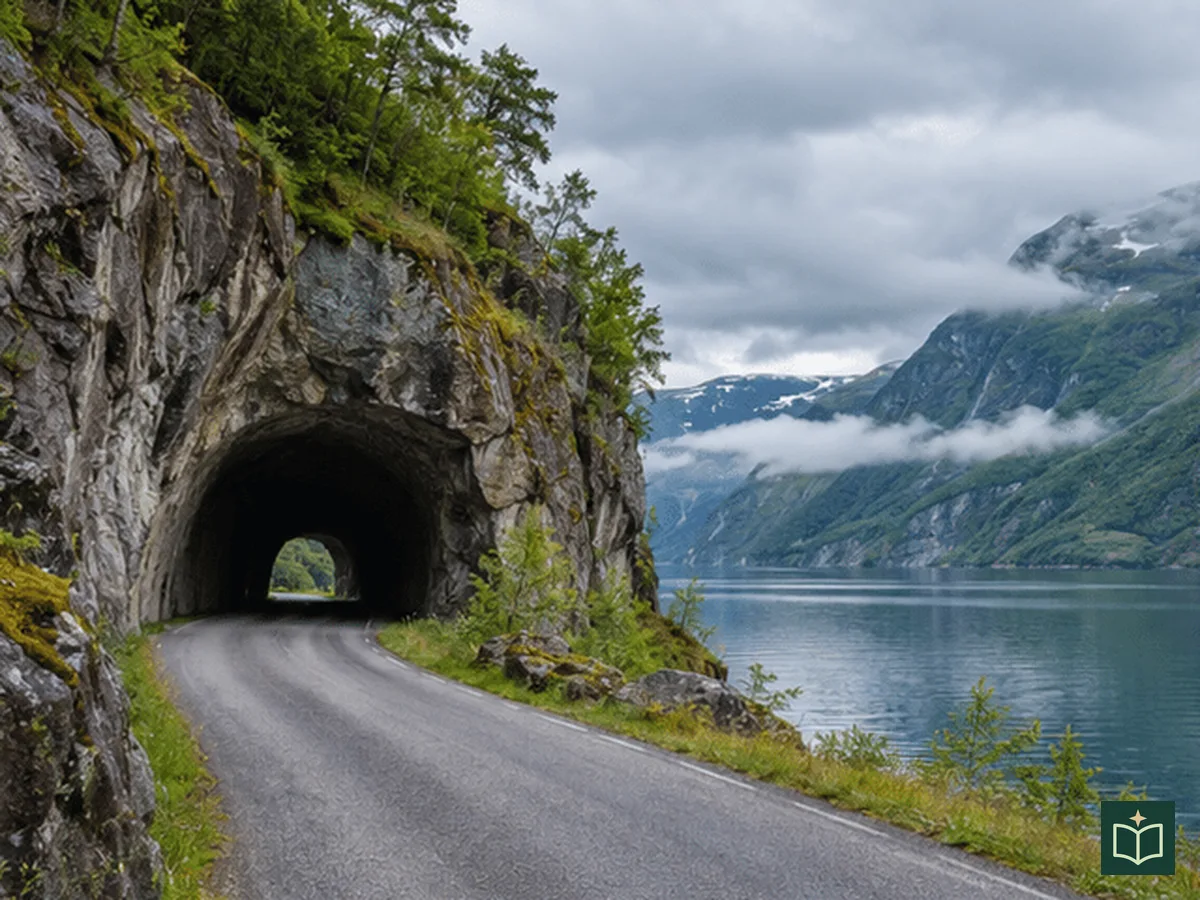
Norway has built dozens of undersea road tunnels to connect islands and cross fjords. The Ryfylke Tunnel near Stavanger, opened in 2019, is about 14 kilometres long and descends to about 290 metres below sea level, making it one of the deepest road tunnels in the world. The Eiksund Tunnel reaches a similar depth with gradients steep enough to test lorry brakes. These tunnels are drilled and blasted through hard rock rather than bored by giant machines. Norway is now building the Rogfast tunnel, about 27 kilometres long, which will become the world’s longest and deepest undersea road tunnel when it opens in the 2030s.
Sunken tube tunnels
A different technique is used where the sea floor is soft or shallow. Engineers dredge a trench, then float out huge concrete sections, sink them into place and join them under water. The tunnel beneath the Pearl River estuary on the Hong Kong–Zhuhai–Macau crossing, about 6.7 kilometres long, was built this way and opened in 2018 as part of a route that combines bridges, artificial islands and tunnel. Tokyo Bay’s Aqua-Line, opened in 1997, combines a tunnel of about 10 kilometres with a bridge, linked by an artificial island that serves as a rest stop. Denmark and Germany are building the Fehmarnbelt tunnel the same way, at about 18 kilometres.
Why build under the sea
Undersea tunnels are costly, but they offer advantages over bridges. They do not block shipping lanes, they are unaffected by wind, fog and storms, and they leave no structure on the skyline. In busy straits such as the Bosphorus, where the Marmaray rail tunnel opened in 2013, they allow traffic to cross without interfering with ships. The Gulf has no long undersea transport tunnels; links such as the King Fahd Causeway between Saudi Arabia and Bahrain use bridges and embankments across shallow water. Dubai and other cities do, however, use tunnels beneath creeks and harbours, and engineers continue to study tunnel options for future regional crossings.
Sources & further reading
Figures are rounded and widely published; check the linked organisations for the latest editions. These organisations do not endorse this website.