Metals that float
We tend to think of metal as heavy, but three metallic elements are less dense than water. Lithium, at about 0.53 grams per cubic centimetre, is the lightest of all solid elements, and potassium and sodium follow. Drop a small piece of any of them into water and it floats, although not peacefully: all three react with water, releasing hydrogen gas and heat, and potassium can burst into a lilac flame. For that reason they are stored under oil in laboratories. The rest of the table runs up to aluminium, at about 2.7 grams per cubic centimetre, which is still only about a third of the density of steel.
Why some metals are light
Density depends on two things: how heavy each atom is, and how closely the atoms are packed. The alkali metals, the group that includes lithium, sodium, potassium, rubidium and caesium, have a single outer electron held loosely far from the nucleus. That makes their atoms unusually large for their mass, and their crystal structure leaves plenty of space between them. Potassium is even less dense than sodium, despite heavier atoms, because its atoms are so much larger. Further down the group, the weight of the nucleus starts to win, which is why caesium ends up denser than magnesium and beryllium, even though it is one of the most reactive metals known.
Light enough to fly
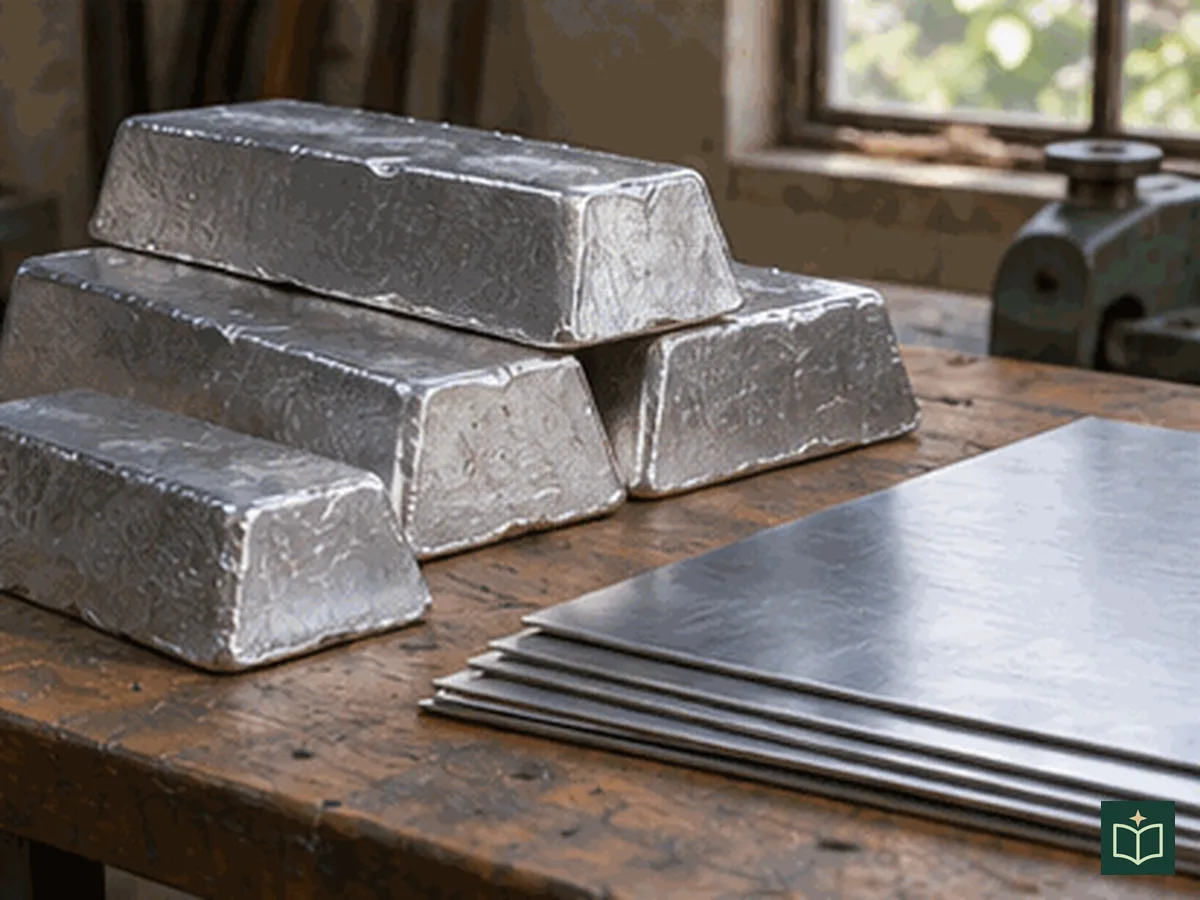
Only a few of these metals are useful as structural materials, because the alkali metals are too soft and reactive. Aluminium and magnesium are the exceptions. Steel has a density of about 7.85 grams per cubic centimetre, so a part made from aluminium of the same size weighs roughly 2.9 times less, and one made from magnesium about 4.5 times less. Alloyed with small amounts of copper, zinc or other elements, they become strong enough for aircraft frames, car wheels, laptop cases and bicycle parts. The Gulf is a major aluminium producer, with large smelters in the UAE and Bahrain turning alumina into metal using locally generated electricity.
Lithium’s new career
Lithium’s lightness is one reason it dominates rechargeable batteries. Its atoms are small in mass and give up an electron easily, so a lithium-ion cell can store a lot of energy per kilogram. Phones, laptops and electric cars all rely on that combination. Battery cells contain lithium compounds rather than the bare metal, which would react with moisture in the air. Beryllium, another light metal, has a different specialist role. It is stiff, stable and transparent to X-rays, so it is used in X-ray windows and in precision space mirrors. Its dust is toxic, however, so it is machined only under strict safety controls.
Calcium and strontium in disguise
Calcium, strontium and rubidium appear in the table even though most people never see them as metals. Calcium is familiar from bones, teeth, limestone and chalk, where it is locked into compounds. As a pure element it is a dull silvery metal that tarnishes quickly in air. Strontium is best known for giving fireworks their deep red colour, again as a compound rather than as metal. Rubidium is used in some atomic clocks. These examples show that density is a property of the pure element, measured under standard conditions, and says little about how the element usually appears in nature or in daily life.
What the list leaves out
This table covers metallic elements, not alloys or materials. Some magnesium–lithium alloys are lighter than pure magnesium, and metal foams filled with tiny bubbles can be lighter still, but they are engineered products rather than elements. The table also measures solids at room temperature. Gallium and mercury, for example, melt at low temperatures, and mercury is far too dense to appear here. At the other end of the scale sit osmium and iridium, more than forty times as dense as lithium. Between them, these extremes show how much the arrangement and mass of atoms can change the weight of a piece of metal the same size.
Sources & further reading
Figures are rounded and widely published; check the linked organisations for the latest editions. These organisations do not endorse this website.