Length first
This ranking orders whale species by the maximum length commonly reached by large adults, rounded to the nearest metre or half metre. The blue whale leads clearly, with the longest reliably measured animals approaching 30 metres. The fin whale, a slimmer and faster relative, follows at about 26 metres. Below that, several species reach 15 to 20 metres and overlap, so the order in the lower half is approximate. Females of most baleen whales grow slightly larger than males, while male sperm whales are much larger than females. Historic records from the whaling era sometimes give greater lengths, but many were estimated rather than carefully measured, so modern references are more cautious.
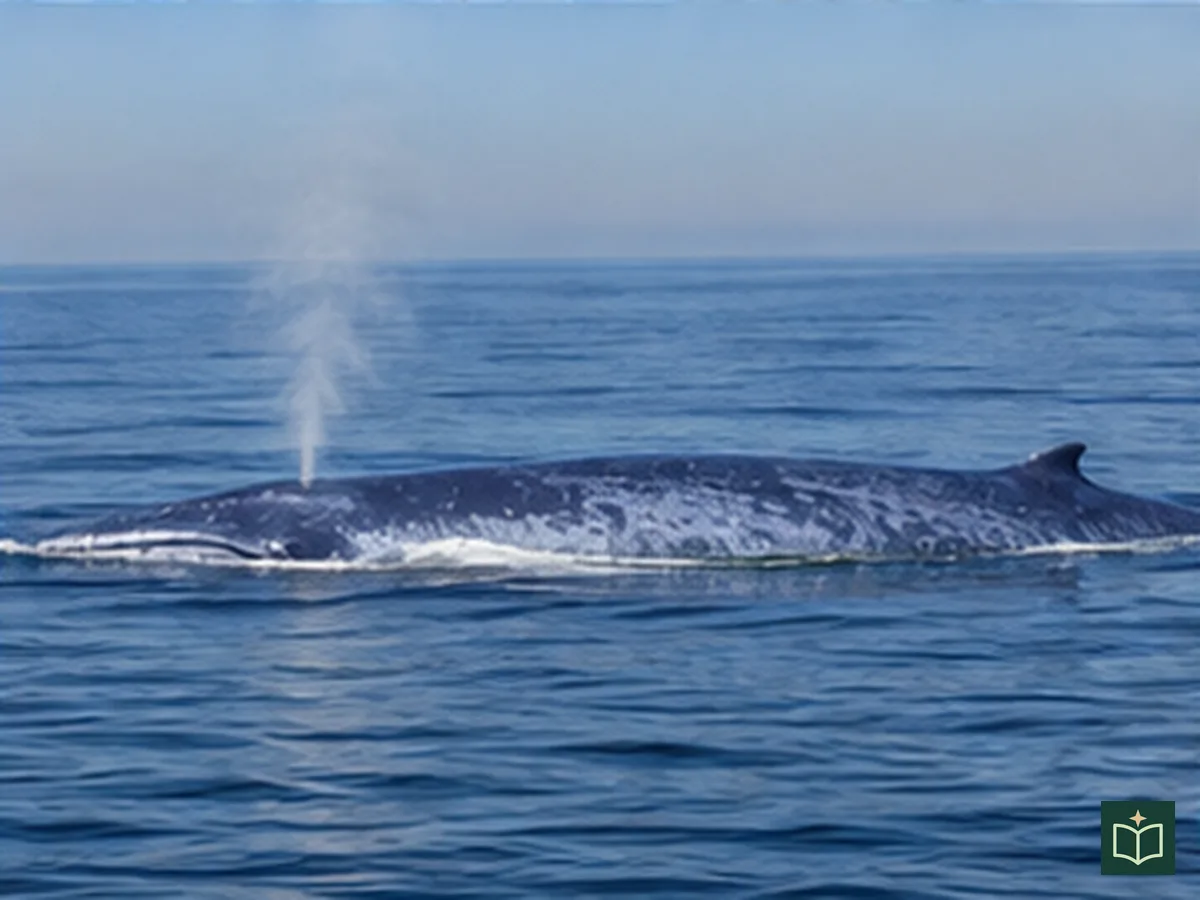
The blue whale
The blue whale is the largest animal known to have existed, larger than any dinosaur so far discovered. Adults commonly weigh more than 100 tonnes, and the heaviest may have reached around 150 tonnes or more. Its heart alone can weigh several hundred kilograms, and its calls are among the loudest sounds made by any animal, travelling hundreds of kilometres underwater. Yet it feeds almost entirely on krill, small shrimp-like crustaceans a few centimetres long. During the feeding season, a blue whale can eat several tonnes of krill a day. Commercial whaling killed hundreds of thousands in the 20th century, and populations remain far below their former levels.
Weight tells a different story
Ranked by weight instead of length, the order changes. Bowhead and right whales are shorter than fin whales but much stockier, with thick layers of blubber; large adults can weigh 80 to 100 tonnes, rivalling or exceeding fin whales. The bowhead lives in Arctic waters and uses its massive head to break sea ice up to around half a metre thick. It is also one of the longest-lived mammals: some individuals are estimated to have lived for more than 200 years. Right whales got their English name because whalers considered them the right whale to hunt: slow, close to shore and buoyant once killed.
The toothed giant
The sperm whale is the largest toothed whale and the largest toothed predator on Earth. Mature males reach around 16 to 20 metres, while females are much smaller. Unlike the filter-feeding baleen whales, sperm whales hunt squid, including giant squid, diving to depths of more than a kilometre and staying under for over an hour. They locate prey using clicks, which are among the loudest biological sounds known. The species has the largest brain of any animal. Its head contains spermaceti, a waxy oil once prized for candles and lubricants, which made it a major target of whalers from the 18th to the 20th centuries.
Whales near the Gulf
Several large whales live in the waters around Arabia. The Arabian Sea humpback whale is a remarkable population that does not migrate to polar feeding grounds like other humpbacks but stays year-round in the Arabian Sea, off Oman, Yemen, Pakistan and India. It is thought to be the most isolated humpback population in the world and is listed as endangered. Bryde’s whales, which prefer warm waters, are seen in the Gulf of Oman and occasionally in the Gulf itself. Blue whales also feed off the coast of Oman in some seasons. Researchers in Oman have studied these populations using photographs, acoustic recorders and satellite tags.
Recovery and threats
Commercial whaling was halted by a global moratorium agreed by the International Whaling Commission in 1982 and in force from 1986, and some species have recovered strongly since. Humpback numbers in many regions have grown substantially. Others remain in danger: the North Atlantic right whale numbers only a few hundred animals, threatened by ship strikes and entanglement in fishing gear. Large whales also matter for ocean ecosystems. Their dung releases iron and nitrogen near the surface, feeding plankton, and when they die their bodies carry carbon to the deep sea. Protecting the largest animals on Earth therefore benefits much of the ocean around them.
Sources & further reading
Figures are rounded and widely published; check the linked organisations for the latest editions. These organisations do not endorse this website.