What landlocked means
A landlocked country is one with no coastline on the world ocean or on any sea connected to it. About 44 sovereign countries are landlocked, roughly a fifth of the world’s total, and they are found in Africa, Asia, Europe and South America. Africa has the most, with 16. Kazakhstan, at about 2.7 million square kilometres, is by far the largest. It does have a long shoreline, but on the Caspian Sea, which is enclosed and has no natural outlet to the ocean. Ships can reach the Black Sea from the Caspian only through Russia’s inland waterways, so Kazakhstan is counted as landlocked.
Central Asia’s heartland
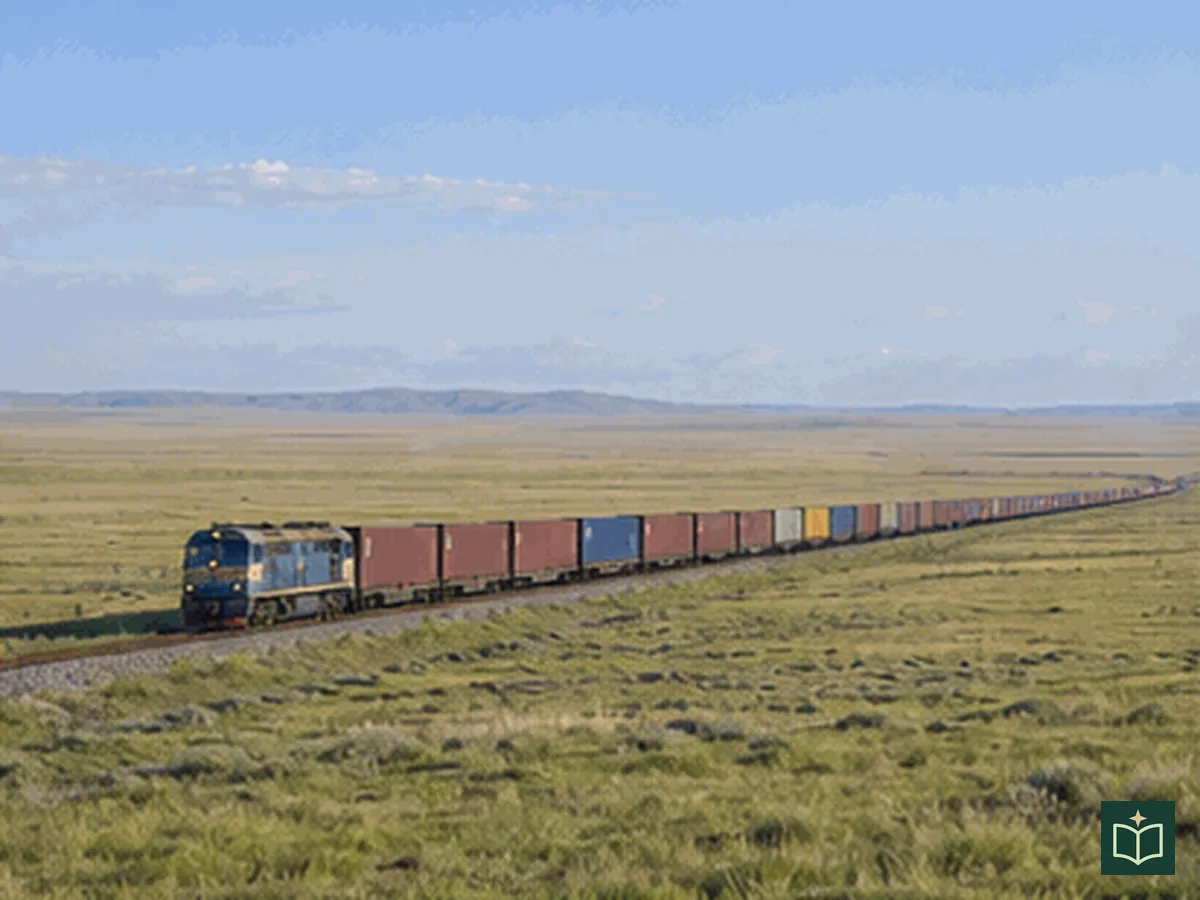
Kazakhstan and Mongolia, the two largest landlocked countries, sit deep in the interior of Asia, far from any ocean. Mongolia is wedged between China and Russia and depends on them for almost all its trade routes. Kazakhstan has developed rail links in several directions, including routes across the Caspian and through the Caucasus that connect it to Europe, and routes south towards ports in Iran and the Gulf. Afghanistan, ninth in the table, also relies on its neighbours, particularly Pakistan and Iran, for access to the sea. Its trade has been redirected several times by conflict and closures along its borders.
Africa’s inland belt
Six of the ten countries are in Africa. Chad, Niger and Mali stretch across the Sahara and the Sahel, where much of the land is desert or dry grassland and the main rivers, such as the Niger, flow towards coastal neighbours. Zambia and the Central African Republic lie farther south in wetter country. Ethiopia became landlocked when Eritrea gained independence in 1993, and it now sends most of its foreign trade through the port of Djibouti, linked by a railway completed in the 2010s. Zambia exports copper by road and rail through ports in Tanzania, South Africa and other neighbours, along routes known as corridors.
Bolivia’s lost coast
Bolivia is the larger of South America’s two landlocked countries, the other being Paraguay. It lost its strip of Pacific coastline to Chile in the War of the Pacific in the late nineteenth century, a loss that remains an important issue in Bolivian politics. In 2018 the International Court of Justice ruled that Chile was not obliged to negotiate access to the sea, although the two countries continue to discuss cooperation. Bolivia has kept a navy, which patrols Lake Titicaca and rivers. Its trade passes mainly through ports in Chile and Peru, and also along rivers that flow into the Atlantic.
The cost of distance
Being landlocked usually means higher transport costs, longer delivery times and dependence on neighbours’ roads, railways, ports and border procedures. Studies by the United Nations and the World Bank have found that landlocked developing countries often pay much more to move goods than coastal countries at a similar level of development. Delays at border crossings can matter as much as distance. To reduce these disadvantages, international law gives landlocked states a right of access to and from the sea. The UN Convention on the Law of the Sea states that they should enjoy freedom of transit through neighbouring countries, though the details are agreed between governments.
Landlocked and prosperous
Being landlocked is not a sentence to poverty. Switzerland, Austria, Luxembourg and Liechtenstein are among the world’s wealthiest countries, surrounded by large markets and connected by efficient railways, roads and rivers. Their success shows that good relations with neighbours and well-run transport links can offset geography. Two countries in the world are doubly landlocked, meaning they are surrounded only by other landlocked countries: Liechtenstein in Europe and Uzbekistan in Central Asia. For Gulf ports such as Jebel Ali in Dubai, landlocked countries in Central Asia and East Africa are important trading partners, reached through transit routes across Iran, Pakistan and the Horn of Africa.
Sources & further reading
- UN-OHRLLS · Landlocked Developing Countries ↗
- World Bank · Trade logistics ↗
- CIA World Factbook · Country profiles ↗
Figures are rounded and widely published; check the linked organisations for the latest editions. These organisations do not endorse this website.