How the ranking works
Comparing animals by weight is less simple than it sounds. Individuals vary, males are usually much heavier than females, and few wild animals are ever weighed. This table therefore uses typical weights for adult males drawn from standard zoological references, rounded to the nearest hundred kilograms. Record animals can be far heavier: the largest African bush elephant on record is estimated at around ten tonnes. The table also counts species rather than broader groups, so Africa’s two elephants appear separately, as zoologists now recognise them as distinct species. Marine mammals are excluded because whales, supported by water, are a separate story; the blue whale outweighs any land animal many times over.
Three elephants at the top
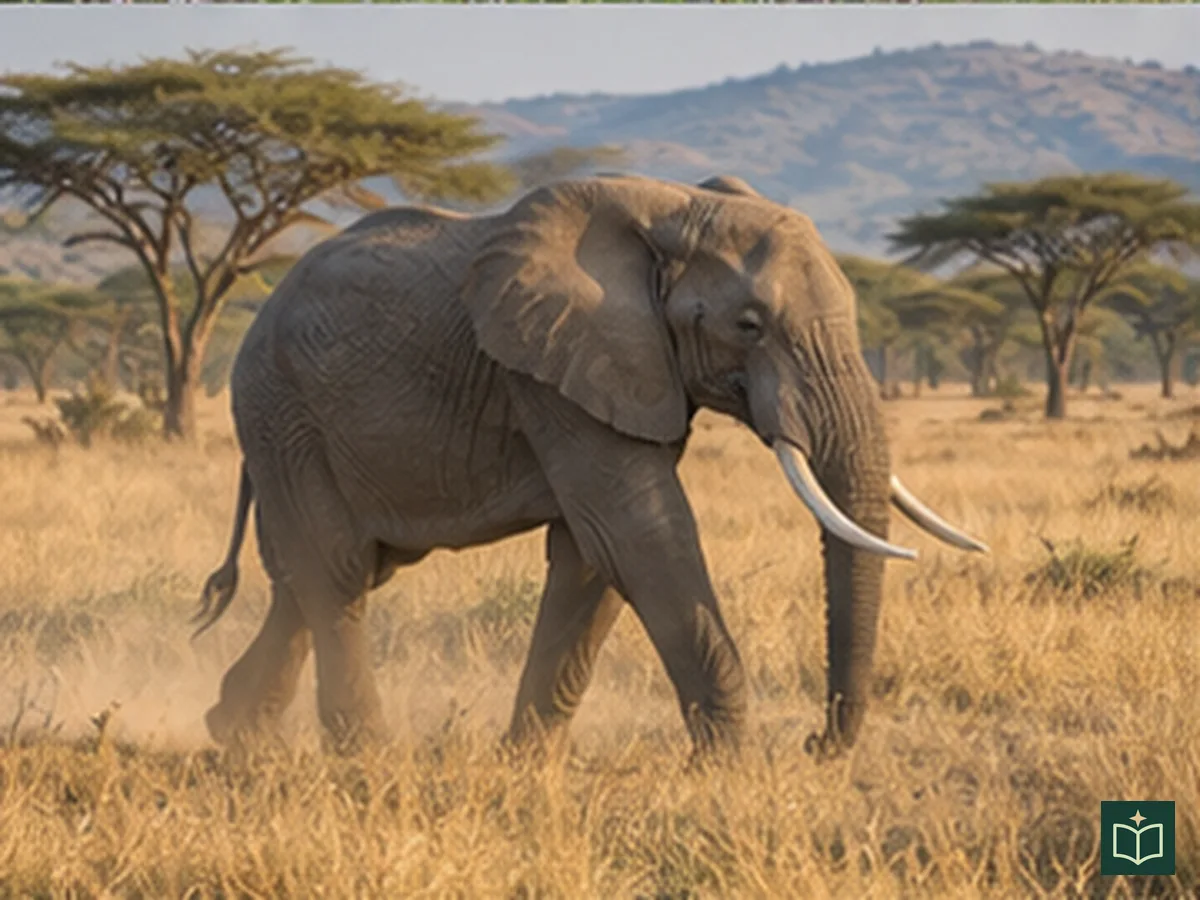
The African bush elephant, found on savannahs from Kenya to South Africa, is the largest living land animal, with bulls typically around six tonnes and three to four metres tall at the shoulder. The Asian elephant, found from India to Borneo, is smaller, with rounder backs and smaller ears; bulls average around four tonnes. The African forest elephant of the Congo Basin and West Africa is smaller again, with straighter tusks suited to moving through dense vegetation. An adult elephant may eat 150 kilograms or more of plants a day and spend most of its waking hours feeding. All three species are listed as threatened by the International Union for Conservation of Nature.
Rhinos and the hippo
The white rhinoceros is the largest of the five living rhino species, with bulls averaging around 2,300 kilograms. Its name probably comes from a description of its wide mouth, suited to grazing, rather than its colour. The Indian, or greater one-horned, rhinoceros of India and Nepal is close behind. The hippopotamus spends its days in African rivers and lakes and emerges at night to graze, sometimes walking several kilometres. Adult males typically weigh about 1,500 kilograms, although large bulls can be considerably heavier. Despite its bulk, a hippo can outrun a person over short distances, and it is considered one of Africa’s most dangerous animals.
Tall rather than heavy
The giraffe is the tallest living animal, with males reaching about five and a half metres, but much of that height is neck and legs, so it weighs less than the rhinos. Males average around 1,200 kilograms. The gaur, a wild ox of South and South-East Asian forests, is the largest living wild cattle species, with bulls standing nearly two metres at the shoulder. The black rhinoceros, a browser that feeds on shrubs, is smaller than its white cousin. The American bison, the heaviest land animal in North America, completes the table. The lower places overlap so much that small changes in data can reorder them.
Why so many plant-eaters
None of the ten heaviest land mammals is a meat-eater. The largest carnivores on land, polar bears and the biggest brown bears, rarely exceed about 700 kilograms. Plants are abundant but low in energy, and large herbivores digest them slowly in big guts, extracting more nutrition. A large body also loses heat and water slowly relative to its mass, which helps in hot, dry climates. Few predators can tackle a fully grown elephant or rhino, so size itself is a defence. Predators face the opposite problem: they must catch every meal, and very large hunters would need more prey than most ecosystems can provide.
Giants under pressure
The biggest land mammals are among the most threatened. Elephants and rhinos have been hunted heavily for ivory and horn, and their ranges have shrunk as farms and settlements expand. The northern white rhinoceros is down to two females, both in a Kenyan conservancy. Large animals reproduce slowly, with elephants carrying a calf for about 22 months, so populations recover slowly from losses. Conservation efforts such as anti-poaching patrols, protected corridors and community programmes have helped some populations, including Indian rhinos in Kaziranga National Park. The Gulf once had its own large mammals, such as the Arabian oryx, saved from extinction in the wild through captive breeding.
Sources & further reading
Figures are rounded and widely published; check the linked organisations for the latest editions. These organisations do not endorse this website.