One peak per world
Comparing mountains across the solar system raises an immediate problem: most worlds have no sea level. Scientists instead measure heights from a reference surface, such as a planet’s average radius, or from the surrounding plains. Different choices can change a figure by several kilometres. To keep the comparison clear, this table lists the tallest known peak on each of ten worlds, using commonly cited heights. Rheasilvia’s central peak and Olympus Mons are effectively tied at about 22 kilometres, and the order between them depends on how each is measured. Everest, at about 8.8 kilometres above sea level, sits in sixth place, comfortably beaten by mountains on Mars, Io and an asteroid.
Why small worlds grow tall
Mountain height is a contest between rock strength and gravity. On Earth, a peak much higher than Everest would begin to deform under its own weight, and erosion by ice, water and wind constantly wears mountains down. Mars has about 38 per cent of Earth’s surface gravity and very little erosion, so volcanoes there could keep growing for hundreds of millions of years. Without plate tectonics, the Martian crust stayed above the same volcanic hotspot rather than drifting away, allowing lava to pile up in one place. Smaller bodies such as Vesta have weaker gravity still, which allows proportionally enormous relief to survive.
Mars and Vesta
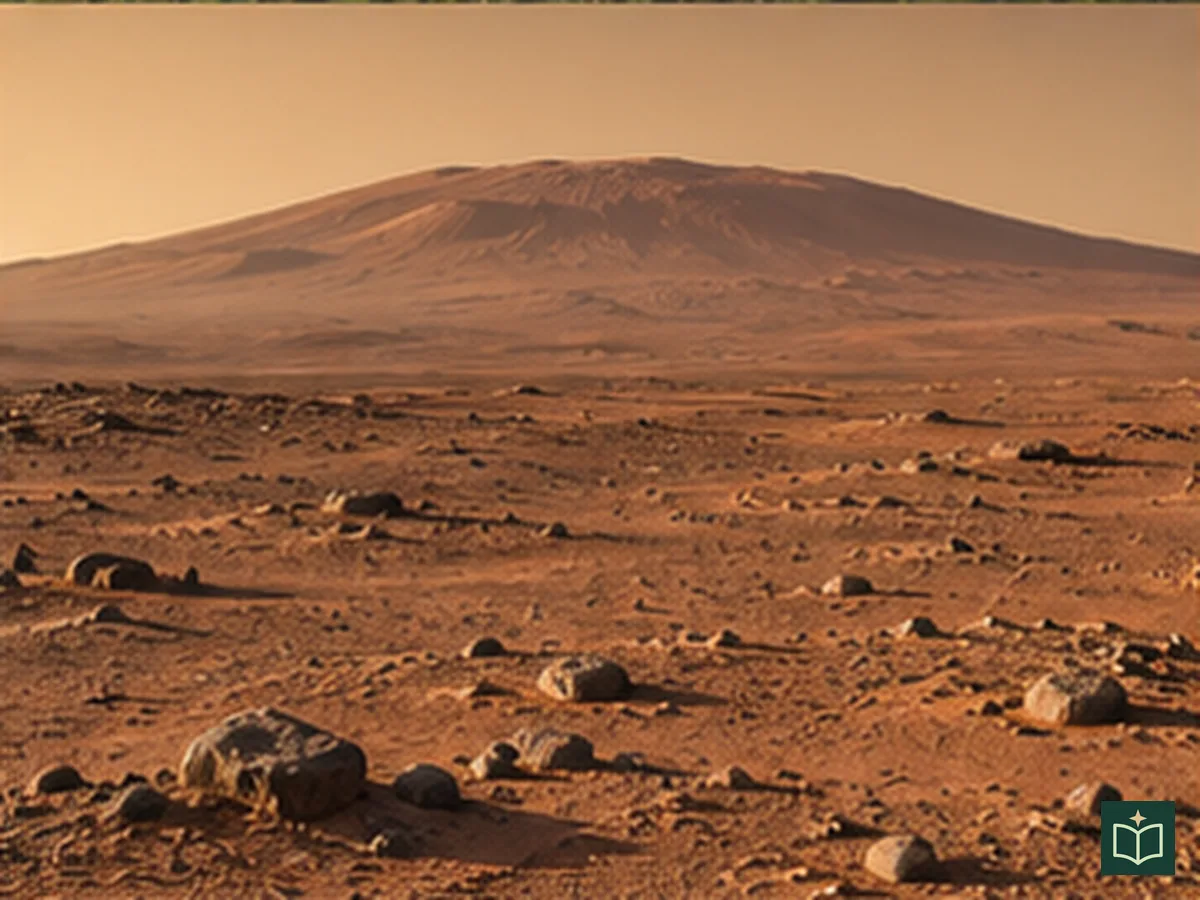
Olympus Mons is a shield volcano about 600 kilometres across, wide enough that someone standing on its slopes would not see the summit because of the curvature of Mars. It rises roughly 22 kilometres above the Martian reference level and is ringed by cliffs several kilometres high. Rheasilvia is something else entirely: a giant impact crater about 500 kilometres wide on the asteroid Vesta, whose own diameter is only about 525 kilometres. When the crater formed, rock rebounded at its centre, leaving a central peak roughly 20 to 25 kilometres high. NASA’s Dawn spacecraft mapped it in detail while orbiting Vesta in 2011 and 2012.
Strange mountains on moons
Saturn’s moon Iapetus has a ridge running around much of its equator, about 1,300 kilometres long and in places around 20 kilometres high, giving the moon a walnut-like shape. Its origin is still debated; ideas include an early fast spin or debris from a collapsed ring. Io, Jupiter’s volcanic moon, has mountains such as Boösaule Montes, about 17.5 kilometres high, which are thought to be blocks of crust pushed up by the constant resurfacing of the moon by lava. Pluto’s Tenzing Montes, named after Tenzing Norgay, are made largely of water ice, which is as hard as rock at Pluto’s frigid temperatures.
Venus and the Moon
Maxwell Montes on Venus rises about 11 kilometres above the planet’s mean surface level, making it the highest point on any rocky planet other than Mars. Because Venus is wrapped in thick clouds, its mountains were mapped by radar, mostly by NASA’s Magellan spacecraft in the early 1990s. The Moon’s Mons Huygens, about 5.5 kilometres high, forms part of the Apennine range, which is the raised rim of the vast Imbrium impact basin. Ceres’s Ahuna Mons is an isolated dome thought to have been built by a slow eruption of salty mud and ice, a type of activity known as cryovolcanism.
The Everest question
Everest is the highest mountain above sea level, but by other measures Earth has taller peaks. Mauna Kea in Hawaii rises about 10.2 kilometres from its base on the sea floor, though most of it is underwater. Chimborazo in Ecuador, because of Earth’s equatorial bulge, has the summit farthest from the planet’s centre. Each measure answers a different question. The same applies elsewhere: Olympus Mons rises about 26 kilometres above the plains to its north-west, while Rheasilvia’s peak stands on the floor of a crater. Heights for these distant mountains are estimates, and new missions may revise them or reveal taller peaks still.
Sources & further reading
Figures are rounded and widely published; check the linked organisations for the latest editions. These organisations do not endorse this website.