A young sea
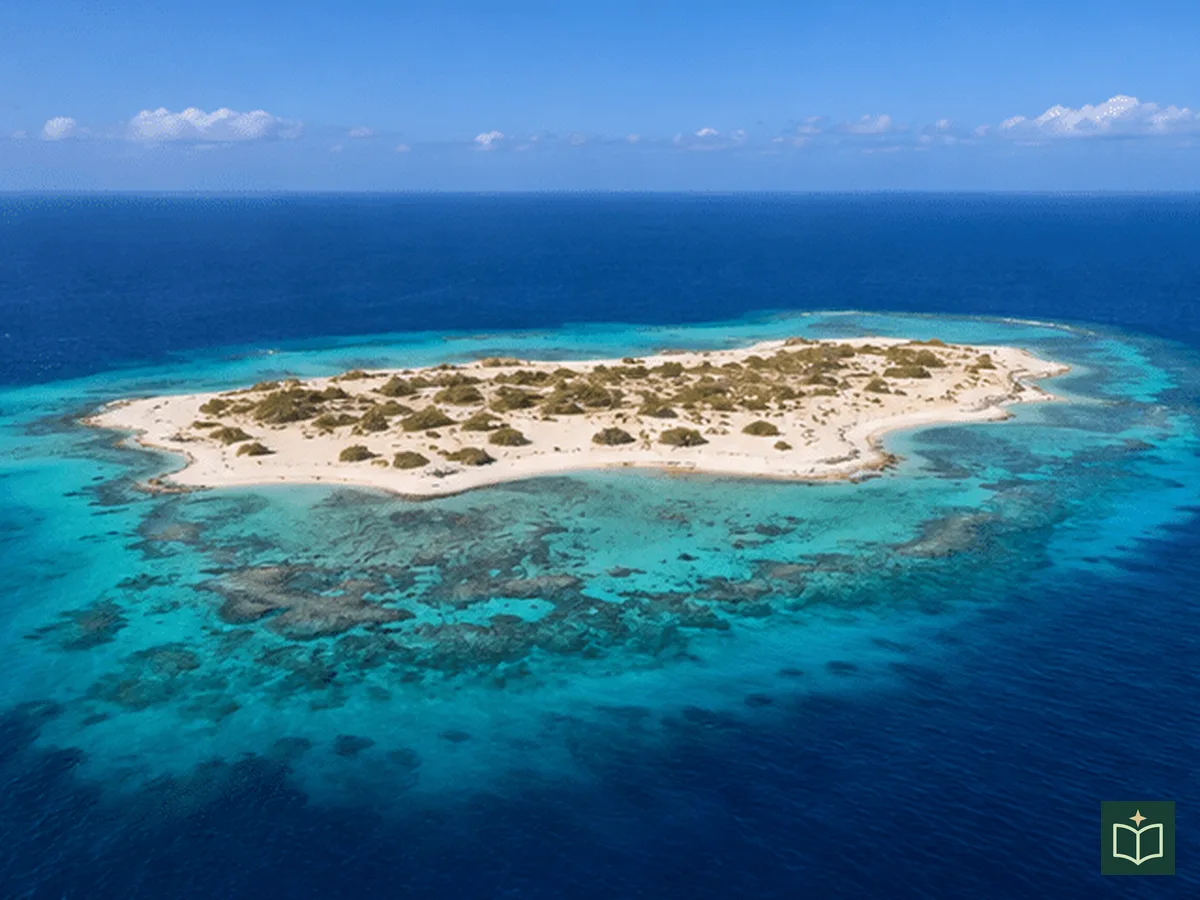
The Red Sea is a narrow arm of the Indian Ocean, about 2,250 kilometres long, that began to open some 25 to 30 million years ago as the Arabian plate pulled away from Africa. It is still widening by around a centimetre a year. Most of its islands sit on the broad, shallow shelves near its southern end, off Eritrea, Saudi Arabia and Yemen. They are mostly low, flat islands of coral limestone, some lifted above the sea by salt deposits buried beneath them. A second group, in the Hanish and Zubair archipelagos, are volcanic peaks rising from the rift along the centre of the sea.
Dahlak Kebir
Dahlak Kebir is the largest island of the Dahlak Archipelago, a scatter of more than a hundred islands off the Eritrean port of Massawa. Estimates of its area range from about 640 to 660 square kilometres. Only a handful of the archipelago’s islands are permanently inhabited, Dahlak Kebir and Nora among them, home to small fishing communities. The island has a long history: its ancient cisterns and a large collection of early Islamic tombstones show that it was a trading and religious centre more than a thousand years ago. Its surrounding waters, rich in coral, fish and seabirds, are protected as a marine national park.
The Farasan Islands
The Farasan Islands lie off Jazan in south-western Saudi Arabia. The main island, Farasan al-Kabir, covers about 390 square kilometres and holds the archipelago’s main town; it is linked by a short bridge to Sajid, the second-largest island at about 160 square kilometres. Zufaf, further out, is about 33 square kilometres. The islands form a marine protected area that shelters dugongs, sea turtles, migratory birds and the Farasan gazelle, a population found only here. Each spring, the islands host a festival marking the brief arrival of parrotfish close to shore, a local tradition. Ferries connect them with Jazan, about 40 kilometres away on the mainland.
Yemen’s volcanic islands
Yemen holds several of the largest islands. Kamaran, about 110 square kilometres, lies close to the mainland and served for decades as a quarantine station for pilgrims travelling by sea to Makkah. Further south, Zuqar and Greater Hanish are volcanic islands near the strait of Bab el-Mandeb. Their ownership was disputed with Eritrea until an international arbitration in 1998 awarded the main islands to Yemen while protecting traditional fishing rights for both countries. Volcanic activity continues in the area: Jabal al-Tair erupted in 2007, and eruptions in the Zubair group in 2011 and 2013 created two new small islands, a reminder that the sea floor here is still being built.
The northern islands
In the north, islands are smaller and fewer. Tiran and Sanafir guard the narrow Strait of Tiran at the entrance to the Gulf of Aqaba, a strategic passage for shipping to Jordan’s port of Aqaba and Eilat. Under an agreement signed in 2016, Egypt recognised Saudi sovereignty over both islands. Tiran is usually given as about 80 square kilometres, though some surveys give less. Egypt’s largest Red Sea island, Shadwan, about 42 square kilometres, sits at the mouth of the Gulf of Suez. Sanafir, at about 33 square kilometres, is close in size to Zufaf. Because many islands are low and fringed by reefs, published areas can vary considerably between sources.
Islands and tourism
For most of history, these islands supported small fishing and pearl-diving communities. Today, several are the focus of new attention. Saudi Arabia is developing luxury resorts on islands along its northern Red Sea coast as part of projects designed to attract international visitors while protecting reefs and turtle nesting beaches. Eritrea’s Dahlak islands and Egypt’s offshore islands draw divers to some of the region’s least disturbed coral. Conservation groups stress that small islands are fragile: seabird colonies, mangroves and fringing reefs can be damaged quickly by construction and heavy use. The Red Sea’s clear water and heat-tolerant corals make its islands valuable for science as well as leisure.
Sources & further reading
Figures are rounded and widely published; check the linked organisations for the latest editions. These organisations do not endorse this website.