What a dwarf planet is
In 2006 the International Astronomical Union, which names and classifies objects in space, adopted a formal definition of a planet. A planet must orbit the Sun, be massive enough for its gravity to pull it into a round shape, and have cleared the neighbourhood around its orbit of other bodies. Objects that meet the first two conditions but not the third became dwarf planets. Pluto, which shares its region of space with countless other icy bodies in the Kuiper Belt, was reclassified as one. Five objects are officially recognised, but astronomers think dozens or even hundreds of others may qualify once their shapes are known.
Pluto and Eris
Pluto and Eris are almost twins. Measurements by NASA’s New Horizons spacecraft, which flew past Pluto in 2015, put its diameter at about 2,377 kilometres, about 51 kilometres wider than Eris. Eris, however, is roughly a quarter more massive, so it is denser and heavier despite being slightly smaller. Its discovery in 2005, announced as a body possibly larger than Pluto, was a main reason astronomers had to decide what a planet is. New Horizons revealed Pluto as a surprisingly active world, with nitrogen-ice plains, mountains of water ice and a thin atmosphere. Eris currently lies nearly three times as far from the Sun as Pluto and has not been visited.
Haumea and Makemake
Haumea is the oddest of the group. It spins once every four hours or so, so fast that it has been stretched into an elongated shape about twice as long as it is wide, which is why its size is given here as an average. In 2017 astronomers found it has a ring, the first discovered around a dwarf planet. Makemake, about 1,430 kilometres across, is one of the brightest objects in the Kuiper Belt and has a small dark moon. Both were found in 2005, during the same burst of discoveries that included Eris. Both are named after creation deities, from Hawaiian and Rapa Nui traditions.
The likely candidates
Below the official five, several large objects are probably round enough to qualify. Gonggong, Quaoar, Orcus and Salacia all orbit beyond Neptune, and Quaoar surprised astronomers in 2023 with a ring lying farther out than theory predicted. Sedna, about 1,000 kilometres across, follows one of the most extreme orbits known, taking around 11,000 years to circle the Sun and its closest approach still lying more than twice as far out as Neptune. Sizes of these distant bodies are estimated from their brightness, heat and the way they block starlight, so they carry margins of tens of kilometres. The order of Sedna, Ceres and Orcus in particular may change with better measurements.
Ceres, the nearby one
Ceres is the exception to the rule that dwarf planets are distant. It orbits in the asteroid belt between Mars and Jupiter and was the first object found there, in 1801. At about 940 kilometres across, it contains roughly a quarter of the mass of the entire belt. NASA’s Dawn spacecraft orbited Ceres from 2015 to 2018 and found bright patches of salt, the remains of salty water that once rose to the surface, and evidence of brine beneath its crust. For about half a century after its discovery Ceres was itself counted as a planet, before being reclassified as an asteroid, then promoted to dwarf planet in 2006.
Why the category matters
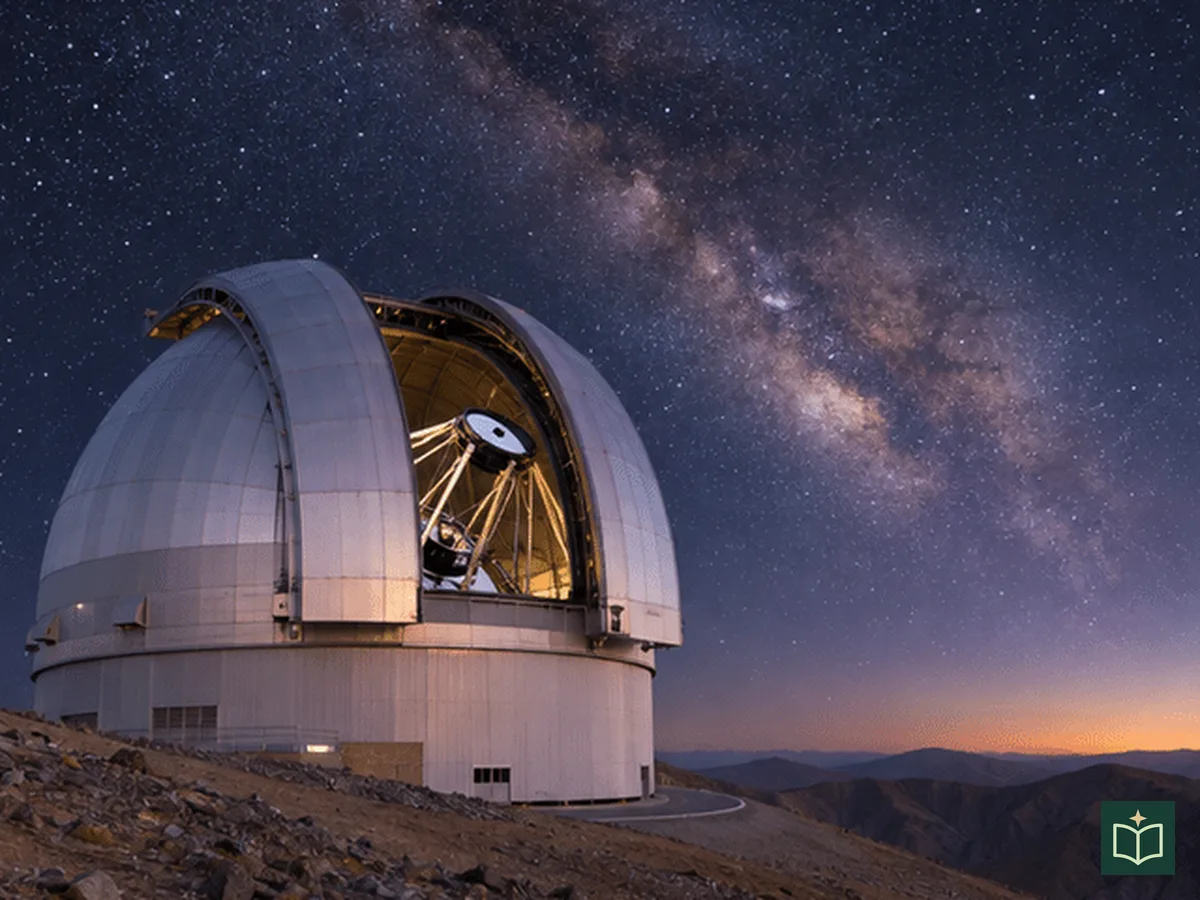
The term dwarf planet still causes debate, and some planetary scientists prefer to call any round body a planet. The argument matters less than what the category reveals: the outer solar system is full of worlds large enough to have geology, atmospheres, rings and moons. Studying them helps explain how the planets formed and why Neptune’s orbit shaped the region beyond it. New telescopes, such as the Vera C. Rubin Observatory in Chile, are expected to find many more distant objects, some perhaps as large as those listed here. For readers watching the sky from the Gulf, none of these bodies is visible without a large telescope.
Sources & further reading
Figures are rounded and widely published; check the linked organisations for the latest editions. These organisations do not endorse this website.