Deserts within a desert
Almost the whole Arabian Peninsula is desert, part of a belt of dry land stretching from the Sahara to north-west India. The Arabian Desert as a whole covers more than two million square kilometres. Within it, geographers and Arabic place names distinguish individual sand seas, called erg in geology and nafud, ramlah or ‘uruq locally, from the gravel plains, rocky plateaus and lava fields around them. This ranking covers the named sand deserts. Areas come mainly from Saudi Arabian geographic references, plus Oman’s Wahiba Sands, and are rounded. The three smallest entries are of similar size, so their order is approximate. Most of Arabia, in fact, is stone, not sand.
The Empty Quarter
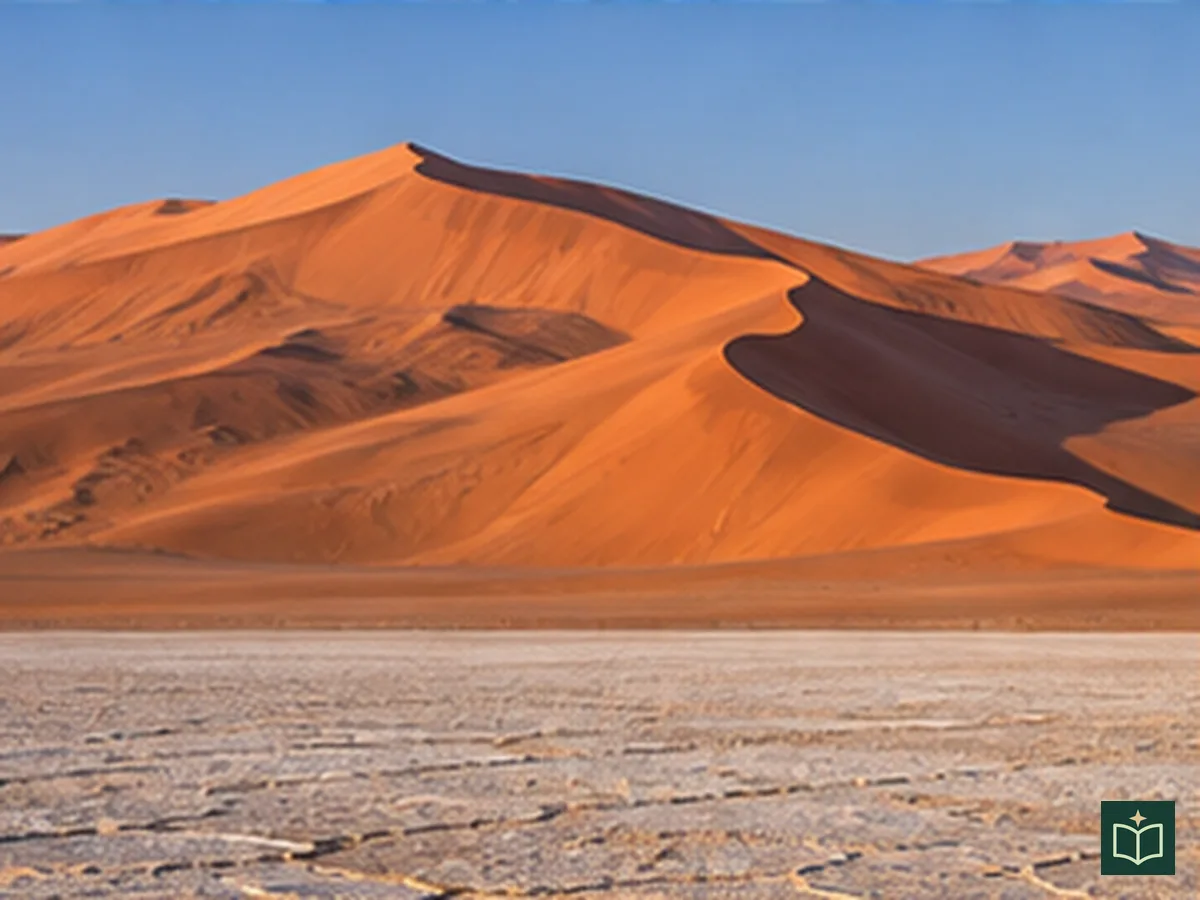
The Rub’ al Khali, or Empty Quarter, covers about 650,000 square kilometres of southern Arabia, roughly eight times the area of the UAE. It is the largest continuous body of sand in the world. Its dunes include long linear ridges in the east and giant star-shaped and crescent dunes elsewhere, some rising more than 250 metres. Near Liwa, in Abu Dhabi, tall dunes sit beside salt flats. Rain can fail for years at a time, and summer temperatures often pass 50°C. Yet the region has a human history: ancient lake beds show it was wetter thousands of years ago, and Bedouin traders and herders crossed it for centuries.
Red sands of the north
The Great Nafud, in northern Saudi Arabia, covers about 65,000 square kilometres. It is famous for its red and orange sand, coloured by iron oxide, and for large crescent dunes. Ancient lakes once filled hollows between the dunes, and archaeologists have found stone tools and fossil animal bones showing that early humans passed through during wetter periods. The Dahna is a narrow arc of sand, about 1,200 kilometres long and at most around 80 kilometres wide, that links the Nafud to the Rub’ al Khali. It acts as a natural barrier between central Arabia and the eastern lowlands, and caravan routes had to cross it at known wells.
The eastern and southern sands
The Jafurah, about 32,000 square kilometres, lies inland from Saudi Arabia’s Gulf coast and now sits above one of the largest shale gas developments in the Middle East. Nafud al-Mazhur and Nafud al-Thuwayrat are smaller sand bodies in central Arabia. In Oman, the Wahiba Sands, or Sharqiya Sands, cover about 12,500 square kilometres between the Hajar mountains and the Arabian Sea. A Royal Geographical Society expedition studied them in detail in the mid-1980s. Their dunes run north to south, aligned by the summer monsoon winds, and Bedouin families still live on their margins, herding camels and goats in the cooler months.
Stone, gravel and lava
Sand seas make up only part of Arabia’s desert. Large areas are hamada, bare rock plateaus, or serir, plains of gravel polished by wind. In the west, the harrats are vast fields of black basalt lava from volcanic eruptions, the most recent of which, near Madinah, occurred in 1256. Harrat Rahat alone covers around 20,000 square kilometres. The limestone escarpment of Jebel Tuwaiq runs for hundreds of kilometres through central Arabia near Riyadh. Each surface supports different plants and wildlife and has shaped where wells, oases and routes could exist. A gravel plain is easier to cross than dunes, but it offers little shelter.
Why the deserts matter
Arabia’s deserts hold most of the region’s oil and gas, and beneath them lie ancient aquifers filled with water from wetter times thousands of years ago, which farms and cities have drawn down quickly. The sands also produce the dust storms that sweep across the Gulf, affecting health, aviation and solar panels. Conservation projects, such as the reintroduction of the Arabian oryx and protected areas in the Rub’ al Khali, aim to restore desert wildlife. Tourism is growing too, from Liwa’s dunes to camps in the Wahiba. For residents of the Gulf, the desert is not empty space but a landscape with its own geography and history.
Sources & further reading
Figures are rounded and widely published; check the linked organisations for the latest editions. These organisations do not endorse this website.